

Need a self-driving car accident lawyer? As self-driving vehicles become more common on Las Vegas roads, the legal landscape for car accident victims is rapidly evolving. If you’re injured in a crash involving a self-driving or driverless car, your case will likely be more complex than a traditional car accident. That’s why you need an expert legal team with experience in this cutting-edge area, who understands how to untangle the web of autonomous vehicles and fight for your rights. At Howard Injury Law, our self-driving car accident lawyers, autonomous vehicle accident attorneys, and driverless car accident lawyers are ready to help you navigate these new challenges and secure the maximum compensation you deserve. Call us, your trusted personal injury lawyers at (702) 331-5722.
The Rise of Autonomous Vehicles – and New Legal Questions
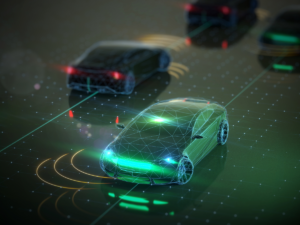
Las Vegas is a hotbed for innovation. From rideshare to delivery robots, driverless technology like Waymo and Zoox is everywhere. But with innovation comes new risks. When a self-driving car is involved in a crash, the question of “Who is liable?” is no longer straightforward. Instead of just two drivers exchanging insurance information, your case might involve:
The human operator (if present)
The vehicle manufacturer
The software developer
Fleet operators or rideshare companies
Hardware or sensor manufacturers
Even third-party maintenance companies or government entities
This is called multi-party liability, and it’s one of the biggest reasons you need a specialized attorney after a driverless car accident.
Who Can Be Held Responsible in a Self-Driving Car Accident?
When a self-driving car accident happens, determining who is responsible is often more complicated than in traditional car crashes. Multiple parties may share liability, depending on the circumstances and the vehicle’s level of automation. Here are the main parties who could be held responsible:
1. Human Operators
Most autonomous vehicles still require some degree of human oversight. If a human operator is supposed to intervene but fails to do so, such as by not paying attention or ignoring system warnings-they may be held liable for the accident. In semi-autonomous vehicles, the law still considers the actions or inactions of the human operator an important factor in determining fault.
2. Vehicle Manufacturers
If a defect in the vehicle’s design, manufacturing, or autonomous system causes the accident, the manufacturer may be responsible. For example, if the car’s sensors fail to detect a hazard or the software makes a dangerous decision, this could be a case of product liability.
Manufacturers are required to thoroughly test their vehicles and provide safe, effective updates. Failure to do so can make them liable for crashes caused by their products.
3. Software Developers
Autonomous vehicles rely on complex software to operate safely. If a programming error, software bug, or incomplete update leads to an accident, the software developer could share in the liability. Sometimes, the software company is separate from the car manufacturer, which adds another layer of complexity to your case.
4. Fleet Operators and Rideshare Companies
Companies that own and operate fleets of autonomous vehicles, such as rideshare services or delivery companies, may also be responsible. These companies are expected to maintain their vehicles, train human monitors, and use the technology appropriately. If they fail in these duties, they can be held liable for resulting accidents.
5. Hardware and Sensor Manufacturers
Driverless cars use sensors, cameras, and radar to “see” the road. If a hardware malfunction or faulty sensor contributed to the crash, the manufacturer of that component could be named in a lawsuit. Integration specialists who combine hardware and software may also be liable if their work is found defective.
6. Government Entities and Infrastructure Providers
Autonomous vehicles rely on clear road markings, proper signage, and up-to-date mapping data. If poor road conditions, missing signs, or faulty infrastructure communication contributed to the car crash, government agencies or infrastructure providers may share responsibility.
How Multi-Party Liability Works
Unlike a typical two-car crash, a self-driving car accident often involves several potentially responsible parties, and Nevada law apportions liability among them based on each one’s role in causing the crash.
There’s an important advantage hidden in that complexity. Many self-driving car cases rest on a defective product — a sensor that failed, software that misread the road, a manufacturing flaw. Nevada treats product claims differently from ordinary negligence. Under NRS 41.141, the usual “each defendant pays only their share” rule doesn’t limit the companies responsible for a defective product: the manufacturer, a component or sensor maker, and others in the product’s chain can be held jointly and severally liable, meaning you may be able to recover the full product-related damages from any one of them. A party liable only for ordinary negligence — a distracted human safety operator, for instance — generally still pays only their own percentage. Which rule attaches to which party is fact-specific, which is exactly why these cases need an attorney to map early.
Exactly how this applies depends on which parties were negligent versus which supplied a defective product, so it’s worth having an attorney map the responsible parties early.
Why You Need a Self-Driving Car Accident Lawyer
If you’ve been hurt in an accident involving a driverless vehicle, you need a lawyer who understands:
- Product liability law: For defects in vehicles, sensors, or software.
- Negligence law: For human errors or company failures.
- Comparative fault principles: For dividing responsibility among multiple parties.
- Technical evidence: Such as vehicle data logs, sensor readouts, and software updates.
At Howard Injury Law, our driverless car accident lawyers and autonomous vehicle accident attorneys have the expertise and resources to investigate every angle of your case. We work with accident reconstruction experts, engineers, and technology specialists to build the strongest claim possible.
What to Do After a Driverless Car Accident
Document Everything: Take photos, gather witness information, and keep medical records of your injuries, journal your pain and recovery, and expenses.
Do Not Talk to Insurance Companies Alone: Statements you make can be used against you, especially in complex, multi-party cases.
Contact a Specialized Attorney: The sooner you call a self-driving car accident lawyer or autonomous vehicle accident attorney, the better your chances of protecting your rights and maximizing your compensation.
The Future of Liability: What’s Next?
As autonomous vehicle technology continues to evolve, so do the laws and regulations around liability. States like Nevada and California are updating their legal frameworks to address these new challenges. In the coming years, we expect to see:
- More product liability claims against manufacturers and software developers.
- Increased scrutiny of rideshare and fleet operators.
- Greater emphasis on data collection and analysis to determine fault.
- New insurance products tailored for autonomous vehicles
Staying ahead of these changes is crucial. At Howard Injury Law, we’re committed to ongoing education and advocacy so we can continue to be leaders in this emerging field.
Don’t Take On a Driverless-Car Case Alone
After a crash with a self-driving vehicle, you’re not up against another driver — you’re up against a technology or auto company with its own legal team, and the evidence that proves what actually happened (the car’s data logs, sensor readouts, and software history) sits in their hands. It can be overwritten within days, or shaped before you ever see it. Howard Injury Law was founded by Glen Howard, a former insurance-defense attorney who spent years building the arguments these companies and their insurers use to pay injured people less — so he knows exactly how they’ll approach your claim and how to get ahead of it. We move quickly to preserve that data, pin down every responsible party, and pursue the full compensation you’re owed — on contingency, so you pay nothing unless we win. If you or someone you love was hurt in a driverless-car crash, start with a free case review now, before the evidence that proves your side disappears.