

You were in the back of an Uber, or behind your own wheel when a taxi cut across a lane, and now you’re hurt and stuck on one question: why did this happen? The common causes of rideshare and taxi accidents in Las Vegas aren’t random bad luck. They follow patterns, and this city stacks the deck in ways most riders never notice until they’re sitting in an emergency room.
That question matters more than it feels like right now. Understanding why a crash happened is the first step toward knowing who is accountable for it. In most rideshare and taxi wrecks, the cause traces back to a decision behind the wheel, which usually means an at-fault driver, an insurer, and a claim.
Here’s what actually drives these crashes in Las Vegas, and why the answer usually works in an injured passenger’s favor.
Why Rideshare and Taxi Crashes Keep Happening in Las Vegas
Las Vegas runs on movement. More than 40 million visitors a year land at Harry Reid, pour onto the Strip, and rely on someone else to drive them everywhere they go. That demand keeps tens of thousands of Uber, Lyft, and taxi drivers circling the same congested corridors around the clock.
Now add the conditions those drivers work in: a 24-hour economy with no natural “off” hours, resort traffic that never fully clears, and a constant churn of tourists who don’t know the roads. A professional driver in a quieter city might make a handful of trips on familiar streets. A Vegas rideshare driver runs loop after loop through the busiest, most chaotic pickup zones in Nevada, often late at night, often exhausted, often watching an app instead of the road.
The result is a crash environment unlike anywhere else in the state. The same city that makes rideshare and taxis so convenient here is exactly what makes them more dangerous.
Driver Behavior: The Cause Behind Most Crashes
If you’ve searched what causes 90% of accidents, you’ve run into a version of the real figure. Federal crash researchers found the driver was the critical reason — the last thing that went wrong before impact — in roughly 94% of the crashes they studied. That’s not the same as saying drivers are always to blame. But it tells you something that matters for your case: most crashes trace back to a choice behind the wheel, not fate.
Researchers sort those driver factors into three buckets, and each one shows up hard in Vegas rideshare and taxi work:
- Recognition errors (not seeing what’s there) — distraction and inattention, the single largest slice.
- Decision errors (bad calls) — speeding, misjudging a gap, running a stale yellow.
- Performance errors (mishandling the vehicle) — overcorrecting, panic braking, losing control.
For a rideshare or taxi driver, those errors don’t come from nowhere. The job creates them.
App Distraction and the “Next Ride” Glance
A rideshare driver’s phone isn’t a personal distraction — it’s their workplace. They’re watching for the next ping, checking the GPS reroute, confirming a pickup pin, and reading surge maps, all while driving. Nevada’s hands-free law limits handheld phone use behind the wheel, but a driver juggling an app in stop-and-go Strip traffic breaks that focus constantly. When a distracted rideshare driver rear-ends the car ahead or drifts into a crosswalk, the app data usually tells the story — if it’s preserved before it’s overwritten.
Fatigue and Long Gig Shifts
Rideshare pay rewards hours on the road, so drivers push. Twelve-hour shifts, 2 a.m. airport runs, and back-to-back weekend nights are normal. A tired driver reacts slower, misreads distances, and sometimes nods off at a light. Fatigue doesn’t leave a mark the way alcohol does, which is exactly why insurers rarely volunteer it as a cause.
Speeding and Surge-Hour Rushing
When surge pricing spikes, every extra ride is money, and the incentive is to move fast. Drivers speed between fares, take corners hard, and squeeze through gaps that aren’t really there. Rushing turns an ordinary Friday night on Las Vegas Boulevard into a chain of near-misses, and some of them aren’t near-misses.
Vegas-Specific Conditions That Raise the Risk
Driver behavior explains most crashes anywhere. What makes Las Vegas different is the environment those drivers operate in.
Strip and Casino Pickup Chaos
The most dangerous few seconds of many rideshare trips happen at the curb. Resort pickup zones near the Strip, the Fremont Street area, and the rideshare staging lots at Harry Reid are dense, poorly marked, and packed with drivers double-parking, stopping in live lanes, and cutting across traffic to reach a waiting passenger. Pedestrians weave between idling cars. It’s a setup built for low-speed collisions and pedestrian strikes, and it repeats thousands of times a day.
Tourists, Unfamiliar Drivers, and Disorienting Roads
Visitors drive rental cars on roads they’ve never seen, distracted by signage and casino lights, braking late and changing lanes without warning. Corridors like Flamingo, Tropicana, Sahara, and the I-15/US-95 Spaghetti Bowl consistently rank among Nevada’s highest-crash spots — locals brace for them, tourists don’t. A rideshare or taxi driver has to predict the mistakes of people who have no idea where they’re going. That’s a big part of what makes Las Vegas roads more dangerous than the average city’s, and it hits professional drivers hardest.
Late-Night and Impaired Conditions
Vegas doesn’t close, and neither does its drinking. Rideshares and taxis do their heaviest volume exactly when the most impaired drivers are on the road. Even a careful, sober rideshare driver is sharing 2 a.m. lanes with people who shouldn’t be driving at all — and a passenger in the back seat pays the price for someone else’s choice.
The New Frontier: Robotaxis on Las Vegas Streets
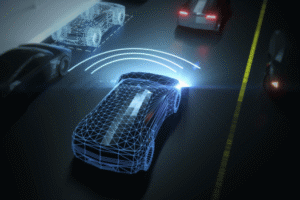
Vegas is now a proving ground for driverless rideshare, which adds a brand-new category of crash. Zoox began charging for fully driverless rides along the Strip in August 2026 and became the first robotaxi service permitted at Harry Reid International Airport that September. Waymo opened its public robotaxi service across a roughly 24-square-mile zone around the Strip in September 2026, with Tesla and others cleared to follow.
These vehicles carry passengers with no human driver at all, and they’re not crash-proof. Federal regulators have already scrutinized robotaxi rear-end collisions, and at least one operator has issued a software recall. When there’s no driver to blame, the questions get complicated fast — the vehicle’s manufacturer, the software company, and their insurers all move into the frame. If a self-driving car or robotaxi crash injures you in Las Vegas, the path to compensation looks very different from a normal Uber wreck, and it’s worth understanding before you sign anything.
Why the Cause of Your Crash Matters for Your Claim
Pinning down the cause isn’t an academic exercise. It decides two things that control your entire case: which insurance policy pays, and how much.
In a rideshare crash, coverage turns on what the driver’s app was doing at the moment of impact. App off, and only the driver’s personal policy applies. Logged in and waiting for a request, and a limited layer of company coverage kicks in. En route to a pickup or with a passenger aboard, and a much larger commercial policy is in play. The difference between those tiers can be enormous — and the trip log that proves which one applies can vanish within days.
That’s where the cause and the clock collide. Trip data, dashcam loops, and the casino and intersection cameras that caught the sequence all get overwritten fast, often within a week or two. Insurers know this. They know an unrepresented person is unlikely to demand that evidence before it’s gone, and they’re comfortable letting it disappear.
This is the part Glen Howard understands from the inside. He spent years as an insurance defense attorney in Las Vegas before switching sides to represent injured people, so he knows how these carriers build a defense, which records they hope you never ask for, and how they quietly reframe a clear-cut crash into a “disputed” one. The Las Vegas motor vehicle accident attorneys at Howard Injury Law move quickly to lock down the cause — the app status, the fatigue, the distraction — before the other side can bury it.
Whether you can go after Uber or Lyft themselves, or only the driver and their insurer, depends on the specifics, and it’s worth getting a straight answer on who’s actually on the hook rather than guessing. Every crash is different, and general information isn’t a substitute for advice about your own situation.
Frequently Asked Questions
What causes most rideshare and taxi accidents?
Most rideshare and taxi crashes come down to driver behavior. Federal crash data assigns the critical reason to the driver in about 94% of collisions — mostly distraction, speeding, and misjudged decisions. In Las Vegas, the job amplifies all three: drivers watch an app for the next fare, run long fatiguing shifts, and rush between rides when surge pricing spikes. Add dense Strip pickup zones and unfamiliar tourists, and ordinary driver errors turn into crashes far more often. The practical takeaway is that these wrecks usually have a provable cause and an at-fault party, which is what makes a compensation claim possible in the first place.
How safe are Ubers in Las Vegas?
For most riders, an Uber or Lyft in Las Vegas is a reasonable way to get around — but “reasonable” isn’t “risk-free.” Rideshare drivers here operate in some of the most demanding conditions in Nevada: constant Strip congestion, late-night and impaired traffic, chaotic curbside pickups, and pressure to keep the meter running. Rideshare companies also don’t put drivers through rigorous safety training. That doesn’t mean you should avoid them, but it does mean crashes happen, and when they do, the layered insurance behind rideshare makes the claim more complicated than a standard fender-bender. Knowing your rights before you ride is the smart move.
Is it safer to take a taxi or an Uber in Las Vegas?
Neither is clearly “safer” on the road — the biggest differences show up after a crash, not before one. Taxis in Las Vegas are commercially licensed and carry their own commercial insurance, which can make the responsible policy easier to identify. Rideshares like Uber and Lyft use tiered coverage that shifts with the driver’s app status, so the payout can hinge on a detail the driver controls. Both put you at the mercy of another person’s driving in heavy Vegas traffic. If you’re injured either way, the questions that matter are who was at fault and which policy covers it — and that’s worth confirming with a Nevada attorney.
What is the leading cause of accidents in Nevada?
The same handful of driver behaviors drive most Nevada crashes: distracted driving, speeding, impaired driving, and following too closely. Statewide, distraction and impairment are especially deadly, and the Las Vegas Valley concentrates all of them — heavy tourist traffic, a 24-hour drinking culture, and busy high-crash corridors. For rideshare and taxi drivers specifically, distraction climbs even higher because their phone is their dispatch, their map, and their paycheck all at once. So while the leading causes look similar to the rest of the country, Vegas conditions push them harder, which is a real part of why crashes involving Uber, Lyft, and taxis are so common here.
Are robotaxis like Zoox safe in Las Vegas?
Driverless robotaxis from Zoox and Waymo now operate publicly in Las Vegas, and their operators point to strong safety records. But “driverless” is not the same as “incapable of crashing.” Federal regulators have already investigated robotaxi collisions, including rear-end crashes, and at least one company has recalled software after Las Vegas incidents. If a robotaxi injures you, the claim is genuinely different from a typical rideshare case — instead of a driver and their insurer, you may be dealing with the vehicle’s maker, its software provider, and their legal teams. It’s a newer, more complex area of Nevada injury law, and it’s one to get guidance on rather than navigate alone.

Hurt in a Rideshare or Taxi Crash? Find Out What Really Caused It.
Right now the evidence that proves what caused your crash — the trip log, the dashcam, the casino camera down the block — is already on a countdown to being erased, and the insurer is counting on you to wait. You don’t have to have all the answers to make a call. You just have to protect them before they’re gone.
Howard Injury Law offers a free, no-pressure consultation to walk through what happened, tell you honestly whether you have a case, and move fast to preserve the proof. Glen Howard’s insurance-defense background means your rideshare or taxi accident claim is handled by someone who knows exactly how the other side builds theirs — and there’s no fee unless we win.
Call (702) 331-5722 any time, day or night, or request your free case review. One conversation tells you where you stand.