


If you think you were partially at fault in a Nevada accident, here’s the part most people get wrong: being partly to blame does not end your claim. Under Nevada law, you can still recover money as long as you were 50% or less responsible for the crash. Your compensation gets reduced by your share of the fault, but it doesn’t disappear.
That matters because the insurance company is hoping you’ll assume the opposite. Plenty of injured people in Las Vegas walk away from a valid claim because they feel guilty, or because an adjuster told them early on that the accident was “their fault.” Neither of those things actually decides what you’re owed.
This guide breaks down how shared fault works in Nevada, who really determines your percentage, and the steps that protect your recovery when blame is in question.

How Fault Affects Your Compensation in Nevada
Nevada uses a system called modified comparative negligence (NRS 41.141). It does two things: it lets partially at-fault people recover, and it reduces what they recover based on their share of the blame.
The dividing line is 51%. If your fault is 50% or less, you can recover — your award is just cut by your percentage. If you’re found 51% or more at fault, you’re barred from recovering anything.
A simple example makes it concrete. Say your total damages are $100,000 and you’re found 30% at fault. You’d recover $70,000 — the full amount minus your 30% share. Push that number to 51%, and the recovery drops to zero. That’s why the exact percentage assigned to you isn’t a technicality; it’s often the whole case. If you want the full mechanics of the rule, our breakdown of Nevada’s comparative negligence law walks through it step by step.
Who Actually Decides How Much Fault Is Yours?
Not you. Not the other driver. And definitely not the insurance adjuster’s opening position.
In a settlement, your fault percentage is negotiated. If the case goes to court, a judge or jury assigns it based on the evidence — the police report, witness statements, photos, dashcam or surveillance footage, and sometimes an accident reconstruction. That first number an adjuster throws at you is a starting move, not a verdict.
This is where an inflated fault percentage becomes a quiet tactic. Every point of blame an insurer can shift onto you shaves money off what they pay. Bump you from 20% to 40%, and they’ve cut your recovery by a fifth without ever disputing your injuries. Attorney Glen Howard spent years defending insurance companies before switching sides, so he knows exactly how those percentages get built and how to push back on them with evidence.
Is It Bad to Admit Fault After a Car Accident?
Yes — and it’s easier to do by accident than you’d think. A quick “I’m so sorry” at the scene, an offhand “I didn’t even see you,” a guess about what happened while you’re rattled: any of these can be treated as an admission and used to raise your fault percentage later.
Fault is a legal determination that depends on the full picture, not your first reaction while adrenaline is still running. You may feel responsible for something that, on closer look, wasn’t your fault at all — or was shared with a driver who was speeding, distracted, or running the light at an intersection like Tropicana and I-15.
Stick to the facts at the scene. Check on anyone hurt, call the police, exchange information, photograph everything, and let the investigation sort out fault. Give your own insurer the basic facts, but you don’t have to give the other driver’s insurance company a recorded statement or a theory of who caused the crash. If you’re unsure what you’re obligated to say, it’s worth talking to a lawyer first.
What Is the Nevada “No-Touch” Law?
The “no-touch law” refers to no-contact accidents — also called phantom vehicle crashes. These happen when another driver forces you into a wreck without ever hitting your car: someone swerves into your lane on the 215 Beltway, brake-checks you, or runs you off the road, and you crash avoiding them.
In Nevada, the driver who caused the crash can be held responsible even though there was no physical contact. The question is whether their traffic violation or negligence forced your reaction, not whether metal touched metal. Nevada courts have long recognized this.
The catch is proof. If the other driver fled or can’t be identified, you may need to turn to your own uninsured motorist coverage — and Nevada generally requires independent corroboration of a no-contact claim, meaning something beyond your own account. Witness statements, video, skid marks, and vehicle damage all help establish that the phantom driver, not you, caused the crash. Building that record early is what keeps the blame from landing on you by default.
How Long Does an At-Fault Accident Stay on Your Record in Nevada?
There are actually two separate records, and people mix them up constantly.
Your DMV driving record in Nevada generally keeps an at-fault accident for about three years. Nevada requires accidents involving injury, death, or property damage over $750 to be reported, and those entries age off after roughly that three-year window. Serious offenses like DUI or reckless driving stay far longer — up to ten years.
Your insurance record works differently. Insurers pull a claims-history report (called a CLUE report) that can show accidents for up to seven years, and a rate surcharge after an at-fault crash commonly lasts three to five years, depending on the carrier and how severe the claim was. So an accident can quietly affect your premium even after it’s gone from your DMV record. In a high-traffic market like Las Vegas, where premiums already run high, that difference is worth understanding before you accept blame you don’t actually own.
What Is the Average Settlement for a Car Accident in Nevada?
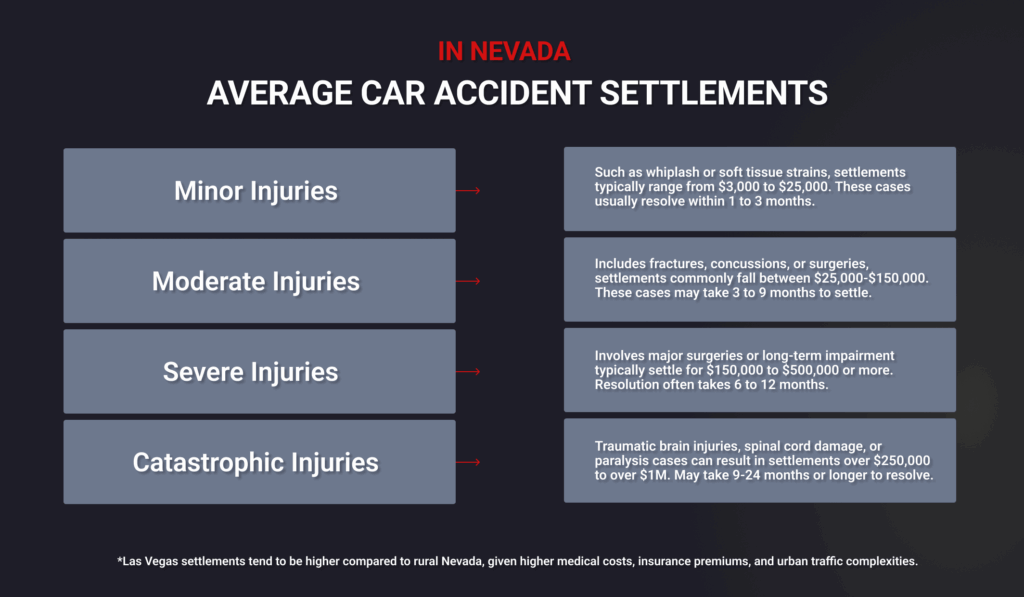
There isn’t a reliable “average,” and any firm quoting you a specific number should make you skeptical. Settlements swing enormously based on the facts, so an average blends a $4,000 fender-bender with a seven-figure catastrophic-injury case and tells you almost nothing about yours.
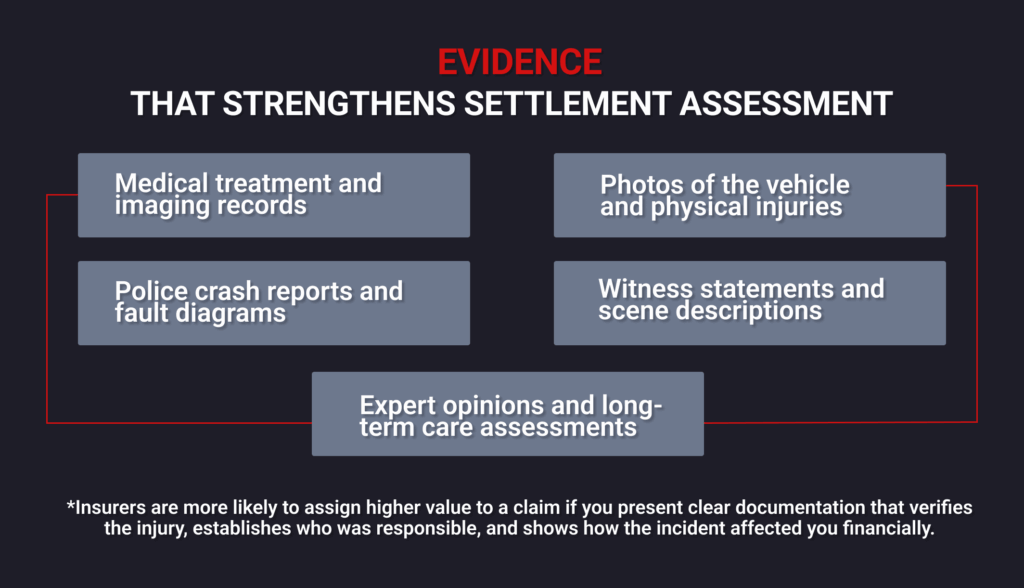
What actually drives your number is concrete: the severity of your injuries, your medical bills and future treatment, lost income, the strength of the evidence, the available insurance coverage — and your fault percentage, which reduces the final figure. Two people hurt in similar crashes on Sahara Avenue can walk away with very different results because those factors line up differently.
The useful question isn’t “what’s the average” — it’s “what is my specific case worth, and how do I keep my assigned fault from eating into it?” That’s something a lawyer can estimate once they’ve reviewed your details.
Recommended Steps If You Think You’re Partly to Blame
If blame is in question, what you do next has real leverage over your fault percentage. A few priorities:
- Get medical care and keep going. Gaps in treatment get used to argue your injuries aren’t serious. Your health and your claim point the same direction here.
- Preserve the evidence. Photos, the police report number, witness names and numbers, and any video from nearby businesses or traffic cameras can shift fault back where it belongs.
- Don’t admit fault or accept the adjuster’s percentage. Their first offer assumes you won’t push back. You can decline to give a recorded statement to the other side.
- Talk to a lawyer before your fault gets locked in. Once you’ve accepted blame or signed something, it’s much harder to undo. A free consultation costs you nothing and can change the whole trajectory.
Every case is different, so treat this as a starting point rather than specific legal advice — a short conversation with a Nevada attorney will tell you how these steps apply to your situation.
How a Las Vegas Personal Injury Lawyer Protects Your Recovery
In a shared-fault case, the fight is largely over your percentage — and that’s exactly where good representation earns its keep. A lawyer gathers the evidence that lowers your assigned blame, handles the insurance company so you’re not talking yourself into a higher number, and makes sure your injuries are valued fully before any reduction is applied.
Glen Howard’s background is the difference here. As a former insurance-defense attorney, he built the same fault arguments that adjusters now use against injured people, so he knows where they’re weak. That perspective is hard to find on the plaintiff’s side, and it works for you.
Cost shouldn’t keep you from finding out where you stand. Nevada injury cases run on a contingency fee, which means no fee unless we win your case. The consultation is free, and there’s no obligation to move forward.
Frequently Asked Questions
Can I still get money if I was partly at fault in Nevada?
Yes. Nevada follows a modified comparative negligence rule, so you can recover as long as you were 50% or less at fault for the accident. Your compensation is reduced by your percentage of blame — if you’re 25% at fault on a $100,000 claim, you’d recover $75,000. The only hard cutoff is 51%: at that point, you’re barred from recovering. Because your exact percentage directly controls your payout, it’s worth having a lawyer challenge an inflated number rather than accepting the insurance company’s first assessment.
Is it bad to admit fault in a car accident?
It can hurt your claim, yes. Apologizing or guessing about what happened at the scene can be treated as an admission and used to raise your fault percentage later. Fault is a legal determination based on all the evidence, not your first reaction while you’re shaken up. Stick to the facts — check on people, call the police, take photos, exchange information — and let the investigation decide who’s responsible. You’re not required to give the other driver’s insurance company a recorded statement or your theory of the crash.
What is the Nevada no-touch law?
It refers to no-contact or “phantom vehicle” accidents, where another driver causes your crash without ever hitting your car — forcing you to swerve or brake and lose control. In Nevada, that driver can be held responsible even without physical contact, as long as their negligence caused your reaction. If they flee or can’t be identified, your uninsured motorist coverage may apply, but Nevada generally requires independent corroboration — witnesses, video, or physical evidence — beyond just your own account.
How long does an at-fault accident stay on your record in Nevada?
It depends which record. Your Nevada DMV driving record generally keeps an at-fault accident for about three years, with serious offenses like DUI lasting up to ten. Your insurance record is separate: a claims-history (CLUE) report can show accidents for up to seven years, and a rate surcharge typically lasts three to five years depending on your insurer and the severity of the crash. That’s why an accident can still affect your premium even after it clears your DMV record.
What is the average settlement for a car accident in Nevada?
There’s no reliable average, and a specific number should make you cautious. Settlements vary too widely — a minor fender-bender and a catastrophic-injury case get blended together into a figure that says nothing about your situation. What actually matters is your injuries, medical costs, lost income, available insurance, the strength of your evidence, and your fault percentage, which reduces the total. A lawyer can give you a grounded estimate for your specific case after reviewing the details.
Not Sure How Much Fault Is Really Yours? Let’s Find Out.
If an adjuster has already put a number on your blame, remember that number isn’t final — it’s a starting position, and it’s usually higher than it should be. The gap between what they’re claiming and what the evidence actually supports can be worth thousands of dollars to you.
Call or text Howard Injury Law at (702) 331-5722 for a free consultation, or reach us through our website. We’ll review what happened, give you an honest read on your fault percentage and your options, and fight to keep the blame — and the reduction — where it belongs. No fee unless we win.