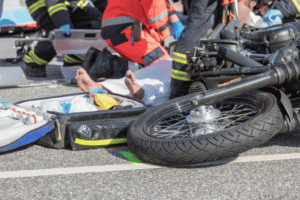


Your Uber driver kept glancing down at the phone on the dash. Or maybe the Lyft that hit you drifted through a light on Las Vegas Boulevard while the driver was clearly reading a ride request. A crash caused by a distracted rideshare driver in Las Vegas feels different from an ordinary fender bender — there’s an app, a company, and a commercial insurer in the mix, and you’re left wondering whether anyone can prove what you saw with your own eyes.
Here’s the reassuring part: usually, they can. The same app that pulled the driver’s attention off the road often leaves a digital trail of exactly what they were doing at the moment of impact. And under Nevada law, a driver who takes their eyes off the road to work an app is a driver you can hold accountable.
What Counts as a Distracted Rideshare Driver in Nevada?
Distraction isn’t only texting a friend. It’s any activity that pulls a driver’s eyes, hands, or focus away from driving. Federal safety researchers break it into three types — visual (eyes off the road), manual (hands off the wheel), and cognitive (mind off the drive). Texting is the one everyone worries about because it hits all three at once.
For a rideshare driver, the risk runs deeper than it does for the average commuter, because interacting with the app is the job.
The App Is Built to Pull Their Eyes off the Road
An Uber or Lyft driver spends a shift tapping to accept ride requests, following turn-by-turn navigation, messaging riders about pickup spots, and checking surge zones. Every one of those is a distraction, and several happen while the car is moving.
Nevada draws a firm line here. Under NRS 484B.165, it is illegal to hold, type on, or read from a handheld device while driving. Hands-free and voice controls are allowed; touching the screen to tap out a message or accept a ping is not. That statute maps almost perfectly onto how rideshare distraction actually happens.
The most common distractions across all Nevada drivers are the familiar ones: texting or working a phone, talking, eating or drinking behind the wheel, and adjusting dashboards or navigation. A rideshare driver juggling the app on a busy Friday night on the Strip is exposed to all of them, and one of them is the leading cause of serious crashes statewide.
How Common Is Distracted Driving — and Why Rideshare Raises the Odds
Distracted driving is not a rare event. Roughly 3,200 people were killed in distraction-affected crashes across the country in the most recent year of federal data, accounting for about 8% of all traffic deaths. Sending or reading a single text takes a driver’s eyes off the road for about five seconds — at 55 mph, that’s the length of a football field traveled blind. And when people ask what causes most crashes, the honest answer is human error: the overwhelming majority of collisions trace back to a choice a driver made, not a mechanical failure or an act of God.
Now layer rideshare on top of that. A rideshare driver is expected to interact with a screen throughout the shift. Add Las Vegas conditions — dense tourist traffic, constant pickups and drop-offs near the Strip and Harry Reid International Airport, and fast-moving corridors like I-15 and Las Vegas Boulevard — and the margin for a distracted glance shrinks to almost nothing. A driver looking down to confirm the next fare on Tropicana doesn’t see the brake lights ahead until it’s too late.
How to Prove a Rideshare Driver Was Distracted
This is where a rideshare crash actually works in your favor. A driver staring at their personal phone leaves thin evidence. A rideshare driver working the app leaves a far richer trail, because the platform records much of what they do.
Depending on the case, the proof can come from several places:
- App and trip data — timestamps showing when the driver accepted a ride, when navigation was active, and when in-app messages were sent, often lined up against the moment of the crash.
- Phone records — call and text logs subpoenaed from the carrier to show device use in the seconds before impact.
- Vehicle and dashcam footage — many rideshare drivers run dashcams, and the recording can capture the driver’s eyes and hands.
- Traffic and business cameras — intersection and casino-property cameras around Las Vegas frequently catch the sequence leading up to a crash.
- Witnesses and the police report — passengers, other drivers, and the responding officer’s notes all carry weight.
The catch is timing. Trip logs get overwritten, dashcam loops record over themselves, and camera footage from a nearby business is often gone within days. A lawyer can send preservation letters to Uber or Lyft and to the insurer quickly, demanding that this data be held before it disappears — and knowing exactly what to ask for is half the battle. If you want a fuller picture of what strengthens a claim, our guide on the evidence you need for a car accident claim walks through it.
Attorney Glen Howard built Howard Injury Law after years on the other side, defending insurance companies. He knows which records a rideshare insurer would rather you never see, and how they build a defense around “there’s no proof the driver was distracted.” That background is why moving fast on the app data matters so much.
What to Do After a Crash With a Distracted Rideshare Driver
Whether you were the passenger in the rideshare, a pedestrian, or the driver of the car it struck, the first moves are similar — and a few are specific to rideshare.
- Get medical care. See a doctor even if you feel okay. Adrenaline masks injuries, and a treatment gap gives the insurer an argument.
- Call the police. A Las Vegas Metro or Nevada Highway Patrol report creates an official record of the crash and any citation.
- Photograph everything. The scene, both vehicles, the rideshare decal on the windshield, license plates, and any visible phone or mount inside the car.
- Screenshot your trip. If you were the passenger, save your trip receipt, driver name, vehicle details, and the ride timeline in the app immediately — that record ties the driver to the app at the time of the crash.
- Collect witnesses. Names and numbers from anyone who saw the driver looking down.
- Don’t accept a fast offer. A quick call from the insurer with a small check is a signal your claim is worth more, not less.
For a full walkthrough, see our steps to take after a crash in Las Vegas. And because these cases hinge on evidence that fades, the sooner you loop in distracted driving accident claims in Las Vegas counsel, the better your odds of preserving it.
Who Pays After a Distracted Rideshare Driver Crash?
Coverage in a rideshare crash depends on what the driver’s app was doing at the moment of impact. When the app is off, the driver’s personal auto policy applies. When they’re logged in and waiting for a request, a limited amount of company coverage kicks in. When they’re on the way to a rider or during a trip, Uber and Lyft carry commercial liability coverage of up to $1 million.
That tiered system is a topic of its own, and it’s where a lot of the money in these claims is decided. Rather than repeat it here, see how Uber or Lyft accident coverage works and what our rideshare and taxi accident claims team handles day to day. Every crash is different, so the coverage that applies to yours is worth confirming with a Nevada attorney.
Frequently Asked Questions
Is a rideshare driver liable if they were looking at the app?
In most cases, yes. A driver who takes their eyes and hands off the road to work an app is failing to drive with reasonable care, and Nevada’s handheld law (NRS 484B.165) makes touching or typing on a device while driving illegal. If that distraction caused your crash, the driver — and often the rideshare company’s insurer — can be held responsible for your injuries. Proving it comes down to evidence: app data, phone records, video, and witnesses. Liability is decided case by case, so the details of what the driver was doing and what the records show will shape the outcome. An attorney can tell you quickly whether the facts support a strong claim.
How do you prove an Uber or Lyft driver was distracted?
The strongest proof usually comes from the app itself. Trip logs can show when the driver accepted a ride, when navigation was running, and when messages were sent — timestamps that can be matched to the crash. Phone records from the carrier add another layer, and dashcam or nearby intersection cameras can capture the driver’s eyes and hands directly. Passenger screenshots, witness statements, and the police report round it out. The key is speed: much of this data is overwritten or deleted within days, so a lawyer’s early preservation demand to Uber, Lyft, and the insurer is often what makes the difference.
What should I do if my Uber driver caused a crash while on their phone?
Get medical attention first, then make sure the police are called so there’s an official report. Before you leave the app, screenshot your trip receipt, the driver’s name, the vehicle details, and the ride timeline — that record links the driver to the app at the moment of the crash. Photograph the scene, the rideshare decal, and anything inside the car showing phone use, and collect contact information from witnesses. Avoid giving a recorded statement to the insurer or accepting a quick settlement before you understand what your claim is worth. Then talk to a Las Vegas attorney while the app data can still be preserved.
Does Uber or Lyft insurance cover a distracted-driver crash?
It can, and the amount depends on the driver’s app status when the crash happened. If the driver was on the way to a rider or on an active trip, Uber and Lyft carry up to $1 million in liability coverage. If they were logged in but waiting, a smaller amount of company coverage applies, and if the app was off, it falls to the driver’s personal policy. Because the coverage tiers get complicated fast, this is worth confirming with an attorney who handles these claims — the difference between tiers can be enormous for a seriously injured person.
How long do I have to file a claim in Nevada?
Nevada generally gives you two years from the date of the crash to file a personal injury lawsuit, under NRS 11.190. That may sound like plenty of time, but in a distracted-rideshare case the practical deadline is much sooner, because the app and camera evidence that proves distraction can vanish within days or weeks. Waiting also gives the insurer more room to argue your injuries weren’t serious. The safest move is to speak with a Nevada lawyer early, protect the filing deadline, and lock down the evidence before it’s gone. An attorney can confirm exactly which deadline applies to your situation.

Talk to a Las Vegas Lawyer Who Knows How to Get the App Data
If a distracted rideshare driver hurt you, the clock is already running on the evidence that proves it. Trip logs, dashcam loops, and camera footage don’t wait — and the rideshare insurer is counting on you to move slowly.
Howard Injury Law moves fast for exactly that reason. Glen Howard spent years defending insurance companies before he started representing injured people in Las Vegas, so he knows how these carriers build a defense and what records they hope you never request. You won’t pay anything up front — we work on contingency, which means no fee unless we win your case.
Not sure whether you have a claim? That’s the right question to ask, and it’s free to answer. Call (702) 331-5722 or request a free consultation, and let our distracted driving accident team start preserving your evidence today. If you’re weighing your options across other Las Vegas car accident cases as well, we can walk you through where yours fits.