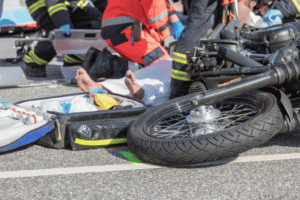


After a motorcycle crash in Las Vegas, your claim comes down to one thing: what you can prove. The other driver’s insurer already has a story ready — that you were speeding, splitting lanes, or riding recklessly — and evidence is what takes that story apart.
Glen Howard spent years on the insurance-defense side before he started fighting for riders, so he knows which pieces of evidence adjusters attack first and which ones actually win a motorcycle accident claim. Below is the evidence that proves fault and the full cost of your injuries in Nevada — and what you need to protect right now, before it’s gone.
Why Riders Have to Prove More Than Drivers Do
In a car-versus-car crash, both drivers usually get the benefit of the doubt. Riders don’t. Adjusters lean on an old assumption — that anyone on two wheels was taking a risk — and they use it to shift blame onto you before the facts are in.
That bias is exactly why evidence matters more in a motorcycle case than almost any other type of motor vehicle accident claim. Strong, well-documented proof is what forces an insurer to deal with what actually happened instead of the story they’d prefer to tell. The good news: rider bias is beatable. It just has to be met with facts.
The Key Types of Evidence in a Motorcycle Accident Claim
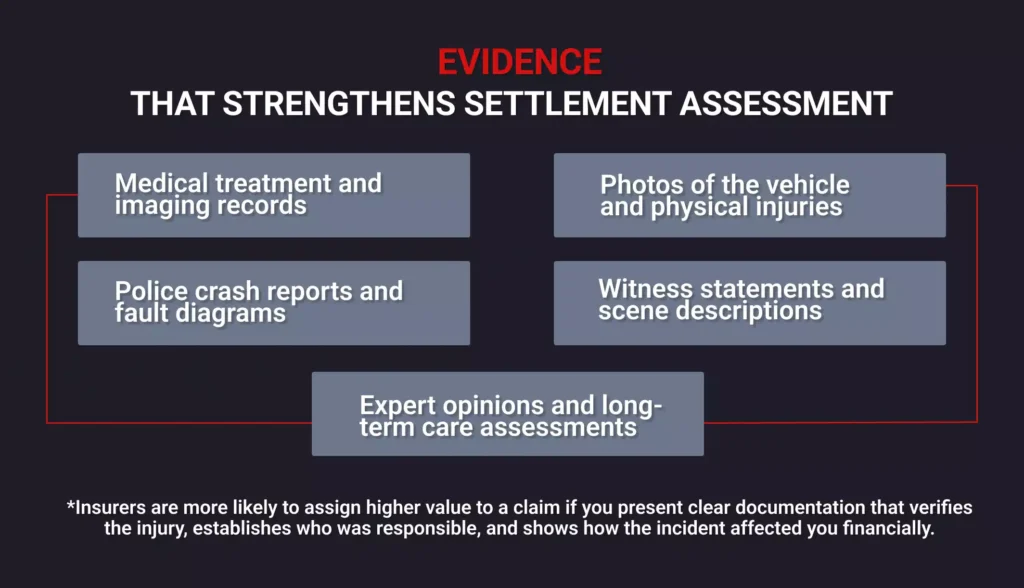
No single item wins a case. What wins is a stack of evidence that lines up and tells one clear story. Here’s what carries the most weight.
The scene itself
The crash scene starts disappearing the moment traffic starts moving again. Skid marks fade, gouge marks in the asphalt get driven over, and debris gets swept away — sometimes within hours on a busy stretch like the Strip or Sahara Avenue. Photos of the final resting positions, the point of impact, road conditions, sightlines, and any missing or blocked signage can pin down who had the right of way.
The crash report — and where it falls short
The police report is useful, but it isn’t the last word. Officers arrive after the fact, and their fault conclusion is an opinion, not a verdict. Reports also carry the same rider bias you’re up against. If the report gets the story wrong, other evidence can override it — which is why you never want the report to be the only thing your claim rests on.
Independent witnesses
A neutral bystander who saw the driver turn left across your path or blow a light is worth a lot. Their account can’t be dismissed as self-serving the way yours can. Names and numbers of witnesses vanish fast once everyone leaves the scene, so getting them early matters.
Video
This is often the single strongest piece of evidence. Traffic and intersection cameras at major Las Vegas junctions, security cameras on nearby casinos, gas stations, and businesses, and dashcam or helmet-cam footage can show the crash as it happened. Much of it gets overwritten on a loop in days, so it has to be identified and preserved quickly.
Your bike and your gear
Damage patterns on the motorcycle, the lean angle at impact, and scrapes on your helmet and gear help a reconstruction expert show speed and direction. Your gear also answers the “conspicuity” attack — if an insurer claims you were invisible, photos of your bike, lighting, and reflective gear push back.
Medical records and injury documentation
Your medical records are the backbone of the damages side of the claim. Prompt treatment, consistent follow-up, and clear notes connecting each injury to the crash are what prove the harm was real and caused by the collision — not something you had before.
Digital and vehicle data
The other driver’s phone records can reveal texting or calling at the moment of impact. Some vehicles store event-data-recorder (“black box”) information on speed and braking. This evidence usually takes a formal legal request to obtain, and the sooner that process starts, the better.
How to Prove a Motorcycle Accident Wasn’t Your Fault
Proving the crash wasn’t your fault is really about dismantling the specific accusation the insurer makes. In Las Vegas, the common ones are that you were speeding, lane splitting, or came out of nowhere.
Each has an evidence answer. Speed claims get checked against skid marks, vehicle damage, and crash-reconstruction math. Lane-splitting accusations matter because that maneuver isn’t legal in Nevada — but camera footage and lane-position evidence can show you weren’t doing it. “Came out of nowhere” usually falls apart against witness accounts and video showing the driver failed to yield.
This is where Nevada’s fault rule comes in. The state uses modified comparative negligence: if you’re found more than 50% at fault, you can’t recover, and if you share some smaller portion of blame, your compensation is reduced by that percentage. Insurers know this, so they push hard to load fault onto the rider. Evidence is what keeps your share low — or off you entirely. If the insurer is already blaming you, our breakdown of what happens when you’re partly at fault for a motorcycle crash walks through how that plays out. Every case is different, so treat this as general information, not advice on your specific facts.
The Injuries That Are Hardest to Prove — and How to Document Them
Some motorcycle injuries are obvious on an X-ray. Others are real, serious, and much harder to prove — which is exactly where insurers dig in.
The tough ones tend to be:
- Soft-tissue injuries — torn muscles, ligaments, and tendons that don’t always show on standard imaging.
- Concussions and traumatic brain injury — symptoms like memory trouble, headaches, and mood changes that are invisible and easy to downplay.
- Road rash and scarring — where the long-term impact on appearance and function needs documenting over time.
- Delayed-onset pain — injuries that surface days later, which insurers love to blame on something other than the crash.
The way you win these is documentation. See a doctor right away, describe every symptom, and keep every appointment. A consistent treatment record is far harder to attack than a gap. Photos of visible injuries as they heal, and a simple journal of pain and limitations, add proof that raw medical bills alone can’t. If your helmet came off or you weren’t wearing one, that raises its own questions — we cover those in whether you can still recover without a helmet.
How Evidence Builds Your Case — From Scene to Settlement
Every motorcycle accident claim has to answer three questions, and each one runs on evidence:
- Liability — who caused it. Proven by scene evidence, video, witnesses, and reconstruction.
- Causation — that the crash caused these specific injuries. Proven by prompt, consistent medical records.
- Damages — what it cost you. Proven by bills, wage records, and documentation of pain and lasting limitations.
Insurers attack the weakest link. A thin liability case invites a lowball offer. A treatment gap invites a “pre-existing” argument. The stronger and better-preserved your evidence, the harder it is to discount — and that’s what moves a settlement from insulting to fair. There’s no honest “average” motorcycle settlement, because value tracks the evidence, the severity of your injuries, how clear the fault is, and the available insurance coverage.
The catch is time. Camera footage gets overwritten, scenes get cleaned up, and memories fade. Nevada also sets a firm deadline to file, so waiting can cost you the claim entirely — the details are in our guide on how long you have to file a motorcycle claim in Nevada. The right first moves are laid out in what to do after a motorcycle accident, and if you’re wondering about the road ahead, here’s how long a motorcycle accident lawsuit takes.
Frequently Asked Questions
What evidence is most important in a motorcycle accident claim?
No single item — the strongest claims stack several sources that agree. Usually the heaviest hitters are video (traffic, business, or helmet-cam footage), independent witness accounts, scene evidence like skid and gouge marks, and thorough medical records tying your injuries to the crash. Video and witness information disappear fastest, so those are the priority to lock down early. A skilled Las Vegas motorcycle accident lawyer can also pursue evidence you can’t get on your own, like the other driver’s phone records or a vehicle’s black-box data, through the formal legal process.
How do I prove the crash wasn’t my fault as a rider?
You prove it by answering the specific accusation. If the insurer claims you were speeding, reconstruction from skid marks and vehicle damage can rebut it. If they claim lane splitting, lane-position and camera evidence can show otherwise. If they claim you appeared from nowhere, witnesses and video showing the driver failed to yield undercut that. Nevada reduces or bars recovery based on your share of fault, so keeping your percentage low is the whole game — and that’s driven by evidence, not by who tells the better story.
Does not wearing a helmet hurt my claim in Nevada?
Nevada requires every rider and passenger to wear a DOT-approved helmet, but not wearing one doesn’t automatically end your claim. It can give the insurer an argument to reduce compensation for head or neck injuries by tying them to the missing helmet — though it has no bearing on injuries a helmet wouldn’t have affected, like a broken leg. Because the analysis depends on your exact injuries, it’s worth reviewing your situation directly; we go deeper in our post on recovering without a helmet.
How much are most motorcycle accident settlements?
There’s no reliable “average,” and any firm quoting one is guessing. Real value comes from four things: how severe and lasting your injuries are, how clearly fault falls on the other party, the strength of your evidence, and how much insurance coverage is available. A well-documented claim with serious injuries and clear liability is worth far more than a thin one. The honest answer is that a case has to be reviewed before anyone can put a number on it.
How long do I have to file a motorcycle accident claim in Nevada?
Generally, Nevada gives you two years from the date of the crash to file a personal injury claim, and three years for property damage. Miss the deadline and the right to compensation is usually gone for good, no matter how strong the case was. Waiting also lets evidence disappear, so the practical deadline is much sooner than the legal one. Exceptions can apply in specific situations, which is why it’s smart to confirm your timeline early rather than assume you have plenty of room.

Talk to a Las Vegas Motorcycle Accident Lawyer
If an insurer is already hinting the crash was your fault, that’s not a reason to panic — it’s a reason to protect your evidence now, while it still exists. The footage, the witnesses, and the scene won’t wait, and neither should you.
At Howard Injury Law, Glen Howard uses his years on the insurance-defense side to get ahead of exactly these tactics for injured riders across Las Vegas — from the Strip to Summerlin to Spring Valley. He personally handles bodily injury cases, the firm has been recognized by the Nevada State Bar and named among Best Law Firms by U.S. News, and you pay nothing unless we win.
Not sure whether you have a case? That’s what a free consultation is for. Call our motorcycle accident attorneys in Las Vegas at (702) 331-5722, or request a free case review — tell us what happened, and we’ll tell you honestly what your claim looks like and what to preserve today.