


You’re stopped at the light replaying it in your head — you had the green, you’re sure of it — and the other driver is already telling the officer it was your fault. Intersection car accidents in Las Vegas so often come down to exactly this: two drivers, two versions, and an insurance company looking for a reason to pin the blame on you.
Here’s what should ease your mind: fault at an intersection isn’t settled by whoever talks loudest at the scene. It’s settled by evidence — and a Las Vegas car accident lawyer who knows how to collect it can be the difference between a denied claim and a fair recovery. This guide covers how these crashes happen, who’s usually at fault, and what actually proves it.
Why So Many Las Vegas Crashes Happen at Intersections
An intersection is the one place two directions of traffic legally cross paths, which concentrates risk by design. Add a few common Las Vegas driving habits and the odds climb fast.
- Speeding and red-light running. The most frequent citations at the valley’s high-crash intersections are speeding 11–20 mph over the limit and disobeying a steady red signal. Speed remains the leading factor in the area’s deadly crashes.
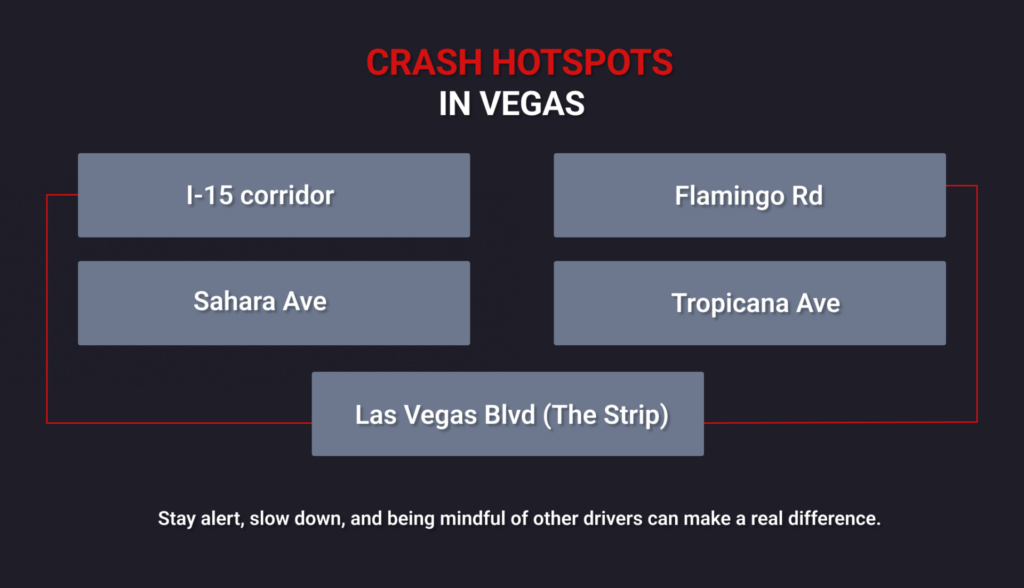
- Wide multi-lane arterials. Some Las Vegas intersections are enormous — Rainbow Boulevard and Flamingo Road run nine lanes across each way — which gives drivers more lanes to misjudge and more room to gamble on a late yellow.
- Tourists and GPS lag. Near the Strip, spots like Tropicana Avenue and Las Vegas Boulevard mix rental cars, rideshares, and visitors reacting a beat late to a navigation prompt, triggering sudden stops and lane changes.
- Repeat trouble spots. Corridors such as Charleston and Decatur Boulevards and Flamingo Road and Maryland Parkway show up on crash lists again and again, often worsened by ongoing construction.
If you want to see where these wrecks cluster across the valley, our overview of where crashes cluster in Las Vegas maps the busiest problem areas.
The Most Common Types of Intersection Crashes — and Who’s Usually at Fault
Not every intersection crash looks alike, and the type often points toward who’s responsible.
Left-turn and failure-to-yield crashes. Under Nevada law (NRS 484B.253), a driver turning left must yield to oncoming traffic that’s close enough to be a hazard. The turning driver is usually at fault — unless the oncoming driver ran a red light or was speeding, which can shift or share the blame. These often become violent side-impact collisions; our T-bone accident page digs into how those cases work.
Red-light-running crashes. A driver who enters on red is almost always at fault, but proving they had the red is the whole battle — which is where evidence comes in.
Rear-end crashes at a light. When someone stops for a signal and gets hit from behind, the rear driver is typically responsible for following too closely or not paying attention.
Right-turn and pedestrian conflicts. Drivers turning right on red must yield to pedestrians and cross-traffic already lawfully in the intersection.
As a general rule, a car approaching an intersection must yield to one already in it (NRS 484B.250), and every driver must obey the signal. Still, every crash turns on its own facts — an attorney who reviews yours can tell you where you realistically stand.
Intersection Crashes Are a Fault Fight — Here’s How You Win It
Because intersection crashes rarely come with a clean admission, they usually become disputed-liability claims, where each driver blames the other and the insurer looks for a reason to reduce or deny payment. Our guide to disputed liability claims in Las Vegas walks through how these play out.
What actually decides who’s at fault:
- The police report, including the officer’s opinion on fault and any citations issued
- Traffic-signal timing data that can show which direction had the green
- Camera footage — city traffic cameras, nearby business and doorbell cameras, and dashcams
- Independent witnesses, especially cross-traffic drivers who saw both signals
- Vehicle damage patterns and, in newer cars, event data recorder (“black box”) information
Fault also isn’t all-or-nothing in Nevada. The state follows modified comparative negligence: you can still recover as long as you’re found less than 51% at fault, though your compensation drops by your share of the blame. That rule is precisely what insurers exploit at intersections — every percentage point they shift onto you is money they keep. Our breakdowns of how fault is determined and Nevada’s comparative negligence rule explain how that math works against a lowball offer.

What to Do If You’re Hit at an Intersection in Las Vegas
The minutes right after the crash are when the evidence that clears you still exists. If you’re able:
- Call 911 and make sure a police report is filed — it’s a cornerstone of any disputed-fault claim.
- Photograph the signal if you can do so safely, along with the final positions of both vehicles, skid marks, and all damage.
- Get cross-traffic witnesses. The drivers stopped at the other approach saw which light was green. Grab names and numbers before they leave.
- Note which light you had while it’s fresh — write it down or record a quick voice memo.
- See a doctor even if you feel okay. Adrenaline masks injuries, and a treatment gap gives the insurer an argument. The evidence you’ll need for your claim starts with prompt medical records.
Getting Fairly Paid After an Intersection Accident
Disputed-fault cases are exactly the ones insurance companies undervalue, because a shred of doubt about who ran the light gives them room to argue you were partly to blame. That’s where Howard Injury Law’s background changes the equation. Founder Glen Howard spent years as an insurance defense attorney — the lawyer building these “you were partly at fault” arguments — so he knows the playbook and how to dismantle it.
A fair recovery should account for your full losses: medical bills and future care, lost wages, property damage, and non-economic harm like pain and reduced quality of life. If you’re trying to gauge what your claim is worth, our guide on how much your case is worth breaks down the pieces. And because these cases run on a contingency fee, you pay no attorney fee unless we win — so finding out where you stand costs you nothing.
Frequently Asked Questions
Who is at fault in an intersection accident in Las Vegas?
It depends on who violated the right of way. Nevada law sets clear rules: a left-turning driver must yield to oncoming traffic, a driver approaching an intersection must yield to one already in it, and everyone must obey the signal. So a driver who runs a red light or turns left into oncoming traffic is often at fault. But it’s rarely that tidy — the other driver may have been speeding or entered on a stale yellow, which can shift or share the blame. Nevada uses comparative negligence, so more than one driver can be assigned a percentage of fault. The final answer turns on evidence, not on who insists loudest at the scene.
What if the other driver says I ran the red light?
This is the most common intersection dispute, and it doesn’t decide your case. Their word is just a claim until it’s backed by proof. Fault gets settled by objective evidence: traffic-signal timing, camera footage from city cameras or nearby businesses, dashcam video, independent witnesses who saw both signals, and the vehicle damage patterns. A lawyer can move quickly to preserve footage before it’s overwritten and to track down cross-traffic witnesses who watched the lights. If the other driver is lying or mistaken, that evidence is what exposes it. Don’t accept fault or give a recorded statement to their insurer before you’ve talked to an attorney.
Can I still recover if I was partly at fault?
Yes, in most cases. Nevada follows modified comparative negligence with a 51% bar. As long as you’re found less than 51% at fault, you can still recover — your compensation is simply reduced by your share of the blame. If your damages total $100,000 and you’re assigned 20% of the fault, you’d recover $80,000. This is exactly why insurers push to inflate your percentage in disputed intersection crashes. A lawyer’s job is to keep your share as low as the facts allow, using the police report, video, and witness accounts to place fault where it belongs.
What evidence proves fault in an intersection crash?
The strongest evidence is objective and time-sensitive. That includes the police report and any citations, traffic-signal timing records showing which direction had the green, and video from traffic cameras, business surveillance, doorbell cameras, or a dashcam. Independent witnesses matter enormously at intersections, especially cross-traffic drivers who saw both signals. Physical clues — skid marks, debris fields, and the point and angle of impact — help reconstruct what happened, and many newer vehicles store speed and braking data in an event data recorder. Much of this disappears fast, so preserving it early is critical. Photograph everything you safely can at the scene, and get names and numbers before witnesses leave.
How long do I have to file after a Las Vegas intersection accident?
In Nevada, you generally have two years from the date of the crash to file a personal injury lawsuit (NRS 11.190(4)(e)). Miss that deadline and the court can dismiss your case, no matter how clear the other driver’s fault was. There are narrow exceptions — claims involving a government entity, for example, follow different and often shorter notice rules — so the safest move is to talk to a lawyer well before the two-year mark. Acting early also protects the perishable evidence that decides intersection cases, since camera footage and witness memories fade within days, not years.
Talk to a Las Vegas Intersection Accident Lawyer
If you were hurt at an intersection and the other driver is already blaming you, the most useful next step is simple: get an honest read on who’s actually at fault before you say anything to an insurer or accept an offer. That one conversation can keep you from signing away a claim that’s stronger than you think.
Howard Injury Law offers a free, no-pressure consultation. We’ll tell you whether you have a case, what it may be worth, and how we’d prove fault — with no fee unless we win. Call (702) 331-5722 or request your free consultation, and let’s talk about what happened at that intersection.