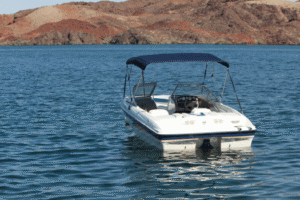


Yes, in many cases you can still sue even if you signed a waiver for a boat or jet ski rental in Las Vegas. Nevada courts enforce some of these forms and refuse to enforce others, and the difference comes down to what the paper says, how you came to sign it, and what the rental company did or failed to do.
If you got hurt on Lake Mead, Lake Mohave, or the Colorado River and you keep replaying the moment you signed at the counter, this is for you. That signature is where the legal question begins. It is rarely where it ends.
Does Signing a Rental Waiver Mean You Can’t Sue in Nevada?
No. A waiver is a contract, and Nevada treats it like one that deserves extra suspicion.
Nevada courts have said for decades that agreements releasing a business from its own carelessness are not favored. Judges read them strictly. The wording has to make the release unmistakable, any unclear language is read against the company that wrote it, and the company carries the burden of proving the form covers what happened to you.
That is a very different picture from the one the rental desk paints. The form is a defense the company gets to raise. It is not an automatic win, and plenty of boat and jet ski accident claims near Las Vegas move forward with a signed waiver sitting in the file.
When You Can Still Sue After Signing a Jet Ski or Boat Rental Waiver
Most successful claims fit one or more of the situations below. You only need one.
The Form Doesn’t Clearly Release the Company’s Own Negligence
Many rental forms spend a page listing the “inherent risks of boating” such as waves, weather, and other vessels. That is not the same as clearly saying, “You give up the right to sue us if our own carelessness hurts you.”
If the release is vague, buried, or written so broadly that nobody could tell what it covers, a Nevada court can refuse to stretch it to fit your injury.
You Were Rushed and Never Told the Real Risks
Nevada looks at whether you actually knew the danger you were supposedly accepting. A signature alone does not settle that.
Courts weigh how the form was presented. Were you handed a clipboard with a line of people behind you? Did anyone explain that most jet skis lose steering the second you let off the throttle? Did the “safety briefing” last ninety seconds on a hot dock at Callville Bay or Hemenway Harbor?
Skimming a form does not automatically free you from it. But when a company hurries first-time riders through paperwork and onto the water, the question of what you understood is often one a jury gets to decide.
The Rental Company Skipped What Nevada Boating Law Requires
Rental businesses on Nevada’s interstate waters, which include Lake Mead, Lake Mohave, and the Colorado River, have duties written into state law. They must list the name and age of every authorized operator on the rental agreement. They must give each operator a summary of the boating rules and instructions for safe operation before the vessel leaves. They cannot send a motorboat out without the safety equipment the law requires.
Nevada also sets a minimum age of 14 to operate a personal watercraft and requires a life jacket on every rider.
A company that hands the keys to an unlisted 12-year-old, skips the instructions, or sends out a jet ski with no working engine cutoff lanyard has a problem a waiver may not fix. A business generally cannot use its own form to excuse itself from safety rules the state imposed to protect you.
The Conduct Went Beyond Ordinary Carelessness
Courts are far less willing to enforce a waiver when the conduct was reckless or grossly negligent. Think of a company that knew a throttle was sticking and rented the jet ski anyway, ignored earlier complaints about a steering cable, or rented to someone who was visibly drunk.
A waiver is meant to cover the ordinary risks of a day on the water. It was never meant to be a license to ignore a known danger.
The Person Who Hurt You Isn’t Covered by the Form
Your waiver is an agreement between you and the rental company. It does not protect strangers.
If another boater ran over your wake line, a drunk operator hit you near Boulder Basin, or a defective part failed, those people and companies never signed anything with you. The other operator, the boat’s owner, and the manufacturer can all be responsible regardless of your rental paperwork. The same is true on land, where several parties can share liability for one crash.
You Never Signed It
Often one person in the group signs for the rental and everyone else climbs aboard. A contract generally binds the people who agreed to it. If you were a passenger who never signed, the company may have a hard time using that form against you.
Children are a separate question. Whether a parent’s signature can sign away a child’s injury claim is not as settled in Nevada as rental companies suggest, and it deserves a close look before anyone assumes the claim is gone.
When Waivers Usually Hold Up
You deserve the other half of the answer too. A waiver is more likely to be enforced when:
- The release plainly says you are giving up claims for the company’s negligence, in language you could find and read.
- You had time to read it, nobody pressured you, and you got a real safety briefing.
- The injury came from an ordinary risk of the activity, like falling off in choppy water or hitting a wake, with no equipment failure and no rule broken by the company.
- The crash came down to your own operating mistake on a properly maintained machine.
If that sounds like your situation, a claim against the rental company will be difficult. Even then, a claim against someone else on the water may still be open.
What If the Rental Company Says the Crash Was Your Fault?
Expect it. Blaming the renter is the second line of defense right behind the waiver.
Nevada uses modified comparative negligence. You can recover compensation as long as you were not more than 50 percent at fault, and your recovery is reduced by your share. Being partly to blame shrinks a claim. It does not erase one, and Nevada’s comparative negligence rule applies on the water as it does on the road.
Watch for two other pressure points. The company may charge your card for damage to the boat, and the agreement may say you must cover the company’s losses. Neither one decides who was legally at fault. Do not pay a disputed damage bill or sign a “damage acknowledgment” because you feel cornered at the dock.
Lake Mead Adds a Second Layer of Law
Lake Mead and Lake Mohave sit on the Colorado River and touch both Nevada and Arizona. Because of that, federal maritime law can apply alongside Nevada law, and it has its own rules about waivers, shared fault, and deadlines.
Which body of law governs your case depends on the details of where and how the accident happened. It can change what a waiver is worth, which is one more reason the form needs to be read by someone who handles water cases and not only car crashes.
What to Do Now If You Signed a Waiver and Got Hurt
A few steps protect your claim, even if you are already back home in another state.
- Keep every document. That means the rental agreement, the waiver, your receipt, and any confirmation emails or texts. If you never got a copy of what you signed, write that down, because it matters.
- Sign nothing new. Incident reports, damage forms, and refund offers sometimes contain a second release.
- Save photos and names. Take pictures of the jet ski or boat, your injuries, and the dock, and get contact information for anyone in your group or nearby.
- Write down the briefing. Note who gave it, how long it lasted, and what they did and did not explain.
- Hold off on recorded statements. An adjuster’s friendly call is evidence-gathering, and you can decline a recorded statement until you have talked with a lawyer.
- Mind the clock. Nevada generally gives you two years to file a personal injury lawsuit, and rental companies do not keep maintenance logs and dock video forever.
How a Former Insurance Defense Attorney Reads a Rental Waiver
Before founding Howard Injury Law, Glen Howard defended insurance companies. He knows how a waiver gets used. The insurer leads with it, hoping the injured person gives up before anyone tests the form.
So Glen reads it the way the defense would, looking for the weak points. Does it clearly release negligence? Who is named, and who is not? How was it signed? What did the rental company’s own records say about that machine and that renter?
Every case turns on its own facts, and nothing here is advice about yours. But the question of whether your waiver holds up should be answered by an attorney who has read it, and not by the business that wrote it. If you are unsure whether you need help at all, here is a plain look at who needs a boat accident lawyer.
Frequently Asked Questions
Is a jet ski rental waiver legally binding in Nevada?
It can be, but not automatically. Nevada allows businesses to use liability waivers, and courts will enforce one that clearly releases the company’s negligence and was signed by someone who understood the risk. Courts also read these forms strictly and against the company that wrote them. A waiver with vague wording, one signed in a rush with no real explanation, or one used to excuse reckless conduct or a broken safety rule can fail. Whether yours is binding depends on its exact language and the facts of your rental, which is why the document itself needs to be reviewed.
Can I sue if I didn’t read the waiver before signing?
Possibly. Not reading a contract does not cancel it, and Nevada generally holds people to what they sign. But a rental waiver raises a second question, which is whether you actually knew the risk you were agreeing to take on. Nevada courts look at how quickly the form was obtained and what both sides understood at the time. If staff rushed you through the paperwork and never explained how the jet ski handles or what could go wrong, that can keep your claim alive even with your signature on the page.
Does a waiver cover a passenger who didn’t sign it?
Generally, a waiver binds the people who agreed to it. If a friend or family member signed for the rental and you rode along without signing anything, the rental company may not be able to use that form against you. Companies sometimes argue the signer agreed on behalf of the whole group, so the wording matters. A passenger may also have a claim against whoever was operating the boat or jet ski, and against any other boater who caused the crash, none of whom are protected by the rental paperwork.
What if the rental jet ski was defective or poorly maintained?
Then the waiver is on weaker ground. A rental company is responsible for the condition of the watercraft it puts on the water, and Nevada law bars a rental business from sending out a motorboat without required safety equipment. Renting a machine with a known mechanical problem can move the case past ordinary carelessness, where courts are much less willing to enforce a release. If the failure traces back to a design or manufacturing defect, the manufacturer may also be responsible, and it was never a party to your rental agreement.
I was visiting Las Vegas. Can I still bring a claim from home?
Yes. Many people hurt on rented boats and jet skis near Las Vegas are visitors, and going home does not end your rights. A claim arising from an accident here is generally handled under Nevada or federal maritime law no matter where you live. Most of the work, including collecting records, dealing with insurers, and negotiating, can be done by phone, email, and video. What you should not do is wait, because evidence held by the rental company gets harder to obtain with time.

A Signature Isn’t a Verdict
You signed a form at a rental counter because that was the only way to get on the water. That does not mean you agreed to be hurt by a broken machine, a skipped safety briefing, or someone else’s recklessness.
Here is a concrete next step. Find the rental agreement, or just the name of the company and the date, and call (702) 331-5722 or request a free case review. A Las Vegas boat accident lawyer who spent years on the insurance side will read the waiver and tell you plainly whether it stands in your way.
The review costs nothing, and you pay no fee unless we win. Howard Injury Law’s motor vehicle accident attorneys in Las Vegas represent injured people across Nevada, on the road and on the water.