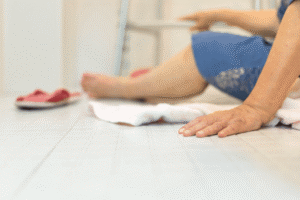
Yes, a store can blame your shoes for a slip and fall, and its insurance company very likely will. But blaming your shoes and proving your shoes caused the fall are two different things. In Nevada, a footwear argument can reduce a claim. It rarely defeats one, and the evidence usually points back at the floor.
If the manager or an adjuster has already asked what you were wearing, you’re not imagining the shift in tone. That question is the opening move of a defense strategy. Here’s how it works, what it’s really worth under Nevada law, and how to keep it from shrinking your claim.
Why Stores Blame Your Shoes After a Slip and Fall
For a store and its insurer, the shoe argument is cheap. It costs nothing to raise, almost everyone is wearing something a lawyer can criticize, and it shifts attention away from the spill, the wet mop or the cracked tile that actually put you on the ground.
Glen Howard knows this playbook from the inside. Before founding Howard Injury Law, he worked as an insurance defense attorney, defending insurers against injury claims. Footwear is a standard line in that script because it doesn’t have to win. It only has to shave a few percentage points off what the store pays.
Shoes are also one piece of a bigger “blame the shopper” approach. Expect questions about your phone, whether the hazard was obvious, and any old injuries too.
How Stores and Insurers Use Your Footwear Against You
The “Wrong Shoes” Argument
The argument changes with whatever you had on. Common versions include:
- Flip-flops or sandals: “Open shoes don’t grip. Anyone would slip in those.”
- High heels or wedges: “She lost her balance because of the heel, not the floor.”
- Smooth or dress soles: “Leather soles are slick on tile, and that’s on the customer.”
- Worn tread: “The soles were bald. A reasonable person would have replaced them.”
- Work or athletic shoes: Even these get questioned, usually over tread wear or how they were laced.
Notice the pattern. No matter what you wore, there’s an angle. That alone tells you how much weight the argument deserves.
Where It Shows Up
The footwear question rarely arrives as an accusation. It comes in quietly:
- At the scene: a manager asks what happened, then glances at your feet and writes it down.
- On the incident report: a line about your shoes, or a box to check.
- In the adjuster’s call: “Just for our file, what kind of shoes were you wearing?” That answer often lands in a recorded statement.
- In a lawsuit: the defense may ask to inspect or test the actual shoes.
Every one of these is a chance to lock you into a description that helps the store later. That’s why what you say and what you keep both matter.
Nevada’s Shared-Fault Rule: What a Shoe Argument Is Really Worth
Nevada uses a modified comparative negligence rule. If you’re partly at fault for your fall, your compensation is reduced by your share of the blame. You’re barred from recovering only if your fault is greater than the fault of the parties you’re pursuing. With a single store as the defendant, that means more than 50%.
Here’s what that looks like in practice. Say your losses total $60,000:
- If the store convinces a jury your shoes were 10% of the problem, you recover $54,000.
- At 30%, you recover $42,000.
- At 51% or more, you recover nothing.
Every point of fault is real money, which is exactly why the insurer fights for each one. You can read more about how comparative negligence works in Nevada, including how fault percentages get assigned.
Two things work in your favor. First, shared fault is a defense the store has to raise and back with evidence. It isn’t your job to prove you wore the perfect shoes. Second, if you’re found fault-free, the math changes again. When more than one party caused the fall, such as a store and its floor-cleaning contractor, a fault-free person can generally collect the full award from any one of them.
Why Your Shoes Usually Aren’t the Real Cause
Would Anyone Have Slipped?
The strongest answer to the shoe argument is a simple question: would a careful person in ordinary shoes have gone down in the same spot?
Spilled soda on polished tile, a freshly mopped aisle with no warning sign, or a puddle from a leaking cooler will take out sneakers just as fast as sandals. When the hazard is slick enough to drop almost anyone, footwear stops being the cause and becomes background detail. Engineers and safety experts can sometimes test the floor surface itself, and those results often say more than anything about your soles.
Las Vegas Dresses for the Heat
Las Vegas stores know their customers. When it’s 110 degrees in July, shoppers in Summerlin, Henderson and Spring Valley walk into grocery stores in sandals and flip-flops. That isn’t careless. It’s normal, and businesses here plan around it, or should.
The same goes for resorts on the Strip, where polished marble runs from the valet entrance to the casino floor. Visitors wear heels to dinner and shows. If a property chooses slick flooring for its look, it takes on the job of keeping that floor dry and safe for the people it invites in. Resort falls raise their own questions about who controls the floor, so it helps to understand how casino injury claims in Las Vegas work.
Monsoon season adds another layer. A summer storm sends people tracking rainwater across entry tile in minutes. A store that doesn’t put down mats, post warnings or check the entrance can’t fairly blame the shoes that walked in from the rain.
When Footwear Can Actually Matter
Honesty helps your case here, so it’s worth saying plainly: sometimes shoes do play a part. A heel that snapped before you fell, a sole that was already peeling off, or footwear plainly wrong for a hazard you knew about can shift some fault to you.
Even then, the store still had its own duty to find and fix dangerous conditions. A footwear issue usually reduces a claim rather than ending it. An experienced attorney will look at both sides before an insurer gets the chance to exaggerate one.
How to Protect Your Claim From the Shoe Defense
What you do in the first days after a fall decides how well the shoe argument holds up. Focus on these steps:
- Keep the shoes. Don’t wear them, wash them or throw them out. Put them in a bag and store them somewhere safe. Clean, intact shoes with good tread are some of the best evidence you have.
- Photograph the soles and the floor. Take clear pictures of the bottoms of your shoes, plus the spill, the wet area or the damaged surface, before anything gets cleaned up.
- Stick to facts on any report. Describe where you fell and what was on the floor. Don’t guess about why you slipped or apologize for your shoes. Here’s what to know before you sign an incident report after a slip and fall.
- Lock down the video. Store footage can show other people slipping in the same place or how long the hazard sat there. Learn how long stores keep surveillance after a fall and why speed matters.
- Go after the records. Sweep and inspection logs can show the store skipped its checks. Here’s how to get store inspection logs after a slip and fall.
- Skip the recorded statement. You don’t have to describe your footwear to the store’s insurer on tape. Talk to a lawyer first.
What a Shoe Argument Does to Your Settlement
Most people searching this question really want to know two things: can they still get paid, and how much. There’s no fixed value for a slip and fall case in Nevada. The number depends on your medical bills, lost income, how long recovery takes, and how clearly the evidence shows the store knew or should have known about the hazard.
The shoe argument works directly against that number. When an adjuster makes an offer, it often has a fault percentage quietly built in. A first offer that seems low may assume you were 30% or 40% to blame for your shoes, even if the evidence doesn’t support it. Pushing that percentage back toward zero is often the difference between a lowball offer and a fair one.
Your own fault isn’t the only thing that cuts value. Gaps in treatment and missing documentation matter too. Here’s a closer look at what reduces the value of a personal injury settlement. Keep the deadline in mind as well: Nevada generally gives you two years from the date of the fall to file an injury lawsuit, and evidence like video can disappear in days.
If a store is already pointing at your shoes, that’s a sign it’s preparing to fight. A Las Vegas slip and fall lawyer can answer the argument with evidence before it sets the tone for your whole claim.

Frequently Asked Questions
Can I still sue if I was wearing flip-flops or high heels when I fell?
Usually, yes. Nevada doesn’t require shoppers to wear any particular kind of shoe, and flip-flops and heels are everyday footwear in Las Vegas. The question is whether your shoes, rather than the store’s hazard, caused the fall. If the floor was wet, slick or damaged, the store’s failure to fix or warn about it is often the main cause no matter what you wore. At most, the store may argue your footwear makes you partly at fault, which reduces your recovery by that percentage. You’re only barred if your share of fault is greater than the store’s. Every case turns on its own facts, so it’s worth having an attorney review yours before you assume your shoes ruined your claim.
Should I keep the shoes I was wearing when I slipped?
Yes. Keep them exactly as they were, and don’t wear, clean or repair them. Put them in a bag, note the date, and store them somewhere they won’t get thrown out. If the store claims your shoes caused the fall, the shoes themselves are often the best way to prove otherwise. Good tread, solid construction or proof that the shoes were nearly new can shut that argument down. If you’ve already thrown them away, take photos of a similar pair, find the receipt or order history, and tell your lawyer. Losing the shoes doesn’t end a claim, but keeping them makes the store’s job much harder.
Can I sue for slipping in a store in Las Vegas?
You can if the store was careless and that carelessness caused your injury. Falling alone isn’t enough. In Nevada, you generally need to show the store created the hazard, knew about it, or should have found it through reasonable inspections, and then failed to fix it or warn you. Evidence like surveillance video, sweep logs, witness statements and photos of the floor makes that case. If the store argues you share the blame, your recovery may be reduced, but not eliminated unless your fault is greater than the store’s. Most claims resolve with the store’s insurer without a trial. You generally have two years from the fall to file a lawsuit, though acting quickly protects evidence.

They’ll Blame Your Shoes. Talk to a Lawyer Who Knows Their Playbook.
If you’re replaying the fall and wondering whether it was your fault, stop and get the facts first. A store pointing at your shoes doesn’t mean you caused your injury. It means the store’s insurer is already working to pay you less.
Glen Howard is a licensed Nevada attorney and a former insurance defense lawyer. He knows how adjusters build the shoe argument because he’s seen it from their side, and he knows what evidence takes it apart. As your premises liability attorney, he’ll look at what the store knew, what the video shows and whether your footwear really matters.
Not sure you have a case? Tell us what happened. The review is free, and you pay no fee unless we win. Before you give a recorded statement or answer another question about your shoes, request your free case review and find out where your slip and fall claim in Nevada really stands.