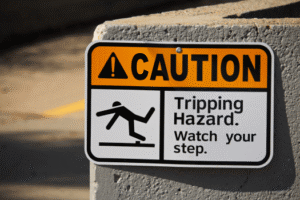
No, you don’t have to sign an incident report after a slip and fall, and you usually shouldn’t sign one a store employee wrote for you. You do want the fall reported, though, in your own words, before you leave. That report is often the first piece of evidence in a Las Vegas slip and fall claim, and it can help you or hurt you depending on what ends up on the page.
Here’s how to handle the form, the manager holding it, and the phone call from the insurer that usually comes next.
Should You Sign an Incident Report After a Slip and Fall?
There’s no Nevada law that requires a customer to sign a store’s incident report. The form belongs to the business. A manager or security officer fills it out, and it goes to the store’s risk department and its insurance company, not to you.
That’s why the safest approach is simple: report the fall, give the basic facts, and politely decline to sign anything you didn’t write or don’t fully agree with. “I’d rather not sign anything today, but please note that I fell and I’m hurt” is a complete answer.
If you’re unsure, it’s fine to say you want to talk to someone first. Nobody can make you sign on the spot.
Why That Report Can Prove They Knew, or Help Them Blame You
Falling on someone else’s property isn’t enough to win a claim in Nevada. You generally have to show the business created the hazard, knew about it, or should have found it with reasonable inspections. That’s called notice, and it’s the heart of proving a slip and fall claim in Las Vegas.
The incident report sits right in the middle of that fight.
What the Report Can Prove
An honest report written minutes after a fall often captures details the store would rather forget. An employee might mention the spill had been there “for a while,” that a customer already warned them, or that staff were “just about to clean it.” A note that an employee was mopping without a sign, or that a display was leaking, can show the business created the hazard itself.
Those details are notice evidence. They’re also the kind of thing that quietly disappears from later versions of the story.
How It Gets Used Against You
The same form can be written to protect the store. Look out for lines like “customer was looking at phone,” “customer stated she was fine,” or “area was dry when inspected.” A store may also write its own guess about what caused your fall.
Once your signature is under those words, an insurer will treat them as your version of events. Nevada uses comparative fault, so anything suggesting you were careless can be used to shrink what you recover.
Does a Fall Require an Incident Report?
As a customer, you’re not legally required to report a fall. You should anyway. A report made before you leave the property creates a timestamp, ties your injury to that location, and puts the business on record that something happened. Without one, the store can later claim it never heard about it.
Where you fell changes who you tell:
- A store, restaurant, or shopping center: Ask for a manager and ask that a report be made.
- A Strip resort or casino: Report it to security. Resorts have their own claims process, covered in our guide to casino and hotel injury claims.
- Your apartment complex: Report it in writing through the tenant portal or by email so there’s a dated record. Here’s more on who is liable when you’re hurt at your apartment complex.
- Your workplace: This is the one situation with a legal deadline. Nevada requires an injured worker to give the employer written notice within 7 days. If someone other than your employer caused the fall, you may also have a workers’ compensation and third-party injury claim.
What to Say (and Not Say) When the Manager Shows Up
Most people who fall feel embarrassed and want to leave fast. Take two minutes. What you say now will be written down.
Stick to the Facts
Tell them where you fell, when it happened, and what you slipped or tripped on. Describe what you saw: “There was clear liquid on the floor in aisle 9, and there was no wet floor sign.” Say that you’re hurt and where it hurts.
That’s enough. Short, factual, and accurate.
Leave These Out
- Apologies. “Sorry, I’m so clumsy” reads like an admission.
- “I’m fine.” Injuries from falls, especially to the back, hips, wrists, and head, often get worse over the next day or two.
- Guesses about the cause. Don’t speculate about your shoes, your pace, or whether you “should have seen it.”
- Anything about your phone or what you were doing. If they ask, you can say you’d rather just describe the hazard.
What Not to Sign at the Scene
Managers sometimes arrive with paperwork ready. Before your name goes on anything, know what you’re looking at. Don’t sign:
- A statement the employee wrote for you. Even if it seems close, the wording matters.
- A form with facts you disagree with. Wrong times, wrong location, or “customer not injured” can follow you through the whole claim.
- Anything tied to a gift card, voucher, or refund. Some come with release language that can end your claim before you know how badly you’re hurt.
- A medical authorization. It can give the insurer access to years of unrelated health records.
You can decline politely: “I’m not signing anything today. I’ll provide my own written account.” Then follow through and write it the same day.
What to Do Instead: Build Your Own Record
Instead of relying on the store’s version, start your own file.
- Get the report number and a name. Write down who took the report and their title. Ask for a copy. Stores often refuse, and that’s normal. An attorney can pursue it through the claim.
- Write your own account the same day. What happened, what you saw on the floor, what employees said, who was there. Date it.
- Photograph the hazard. Capture the spill or defect, the lack of warning signs, the lighting, and the area around it.
- Get witness names and phone numbers. Independent witnesses carry weight.
- Note the cameras. Look up and see where they point. Footage can be recorded over quickly, so time matters.
- See a doctor the same day. A gap in care is one of the first things an insurer points to.
- Keep your shoes and clothes. Don’t wash or toss them. Stores often argue footwear caused the fall.
Whether the hazard was a spilled drink at a grocery store off Rainbow and Sahara or a torn mat at a Summerlin shopping center, the goal is the same: lock in what the floor looked like before anyone cleans it up. For a look at the hazards behind most claims, see these common causes of slip and fall accidents.
When the Store’s Insurance Adjuster Calls
Within days, you may get a friendly call from the store’s insurer or a third-party claims company. That adjuster already has the incident report. Their job is to fit your story to it.
You don’t have to give them a recorded statement. Take their name and claim number, and let an attorney handle the conversation. Here’s why you should think twice before giving a recorded statement.
If the call comes with a quick offer, don’t sign the release that goes with it. A signed release generally closes your claim for good. Read more on whether to accept the first settlement offer.
Already Signed It? Your Claim Isn’t Over
A lot of people sign without thinking. You were hurt, flustered, and someone in a store uniform told you it was routine. That happens all the time.
Signing an incident report is not the same as signing a release. In most cases it doesn’t waive your right to bring a claim. It may mean your attorney has to address what the form says, and that’s where the rest of the evidence comes in: your photos, your medical records, witness accounts, the store’s own logs, and what employees knew. If you did sign a release or accepted money, a lawyer can still review exactly what you signed and tell you where you stand.

Frequently Asked Questions
Can I get a copy of the incident report after a slip and fall?
You can ask, and you should. But most stores, restaurants, and resorts won’t hand over their internal incident report on the spot. The report is written for the business and its insurer, and many companies have a policy of keeping it in-house. That doesn’t mean it’s gone for good. Once you have an attorney, your lawyer can request it during the claim and, if a lawsuit is filed, pursue it through the legal process, along with related records like surveillance video and inspection logs. In the meantime, write down the report number and the name of the person who took it, and keep your own written account. Your notes may end up being the most reliable record of what happened that day.
Is it worth reporting an accident to insurance?
After a fall, think about two different insurance companies. Your own health insurance is usually what pays your medical bills right away, so use it for treatment. Keep in mind your health plan may later ask to be repaid from any settlement, which your attorney can work through. The store’s insurance company is different. The business reports the fall to its own insurer, and you don’t owe that company a recorded statement or a signed form. Reporting the fall to the property itself is worth it, because it creates a record. Talking at length with the property’s insurer before you understand your injuries usually isn’t. Let an attorney handle that contact.
What is a good settlement offer for a slip and fall?
There’s no standard number. A fair offer depends on your medical bills and future treatment, lost income, how the injury affects your daily life, and how strong the evidence is that the business knew about the hazard. The store’s insurer will also argue about your share of fault. Nevada lets you recover as long as you aren’t more at fault than the business, but your recovery is reduced by your percentage. Be wary of any offer that arrives before you’ve finished treatment. Early offers are often based on bills to date, and the release that comes with them usually ends the claim permanently. An attorney can value the full claim before you decide.

Signed or Not, Find Out What the Store Knew
If you’re staring at a form you signed, or a manager is pushing you to sign one, you’re not stuck. What matters most is what the business knew about that hazard and when, and that’s what a Las Vegas slip and fall attorney digs into first.
Glen Howard spent years as an insurance defense attorney. He’s seen how claims departments use incident reports and early statements to shrink claims, and he uses that knowledge to protect injured people across Nevada. Most premises claims have a two-year deadline, and some, like falls on government property, have extra requirements, so don’t wait on the footage or the paperwork.
Not sure whether you have a case? Get a free case review. There’s no fee unless we win, and you can learn more about Nevada premises liability claims while you heal.
Every case is different. This article is general information, not legal advice for your situation.