

One second you’re braking for slowing traffic near the Spaghetti Bowl. The next, you hear metal folding behind you and feel your car shoved forward into the one ahead. An I-15 freeway pileup happens that fast — a single hard stop turning into a chain of eight, ten, fifteen vehicles before anyone can react. If that’s what just happened to you on a Las Vegas freeway, you’re probably shaken, unsure who caused it, and quietly worried that with this many cars involved, no one will be held responsible and you’ll be stuck with the bills.
You won’t be. A multi-car pileup is chaotic, but Nevada law still sorts out who’s responsible and who pays. Here’s what’s really going on when I-15 backs up into a wreck, what to do in the moments after, and how these claims actually get resolved.
Why I-15 and the Spaghetti Bowl produce chain-reaction pileups
The Spaghetti Bowl — where I-15 meets US-95 just north of downtown — moves more than 300,000 vehicles a day through a tangle of merges, splits, and short weaving lanes. That design was drawn up in the 1960s, long before Las Vegas grew into the valley it is now. The result is a stretch where drivers cross several lanes in a few hundred feet, brake suddenly for backups, and misjudge gaps at freeway speed.
I-15 itself compounds the risk. The corridor from Sahara south through the Tropicana and airport interchanges runs heavy and stop-and-go, and weekend surges of California traffic pack it even tighter. Add glare, blowing dust, or a sudden slowdown, and you have the exact conditions that turn one rear-end tap into a wall of crumpled cars. These aren’t freak events — I-15 consistently ranks among the highest-crash corridors in Clark County.
How one mistake becomes a multi-car pileup
Almost every pileup starts with a single act of negligence — a driver following too closely, glancing at a phone, or speeding into slowing traffic. That first collision creates an unexpected hazard: stopped cars and debris in a live travel lane. Drivers behind, carrying inadequate stopping distances at 65 mph, can’t shed speed in time. Each impact pushes vehicles into the next, and the chain reaction feeds itself.
Low visibility makes it worse. Dust storms off the desert, sun glare on the westbound afternoon commute, or nighttime confusion around the interchange can hide the wreck ahead until it’s too late to stop. That’s why the “3-car chain” people picture rarely stops at three cars on a Las Vegas freeway — once the hazard exists, every following driver becomes a potential link. Understanding that chain is the whole game in a multi-vehicle accident claim, because it’s how fault gets traced back through the wreck.
What to do if you’re caught in a pileup on I-15
Your first job is survival and self-preservation, not fault. In the seconds and minutes after a pileup:
- Get to safety. If your car still moves and it’s safe, ease it out of live lanes toward the shoulder or an exit ramp. If it doesn’t, stay belted, put your hazards on, and wait for a gap before getting out — secondary collisions are the biggest danger in a pileup.
- Call 911. With this many vehicles, you want Nevada Highway Patrol or Metro on scene. A police report documenting the sequence is critical when several drivers are involved.
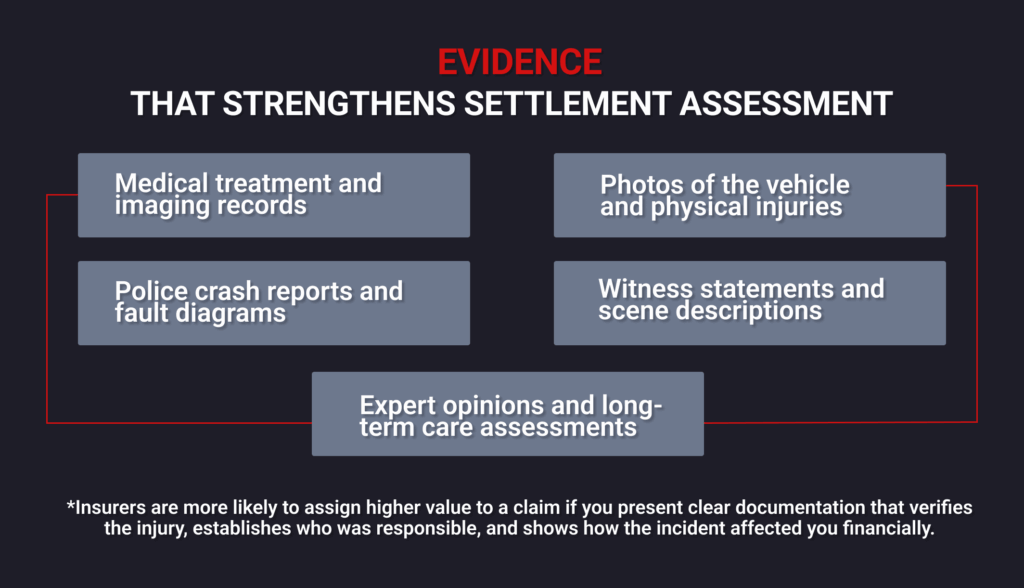
- Document what you can. Photograph your car, the vehicles around you, positions, and the road. Note the order of impacts if you saw it. Get names and insurance info from every driver you can reach.
- Check real-time delays and alternate routes. Once you’re safe, platforms like KTNV and local traffic apps show which I-15 ramps and lanes are blocked. Drivers routinely peel off onto Martin Luther King Boulevard or surface streets to bypass a downtown backup. Our injury helpline at HILhelps is also a place to turn when you need help sorting out what to do next after a Las Vegas crash.
Who’s at fault when a dozen cars are involved?
This is the fear driving most people who search after a pileup: if everyone hit someone, is everyone at fault, so no one pays? No. Nevada doesn’t throw up its hands because the wreck is complicated. Fault gets apportioned — investigators and insurers reconstruct the sequence and assign a percentage of blame to each driver who contributed.
Nevada follows a modified comparative negligence rule, which means you can still recover money even if you were partly at fault, as long as your share isn’t greater than the other drivers’ combined share. Your recovery is reduced by your percentage of blame, not erased. Sorting out those percentages in a chain reaction is genuinely difficult work, and it’s where these claims are won or lost — we break it down further in our guide on how fault is determined in a multi-car pileup. Every crash is different, so treat this as general information and talk to an attorney about your specific sequence.
Why one insurance policy often can’t cover everyone hurt
Here’s the practical problem a pileup creates. Nevada’s minimum liability coverage is 25/50/20 — $25,000 per person, $50,000 per accident for bodily injury. When ten people are injured in one wreck, a single at-fault driver’s policy can’t come close to covering everyone’s medical bills and lost wages. Multiple insurers get pulled in, each trying to pin blame elsewhere and pay as little as possible.
That’s when your own coverage can matter. Uninsured and underinsured motorist (UM/UIM) protection may fill the gap when the at-fault driver’s limits run dry. Untangling which policy pays what — and pushing back when carriers point fingers — is exactly the fight described in what happens when multiple insurance companies battle over one crash. It’s also why handling a serious chain-reaction crash in Las Vegas on your own puts you at a real disadvantage.
Frequently Asked Questions
What was the deadliest car pileup in U.S. history?
It depends on how you measure it. By lives lost, the deadliest was the November 1991 dust-storm pileup on Interstate 5 near Coalinga, California, where a wall of blowing dust triggered a chain reaction involving more than 100 vehicles and killed 17 people. By sheer size, the largest was a 2002 fog-driven pileup near Los Angeles that involved roughly 216 vehicles, though it caused no deaths. Both share the same cause behind most massive pileups: low visibility plus following distances too short to stop in time. Las Vegas hasn’t seen a catastrophe on that scale, but the same ingredients — dust, glare, and packed I-15 traffic — drive the multi-car wrecks that happen here.
What’s the biggest car pileup in Las Vegas?
Las Vegas hasn’t had a single famous “hundred-car” event like the fog and snow pileups seen in other states — our weather rarely produces those conditions. What the valley does have is a steady pattern of multi-vehicle chain reactions on I-15 and at the Spaghetti Bowl, where 300,000-plus vehicles a day weave through tight merges at freeway speed. A backup, a distracted driver, or a sudden dust gust is all it takes to stack up a dozen cars. So rather than one record-setting crash, Las Vegas sees frequent serious pileups on the same handful of corridors year after year.
Where do most car accidents happen in Clark County?
Crashes concentrate heavily on a small number of corridors and interchanges rather than spreading evenly across the valley. I-15, US-95, the 215 Beltway, and the Spaghetti Bowl consistently show up as the highest-crash locations, along with busy signalized intersections — statewide, close to 40% of all crashes happen at intersections. Clark County also carries the overwhelming share of Nevada’s serious crashes, accounting for roughly seven of every ten traffic deaths in the state. Our motor vehicle accident hub breaks down the local crash-hotspot data in more detail if you want the full picture.
How do I check I-15 accidents and alternate routes right now?
For live conditions, local news stations like KTNV and traffic apps show which I-15 ramps, lanes, and the Spaghetti Bowl interchange are blocked in real time, and NDOT posts freeway alerts on its electronic signs and site. When downtown backs up, drivers commonly exit to Martin Luther King Boulevard or nearby surface streets to get around the interchange. If you’ve already been in a crash and don’t know what to do next, reach out through our HILhelps injury helpline — it’s built for exactly the “I need help now” moment after a Las Vegas accident.
Who pays for my injuries in a multi-car pileup on I-15?
Usually the drivers found at fault — through their liability insurance — pay in proportion to their share of blame. Because Nevada apportions fault across everyone who contributed, more than one driver and more than one insurer may owe you money. When the at-fault drivers don’t carry enough coverage to pay for everyone hurt, your own uninsured/underinsured motorist coverage can help fill the gap. Sorting out which policy pays, and how much, is the hardest part of a pileup claim, and it’s easy for carriers to underpay when no attorney is checking the math. Every case turns on its own facts, so it’s worth having a Nevada attorney review yours.
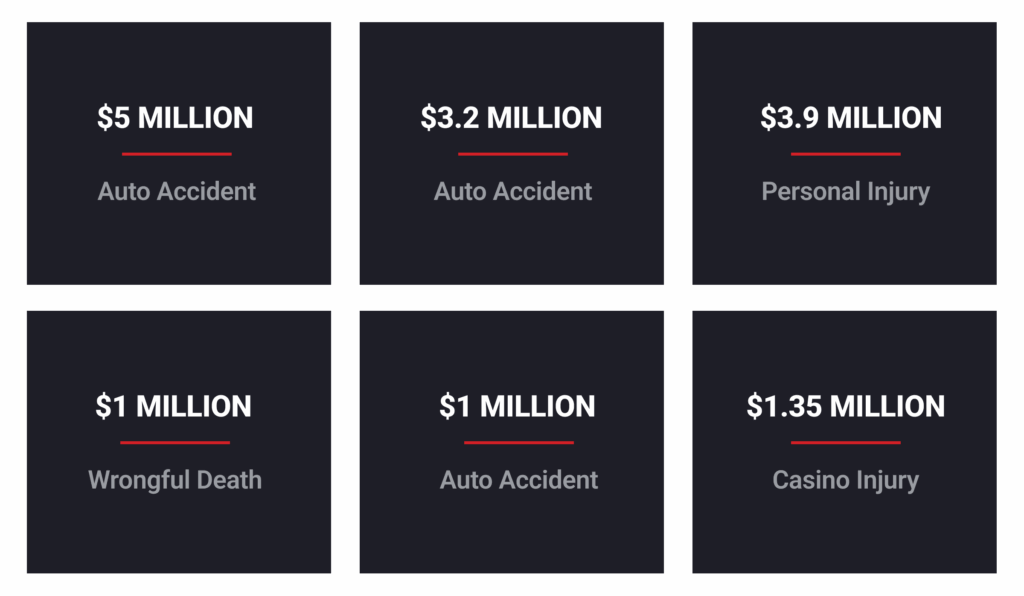
How Howard Injury Law untangles a Las Vegas pileup
Before he represented injured people, Glen Howard worked as an insurance defense attorney — the lawyer carriers hired to minimize payouts. He knows how adjusters build the case that your injuries are minor, that you share too much blame, or that another driver’s policy is someone else’s problem. In a multi-vehicle wreck, where every insurer is trying to shift responsibility, that inside knowledge is the difference between a lowball offer and full compensation.
Our team handles the reconstruction, the competing insurers, and the UM/UIM angles so you can focus on recovering. If your crash happened on any of the valley’s high-risk corridors, our highway accident attorneys covering I-15, US-95, and the 215 know these roads and how their wrecks unfold. And you can see the full scope of how we approach these claims on our Las Vegas multi-vehicle accident attorney page — or start with the broader Las Vegas motor vehicle accident hub if you’re still getting your bearings.
You don’t pay us anything unless we win. If you were hurt in a pileup on I-15 or at the Spaghetti Bowl and you’re not sure who’s responsible or whether anyone’s insurance will cover you, call (702) 331-5722 for a free consultation. Bring what you have — photos, the report number, the other drivers’ info — and we’ll tell you honestly whether you have a case worth pursuing.