

In 2025, 83 of the 239 people killed on Clark County roads were pedestrians. That’s roughly one in three. Most of those crashes didn’t happen at random. They clustered on the same wide, fast corridors, and knowing the most dangerous intersections for pedestrians in Las Vegas can help you understand what happened to you and what it means for an injury claim.
If you or someone you love was hit while walking, the first question is often a quiet one: Was it my fault for crossing there? In most cases, the answer is no. Here’s where Las Vegas pedestrians are most at risk, why, and what Nevada law says about the driver who hit you.
Why Las Vegas Is One of the Most Dangerous Places in the Country to Walk
Southern Nevada consistently ranks among the worst places in America for people on foot. In the 2026 Dangerous by Design report from Smart Growth America, the Las Vegas–Henderson–North Las Vegas metro ranked 23rd in the nation for pedestrian danger, with 361 pedestrian deaths from 2020 to 2024. Nevada ranked 7th among all states.
Traffic deaths overall did drop in 2025. Nevada recorded 381 road deaths, its lowest count since 2021. But pedestrians still made up a much larger share of Clark County deaths than their share of road users.
A lot of it comes down to design. Much of the valley was built around the car: six- and eight-lane arterials, 45 mph speed limits, long blocks, and crosswalks that can be a quarter-mile apart. Add 24-hour activity, heavy bus ridership, and millions of visitors unfamiliar with local roads, and the risk rises sharply for anyone crossing on foot.
The Most Dangerous Intersections for Pedestrians in Las Vegas
In September 2025, the Las Vegas Metropolitan Police Department (LVMPD) named 12 intersections as its most dangerous, based on three years of fatal and serious-crash data, and launched targeted enforcement at each one. LVMPD’s list covers all crash types, not only pedestrians. But almost every location on it shares the same features that make crossing on foot so risky: high speeds, heavy turning traffic, and long distances between safe crossings.
Here’s how those intersections look from a pedestrian’s point of view.
West and Southwest Valley Arterials
- Charleston Boulevard & Decatur Boulevard, ranked #1 on LVMPD’s list
- Flamingo Road & Rainbow Boulevard
- Charleston Boulevard & Hualapai Way
- Blue Diamond Road & Arville Street
- Tropicana Avenue & Decatur Boulevard
- Flamingo Road & Arville Street
These are some of the busiest arterials in Spring Valley, Enterprise, and the west side. Residents describe drivers speeding and running red lights, often while pedestrians are walking to or from bus stops. Left-turning drivers watching for a gap in oncoming traffic frequently never look at the crosswalk they’re turning into.
The Flamingo Road Corridor East of the Strip
- Flamingo Road & Maryland Parkway
- Flamingo Road & Pecos Road
Flamingo & Maryland sits at the northeast corner of the UNLV campus, where student foot traffic meets one of the valley’s busiest east–west routes. Farther east, Flamingo & Pecos is a wide, fast intersection with a long history of serious crashes. Both combine heavy pedestrian activity with multi-lane roads that take a long time to cross.
East Valley and Boulder Highway
- Boulder Highway between Sahara Avenue and Karen Avenue
- Washington Avenue & Nellis Boulevard
Boulder Highway has been one of the deadliest roads in the valley for people on foot. On one stretch, pedestrian deaths averaged about five a year until LVMPD and Clark County installed a metal fence in the median to stop mid-block crossings. That stretch then went a full year with zero pedestrian deaths, and the fencing is expanding along the corridor. The lesson: when crosswalks are far apart, people cross wherever they can, and the road design keeps putting them in harm’s way.
North Las Vegas Boulevard
- Las Vegas Boulevard & Cheyenne Avenue
- Las Vegas Boulevard & Cashman Center
North of downtown, Las Vegas Boulevard is wide, fast, and has confusing lane configurations. Drivers running signals and making sudden lane changes create serious risk for anyone crossing, especially at night.
Want the bigger picture across every crash type, including freeway interchanges and the valley’s deadliest highways? Our breakdown of Las Vegas crash hotspots for every vehicle type covers it.
Pedestrian Safety Concerns on the Las Vegas Strip
The Strip’s biggest intersections, Las Vegas Boulevard at Tropicana Avenue and at Flamingo Road, aren’t on LVMPD’s list. They’re still some of the most hazardous places in Nevada to be on foot, just in a different way.
On the Strip, the danger isn’t mainly speed. It’s volume and distraction:
- Massive crowds spill off packed sidewalks and pedestrian bridges into traffic lanes.
- Rideshare and taxi pickups create constant stop-and-go traffic and sudden curb pulls.
- Resort driveways and garage exits cross the sidewalk, and drivers often look for cars, not people.
- Tourist drivers navigate unfamiliar roads while reading signs, following GPS, or watching the lights.
- Late-night foot traffic, often after drinking, puts pedestrians and impaired drivers on the same roads.
Downtown’s Fremont Street area has similar risks, with one-way streets and late-night crowds that confuse visitors on foot and behind the wheel. If you’re walking the Strip, these pedestrian safety tips for the Strip can lower your risk.
What Makes These Crossings So Dangerous
The same few factors show up again and again in Las Vegas pedestrian crashes:
- Failure to yield on turns. Left-turning drivers focus on oncoming cars and cut through crosswalks without seeing the pedestrian.
- Speed on wide roads. A pedestrian hit at 40 mph is far more likely to be killed than one hit at 20 mph. Many valley arterials are posted at 45.
- Darkness. Nationally, roughly three out of four pedestrian deaths happen after dark. Long, poorly lit stretches make people on foot hard to see.
- Distraction. Phones, navigation screens, and the Strip’s lights all pull a driver’s eyes off the road.
- Crossing mid-block. When the nearest crosswalk is a long walk away, people cross between intersections. That’s risky, but it doesn’t give a driver permission to hit someone.
Does Getting Hit at a “Known Dangerous” Intersection Change Your Claim?
Many people assume that if they were hit somewhere “everyone knows” is dangerous, they share the blame. That’s not how Nevada law works. Every case is different, but a few principles apply broadly.
Drivers Owe You Care Even Outside a Crosswalk
Nevada law requires drivers to yield to pedestrians in marked and unmarked crosswalks. Even when a pedestrian crosses outside a crosswalk, drivers still have a legal duty to exercise due care to avoid hitting them. A driver who was speeding, distracted, or running a light can still be held responsible.
Nevada also uses modified comparative negligence. Even if you were partly at fault, you can still recover compensation as long as your share of fault isn’t greater than the driver’s. Your recovery is reduced by your percentage of fault. A Las Vegas pedestrian accident lawyer can help show where the fault really lies.
How Insurers Use the Location Against You
Insurance adjusters know these intersections too, and they use them against you. Expect lines like “There was a pedestrian bridge 200 feet away,” “Everyone knows not to cross Boulder Highway there,” or “She should have waited for the walk signal.”
Glen Howard spent years as an insurance defense attorney before he started representing injured people. He knows these arguments because he used to watch insurers build them. They’re designed to push your share of fault as high as possible so the insurer pays less, or nothing. A notorious location doesn’t excuse a driver who wasn’t paying attention.
Can You Sue the County or City Over a Dangerous Intersection?
Sometimes, but it’s difficult. Nevada gives government entities significant protection for design and planning decisions, caps damages in most claims against them, and imposes strict deadlines. A claim is more realistic when there was a known, specific failure, like a broken signal left unrepaired, than when the complaint is about the road’s general design. In most pedestrian cases, the driver and their insurance are the main source of recovery.
Evidence Disappears Fast at Busy Intersections
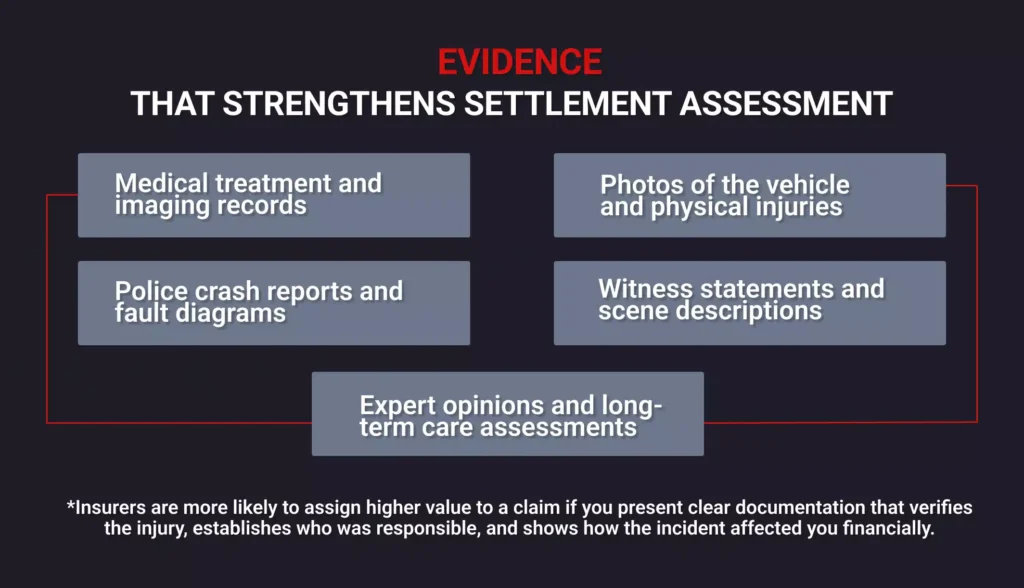
The busiest intersections are often surrounded by cameras: businesses, gas stations, casinos, buses, and rideshare dashcams. But that footage is often overwritten within days or weeks. Witnesses scatter, and signal timing records and 911 data need to be requested quickly. The sooner someone starts gathering evidence, the stronger your claim.
Frequently Asked Questions
What is the most dangerous intersection in Las Vegas for pedestrians?
In LVMPD’s September 2025 list of the valley’s 12 most dangerous intersections, Charleston Boulevard and Decatur Boulevard ranked #1. The list is based on all crash types, not only pedestrian crashes. But the top locations, including Flamingo & Rainbow, Tropicana & Decatur, and Flamingo & Maryland Parkway, share the features that make crossing on foot so risky: high speeds, heavy turning traffic, and long distances between crosswalks. On the Strip, the intersections of Las Vegas Boulevard with Tropicana and Flamingo carry some of the heaviest foot traffic in Nevada and pose a different risk: crowds, distraction, and constant rideshare activity.
Which parts of Las Vegas are most dangerous for people walking?
For pedestrian traffic, the highest-risk areas include the east valley along Boulder Highway, the Strip corridor, downtown near Fremont Street, the Flamingo Road corridor near UNLV, and the major arterials on the west side through Spring Valley and Enterprise. What they share is a mix of heavy foot traffic, fast multi-lane roads, and long gaps between safe crossings. Boulder Highway has been especially deadly, which is why Clark County and LVMPD have been installing median fencing to stop mid-block crossings on parts of the corridor.
When are pedestrians most likely to be hit in Las Vegas?
Nighttime is the most dangerous. Nationally, roughly three out of four pedestrian deaths happen after dark, and Las Vegas’s 24-hour activity keeps many people walking late into the night. Dim lighting on long arterials, impaired drivers leaving bars and casinos, and pedestrians wearing dark clothing all add to the risk. Weekend nights on and around the Strip are especially risky because visitor foot traffic and impaired driving peak at the same time.
What should I do if I was hit by a car at one of these intersections?
Get medical care right away, even if you feel okay. Some serious injuries don’t show symptoms at first. If you can, call 911 so police document the crash, take photos of the scene, and get the driver’s and witnesses’ contact information. Note any nearby businesses or buses that might have cameras. Don’t give a recorded statement to the driver’s insurance company before you talk with a pedestrian injury attorney in Nevada. In Nevada, you generally have two years from the date of the crash to file a personal injury lawsuit, but evidence at busy intersections can disappear much sooner. To see how injury severity shapes a claim, read about what a pedestrian accident claim can be worth. If your child was the one hurt, our guide on what to do when a child is hit near school or home walks through the steps parents need.

Hit Crossing a Las Vegas Street? Find Out Where You Stand
If you were hit at one of these intersections, the insurance company is probably already working out how to blame the location, or you. You don’t have to accept their version.
Howard Injury Law is led by Glen Howard, a former insurance defense attorney who knows exactly how adjusters build the “you should have crossed somewhere else” argument and how to take it apart. Our motor vehicle accident lawyers have recovered more than $80 million for Nevada injury victims, and we work on a contingency fee: no fee unless we win.
Not sure you have a case? That’s what the first conversation is for. Request your free case review and talk with a pedestrian accident attorney in Las Vegas about what happened, who’s responsible, and what to do next, before the evidence at that intersection is gone.