

When someone you love is killed in a Las Vegas crash, one question sits underneath the grief: was the other driver at fault, and can anyone actually prove it? In Nevada, fault in a fatal car accident is not settled at the scene or by a single officer’s opinion. It’s built from evidence, measured against state negligence law, and — if a case goes that far — decided by a judge or jury, not by the insurance company hoping you’ll accept their version.
That distinction matters, because the first story told about a fatal crash is often the wrong one. The person who can no longer speak frequently gets blamed. Understanding how fault is really determined is the first step toward protecting your family’s right to answers and accountability.
What Determining Fault Actually Means in a Fatal Nevada Crash
“Fault” is a legal conclusion, not a gut reaction. In Nevada, it usually comes down to negligence — proving that a driver owed a duty of care, broke that duty, and caused the death and the losses that followed. A speeding driver on I-15, a driver who ran a red at a busy Spring Valley intersection, an impaired driver leaving the Strip — each breached the basic duty every Nevada driver owes to everyone else on the road.
In a fatal crash, that finding of fault does more than assign blame. It supports a wrongful death claim under Nevada law, which allows surviving family members and the estate to recover for their loss. These are actually two related but separate claims — one for the family’s own losses and one belonging to the estate — and how they fit together is worth understanding early. (Every crash is different, so treat this as general information, not advice about your specific case.)
Who Actually Decides Who Was at Fault?
Most people assume the police report settles it. It doesn’t. The responding officer’s report is important evidence and often carries real weight, but it reflects one professional’s opinion based on limited scene information — it is not a binding legal ruling on fault.
Several parties weigh in before fault is truly established:
- Law enforcement, who document the scene and may cite or arrest a driver
- Accident reconstruction experts, who use physics, damage, and roadway evidence to rebuild what happened
- The Clark County Coroner/Medical Examiner, whose findings can speak to cause of death and impairment
- Insurance adjusters, who make their own liability decisions to control what they pay
- A judge or jury, who make the final legal determination if the case is litigated
The takeaway for a grieving family is simple: an early conclusion — from an officer, an adjuster, or a rumor — is not the final word. Fault can be re-examined and, when the evidence supports it, corrected.
The Key Evidence Used to Determine Fault in a Fatal Crash
Because a fatal crash ends in a death, the investigation runs deeper than a typical fender-bender claim. And because the person who died cannot give their side, independent evidence carries enormous weight. The pieces that most often decide fault include:
- The police and scene report, including citations, diagrams, and officer observations
- The vehicle’s “black box” (EDR), which can capture speed, braking, and throttle in the seconds before impact
- Camera footage — Strip properties, business surveillance, and traffic cameras along corridors like Boulder Highway or the 215 Beltway
- Independent witnesses who saw the crash unfold
- Cell phone and app records that may show distraction or texting
- Toxicology results for alcohol or drugs
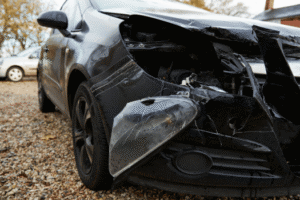
- Physical evidence — skid marks, debris fields, vehicle damage, and roadway measurements
- Autopsy and medical findings tied to cause of death
Preserving this evidence quickly is critical; black-box data gets overwritten and camera footage is deleted on a cycle. A thorough fatal crash investigation is exactly what a strong claim depends on.
Nevada’s Legal Standards for Fault
Nevada’s fault rules can either protect your family’s recovery or quietly shrink it, depending on how the numbers land. Knowing the standard helps you spot when an insurer is playing games.
Modified comparative negligence — the 51% rule
Nevada follows a modified comparative negligence rule. If your loved one is found partly responsible for the crash, the family’s recovery is reduced by that percentage. If a jury awarded $1 million but assigned the deceased 20% of the fault, the award drops to $800,000. There is one hard line: if the deceased is found more than 50% at fault, the family recovers nothing. This is precisely why insurers push so hard to inflate the deceased’s share of blame.
What if your loved one was partly at fault?
Partial fault does not automatically end a claim. Unless your loved one was more than half responsible, your family can still recover — just at a reduced amount. Insurers routinely exaggerate a deceased driver’s role because that person can’t defend themselves, so an early, evidence-backed fault analysis is one of the most valuable things a family can do.
When your loved one was not at fault
If the deceased carried no fault and more than one driver caused the crash — common in multi-vehicle pileups on I-15 or US-95 — Nevada law can allow the family to pursue the full amount from any one of the at-fault parties, rather than being limited to each driver’s slice. That’s a meaningful protection when one at-fault driver is uninsured and another is well-insured.
The Criminal Case vs. Your Civil Claim: Two Separate Tracks
Families are often told to “wait and see what happens with the criminal case.” You usually don’t have to. A criminal prosecution and your civil claim are separate systems with different goals and different standards of proof.
A criminal case must prove guilt beyond a reasonable doubt and exists to punish. Your civil wrongful death claim only has to show fault was more likely than not — a lower bar. Because of that gap, a driver can be found civilly responsible even if they were never charged, or were charged and acquitted. Whether and how the driver’s criminal case interacts with your claim is a common source of confusion, and it deserves a clear answer for your situation.
How Insurers Try to Pin the Blame on the Person Who Can’t Speak
Here is where experience on the other side matters. Howard Injury Law was founded by attorney Glen Howard, who spent years as an insurance defense attorney before representing families. He has seen how the blame-the-victim strategy is built — because he used to be on the receiving end of these claims.
The tactics are predictable. Adjusters push for recorded statements from grieving relatives, comb the deceased’s social media for anything they can twist, and float theories that the person who died was speeding, distracted, or “came out of nowhere.” None of it is neutral. It’s designed to nudge the deceased’s fault percentage upward, because every point they add is money they subtract. Knowing that playbook in advance is how you counter it with real evidence instead of assumptions.
You Have Two Years — and the Evidence Is Fading Now
Nevada generally gives families two years from the date of death to file a wrongful death claim, though certain situations carry different or shorter deadlines. Two years can feel like forever in the fog of grief, but the evidence that proves fault doesn’t wait. Black-box data is overwritten, footage is erased, and witness memories fade within weeks. Confirming your family’s deadline and preserving evidence early are the two moves that protect the case. The exact deadline that applies to your circumstances is worth pinning down right away.
Frequently Asked Questions
Who usually decides who was at fault in a fatal car crash?
No single person has the last word. The investigating officer offers an opinion, insurance adjusters make liability decisions to control payouts, and accident reconstruction experts and the Clark County Coroner add technical findings. But the final legal determination of fault, if a case is disputed and litigated, belongs to a judge or jury. That’s why an early “at-fault” label from police or an insurer is not permanent — it can be challenged and, when the evidence supports it, overturned. In Nevada, fault is proven, not simply announced at the scene.
Does a police report determine who was at fault?
No. A police report is strong, useful evidence, and it often influences how insurers view a claim, but it is not a binding legal ruling on fault. Officers reconstruct events after the fact with limited information, and reports can contain errors or miss key details a deeper investigation uncovers — a hidden camera, black-box data, or a witness who left before police arrived. If your family believes a report unfairly blamed the deceased, that finding can be contested with additional evidence. Don’t treat an unfavorable report as the end of the story.
What happens if my loved one was partly at fault?
Your family can likely still recover, just at a reduced amount. Nevada’s comparative negligence rule lowers the recovery by the deceased’s percentage of fault — unless that share exceeds 50%, which bars recovery entirely. Because that threshold decides everything, insurers work hard to push a deceased driver’s blame past the halfway mark. A careful, evidence-based fault analysis often reveals the deceased’s true share was far smaller than the insurer claimed. This is one of the most important areas to have reviewed before accepting any insurance company’s version of events.
Can we still file if the driver was never criminally charged?
Yes. A wrongful death claim is a civil matter, entirely separate from any criminal case. Civil fault only has to be shown as “more likely than not,” a lower standard than the “beyond a reasonable doubt” required to convict. A driver can face no charges — or be acquitted — and still be held financially responsible in civil court. You generally do not need to wait for the criminal process to finish before protecting your family’s civil claim, and waiting can cost you evidence.
How likely is a Las Vegas car accident to be fatal?
Most crashes are not fatal, but Nevada still loses hundreds of people to traffic deaths each year, with the Las Vegas Valley accounting for a large share. Corridors like the Strip, Boulder Highway, and the I-15/US-95 freeway system see repeated serious and deadly crashes. If you want the full local crash picture, the Las Vegas motor vehicle accident hub covers city-wide data and hotspots in depth. What matters most after a loss, though, isn’t the odds — it’s whether fault can be proven in your specific case.

Talk to a Las Vegas Attorney Who Knows How the Other Side Assigns Blame
You’re not trying to win an argument — you’re trying to find out what really happened to someone you love, and whether the person responsible will be held to it. That starts with an honest look at the evidence and a clear explanation of what your family can recover, before an insurer’s version hardens into “the truth.”
Howard Injury Law brings former insurance-defense experience to exactly that fight, and works on a contingency fee — no fee unless we win. If you’re not sure whether you have a case, that’s the right reason to ask. Reach out for a free, no-pressure consultation with a Las Vegas fatal crash attorney while the evidence that proves fault is still there to be preserved.