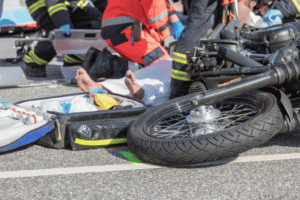


A head-on collision on a two-lane road is one of the most violent crashes you can survive in Nevada — two vehicles closing on each other with only a painted line between them, and nowhere to go. If you were hit by a driver who crossed the centerline or tried to pass when it wasn’t safe, you’re likely hurting, frightened, and already wondering how the other side will try to blame you. This guide walks through who’s at fault, why Nevada isn’t a no-fault state, and how a Las Vegas car accident lawyer proves what happened when there were no cameras and no witnesses.
Why Head-On Crashes on Two-Lane Roads Are So Severe
On a freeway, a median or barrier usually separates opposing traffic. On a two-lane road, nothing does. A single painted stripe is all that stands between your lane and oncoming traffic moving just as fast in the other direction.
That’s why these crashes are so devastating. When two vehicles meet head-on, the force of impact combines both of their speeds — and out on Nevada’s open two-lane highways, those speeds are high. There’s often no shoulder to steer onto, no time to react, and no room to escape. The result is frequently catastrophic: traumatic brain injuries, spinal damage, broken bones, and internal injuries that change a life in an instant.
The severity is also why the at-fault driver’s insurance company fights so hard on fault. The more serious your injuries, the more your claim is worth — and the more motivated they are to argue you share the blame.
Why Head-On Collisions Happen on Nevada’s Two-Lane Roads
Most head-on crashes on undivided roads trace back to one driver leaving their lane. It usually happens in one of three ways:
- Unsafe passing. A driver crosses the double-yellow to overtake a slower vehicle and misjudges the oncoming traffic or the distance ahead — a common cause on long rural stretches where drivers get impatient behind trucks or RVs.
- Drifting across the centerline. Fatigue on a long desert drive, distraction, or a medical event pulls a driver over the line before they realize it.
- Blind curves and crests. On winding mountain and canyon roads, a driver can’t see far enough ahead to pass or correct safely.
Nevada has no shortage of roads where this happens. The two-lane stretches of US-95 heading north out of Las Vegas, State Route 160 between Las Vegas and Pahrump over the mountain pass, State Route 159 through Red Rock Canyon, and the winding Kyle Canyon road up toward Mount Charleston all mix high speeds, limited passing sight lines, and opposing traffic feet away. When one driver breaks the rules on a road like that, the people coming the other way pay for it.
Who Is at Fault in a Two-Lane Head-On Collision in Nevada
In most head-on collisions on a two-lane road, the driver who crossed the centerline is at fault. Nevada law requires every driver to keep to the right half of the roadway under NRS 484B.200. And Nevada’s passing law, NRS 484B.213, is written specifically for two-lane roads: you cannot cross the center to pass unless the road ahead is clearly visible and free of oncoming traffic — and you can never pass on a curve, a hill crest, or near an intersection where your view is blocked.
When a driver breaks one of those rules and hits you, they’ve committed a traffic violation, and that violation is powerful evidence of negligence.
This is also where a common misconception comes in. Nevada is not a no-fault state. In a no-fault state, each driver’s own insurance pays regardless of who caused the crash. Nevada is the opposite — an at-fault (tort) state — which means the driver who caused the collision is responsible for the damage, and their insurance company pays your medical bills, lost income, and other losses.
Because that money comes out of the at-fault insurer’s pocket, expect them to push back. Under Nevada’s comparative negligence rule (NRS 41.141), if they can pin more than 50% of the blame on you, you recover nothing — and every percentage point they shift onto you shrinks your payout. So they’ll look for any angle: that you were speeding, distracted, or could have swerved. In a clear centerline crash, that argument is usually weak, but it’s exactly why the other side investigates your driving as closely as their own. Getting a clear read on how fault is determined in a Nevada car accident — and what to do when the insurer disputes liability — matters more here than in almost any other type of crash.
Every case turns on its own facts, so treat this as general information, not legal advice for your specific situation. The only way to know where you stand is to have an attorney look at the details.
What to Do After a Head-On Crash on a Rural Nevada Road
Getting medical care comes first — always. Head-on impacts commonly cause injuries that adrenaline hides in the first hours, and a gap in treatment is the first thing an insurer uses to argue you weren’t really hurt. If you were taken by ambulance and couldn’t act at the scene, that’s normal for a crash this serious, and a family member can start protecting your claim for you.
Two-lane crashes out past the edge of the valley bring their own problems. Cell service can be spotty, help takes longer to arrive, and there are no traffic cameras watching the road. If you’re able to, that makes a few things worth doing:
- Call 911 and get the Nevada Highway Patrol or local police to the scene, and write down the crash report number.
- Note the road and roughly where you are — a milepost marker, a cross street, a landmark. Remote crash locations are easy to lose track of later.
- Take photos of both vehicles, their final resting positions, debris, skid or gouge marks, and the centerline, if it’s safe.
- Don’t give the other driver’s insurer a recorded statement before you’ve talked to a lawyer.
Nevada gives you two years from the crash to file a personal injury claim under NRS 11.190, but on a rural road the physical evidence disappears far faster than that. Skid marks fade, vehicles get towed and repaired, and witnesses who happened to pass by are gone. The sooner the scene is investigated, the stronger your case.
Proving Fault When There Were No Cameras or Witnesses
The hardest part of a two-lane head-on case is often proving who left their lane when there’s no video and no bystander to describe it. That’s not a dead end — it’s an accident-reconstruction problem, and the road itself holds the answers.
An investigator can read where each vehicle was at the moment of impact from the physical evidence: the point of impact, gouge and scrape marks in the asphalt, the debris field, the final resting positions, and the crush patterns on both vehicles. Those details show which car crossed the centerline. Alongside that, the strongest evidence usually includes:
- Vehicle “black box” (EDR) data — speed, braking, and steering inputs in the seconds before impact.
- 911 and dispatch records — a drifting or unsafe-passing driver is often reported by other motorists before the crash.
- The crash report and any citations issued to the other driver.
- Impairment records — if the other driver was arrested for DUI, that criminal case supports your civil claim.
Because this evidence degrades quickly on an open road, moving fast is what keeps the insurer from inventing a version of events where you share the blame.
How Howard Injury Law Handles Two-Lane Head-On Cases
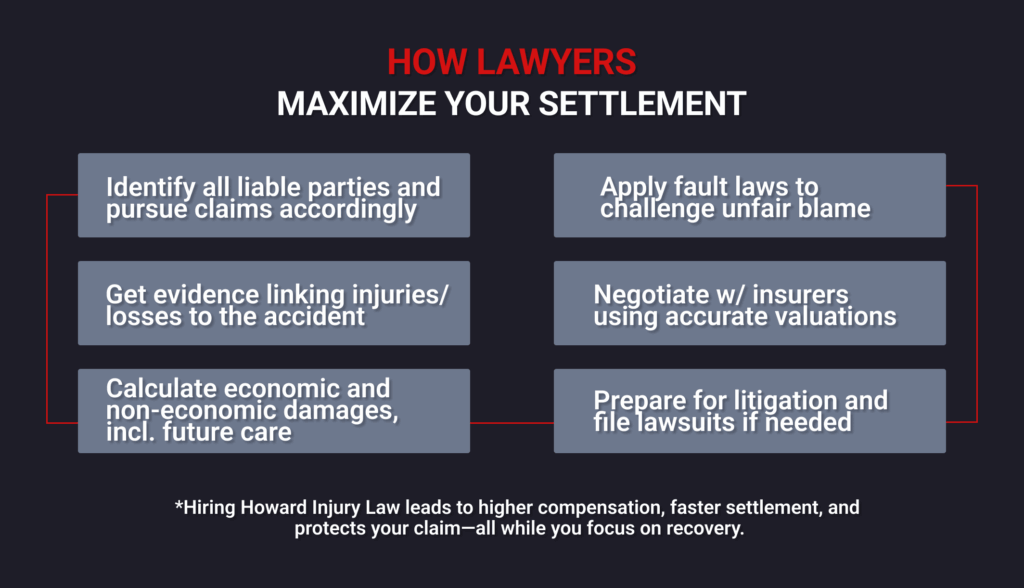
Founding attorney Glen Howard spent the early part of his career as an insurance defense attorney — the lawyer on the other side, arguing to reduce what victims were owed. He knows exactly how adjusters build a comparative-fault argument in a head-on case, because he used to make those arguments himself. Now he uses that playbook for injured Nevada drivers instead of against them.
For a two-lane head-on, that means getting to the evidence before it’s gone: preserving the scene, pulling EDR data, and locking down the fault picture so the insurer can’t rewrite it. It also means telling you honestly what your head-on collision claim could be worth and where the first offer is likely to fall short. If you’re comparing your crash to other kinds of collisions, our overview of what a Las Vegas car accident claim involves is a good starting point, and our highway accident guide covering I-15, US-95, and the 215 is worth a look if your crash happened on one of those routes.
There’s no financial risk in finding out. Howard Injury Law works on contingency — no fee unless we win — so you get a serious head-on collision lawyer in Las Vegas fighting the insurance company without paying anything upfront.
Frequently Asked Questions
Is Nevada a no-fault state for car accidents?
No. Nevada is an at-fault, or “tort,” state — not a no-fault state. That means the driver who caused the crash is responsible for the harm, and their insurance company pays for your injuries, lost income, and other losses. In a true no-fault state, each driver’s own insurer covers their costs no matter who was to blame; Nevada works the other way. Because the at-fault insurer is on the hook, they have a financial reason to shift blame onto you under Nevada’s comparative negligence rule. Establishing who actually caused the head-on collision is the foundation of your entire claim.
Who is at fault in a head-on collision on a two-lane road?
Usually the driver who crossed the centerline. Nevada law requires drivers to stay on the right half of the road (NRS 484B.200) and bars passing across the center of a two-lane highway unless the road ahead is clearly visible and free of oncoming traffic (NRS 484B.213). A driver who drifts over the line or makes an unsafe pass has broken those rules, and that violation is strong evidence of negligence. The other side may still argue you share some fault — that you were speeding or could have avoided the crash — so proving exactly who left their lane is what protects the full value of your claim.
What are the most dangerous two-lane roads in Nevada for head-on crashes?
Two-lane roads become dangerous when high speeds meet limited passing visibility and no median. Around Southern Nevada, the rural stretches of US-95 north of Las Vegas, State Route 160 between Las Vegas and Pahrump, State Route 159 through Red Rock Canyon, and the winding canyon roads up toward Mount Charleston all fit that description. Long, open desert highways invite risky passing and fatigue-related drifting, while mountain and canyon roads add blind curves and crests where drivers can’t see oncoming traffic. Any road where opposing traffic is separated only by paint carries head-on risk.
What is a head-on collision, exactly?
A head-on collision is a crash where the front ends of two vehicles traveling in opposite directions strike each other. On a two-lane road, it typically happens when one driver crosses the centerline — while passing, drifting, or driving the wrong way — into oncoming traffic. Head-on crashes are considered the most dangerous type of collision because the impact combines the speed of both vehicles, producing forces far greater than a rear-end or side-impact crash at the same speeds. That combined force is why head-on collisions so often cause severe, life-altering injuries rather than minor ones.
You Were Just Driving Home. Now You’re Facing Their Insurance Company.
You didn’t do anything wrong — another driver crossed the line — and now you’re hurt and bracing for a claims adjuster who’s going to suggest you drifted too. You shouldn’t have to fight that battle while you’re trying to heal.
That’s our job. A free case review will tell you exactly where you stand: who’s at fault, what your claim is worth, and what the insurance company is likely to try. Glen Howard knows their tactics from the inside, and you pay nothing unless we win.
Call Howard Injury Law at (702) 331-5722 for a free, no-obligation consultation, or reach out through our contact page. The sooner we get to the evidence, the stronger your case.