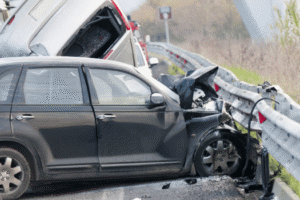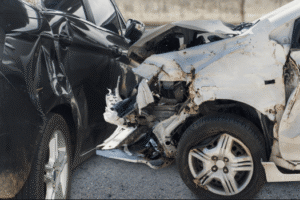


The driver who hit you was staring at a screen full of blue arrows, not the road in front of them. Now their insurance company wants to treat “I was just following my GPS” like it’s a reasonable excuse — and you’re left hurt, out of work, and wondering whether a navigation app really counts as distracted driving. It does. A GPS distraction car crash is still a distracted driving crash, and in Nevada the driver holding the phone is responsible for what happens when they look away.
This guide covers what Nevada law actually says about using GPS behind the wheel, why “the app told me to” is not a legal defense, and how the distraction gets proven when the other driver denies it.
Is Using GPS While Driving Legal in Nevada?
Partly — and the line matters. Nevada’s hands-free law lets you use a voice-operated navigation system that’s mounted to your vehicle. Set your destination before you pull out, mount the phone, and let it talk to you, and you’re on the right side of the law.
What the law prohibits is physically handling the phone while you’re driving — and that includes typing an address into a maps app, tapping to reroute, or scrolling the map to check where your exit is. Under Nevada’s statute, that counts as manually entering data on a handheld device, the same category as texting. Being stopped at a red light doesn’t make it legal, either; you’re still operating the vehicle.
A first offense is a $50 civil penalty and isn’t treated as a moving violation. But the ticket is the small part. When a driver breaks a traffic-safety law and causes a crash, that violation becomes powerful evidence that they were at fault. For the full breakdown of the statute and its penalties, see our guide to Nevada’s hands-free and texting-while-driving law.
“I Was Just Following My GPS” Is Not a Defense
Every driver in Nevada owes the same basic duty: watch the road, obey the signals, and control the car. A navigation app does not suspend that duty. It’s a tool the driver chose to use, and choosing to look at it instead of the road is the exact failure the law holds them responsible for.
So when the at-fault driver says the app rerouted them, or told them to turn, or “led them the wrong way,” none of that shifts the blame off their shoulders. The app didn’t cut across three lanes. The app didn’t run the light. The driver did — while their attention was somewhere else. If anything, admitting they were following turn-by-turn directions at the moment of impact confirms where their eyes weren’t.
Insurance adjusters know this, which is why they rarely argue the GPS excuse head-on. Instead they pivot to blaming you. That’s a tactic, not a verdict — and it’s covered below.
How a GPS Distraction Turns Into a Crash
Navigation crashes tend to follow a few recognizable patterns, and understanding yours helps show exactly how the other driver failed:
- The late reroute. The app announces an exit or turn a beat too late, and the driver reacts by cutting across lanes or braking hard to catch it. Sudden, unexplained lane changes near freeway splits — like the late exits around the Spaghetti Bowl where I-15 and US-95 meet — are a classic sign.
- The wrong-way or wrong-turn. A driver blindly obeys a prompt and turns down a one-way street or onto a ramp against traffic.
- The eyes-down glance. On a familiar road, the driver assumes it’s safe to look down and “just check” the map — and misses the stopped car, the light, or the pedestrian ahead.
The reason these crashes hit so hard is that a driver looking at a screen never brakes. There’s no reaction, no slowing down — just full-speed impact into whatever they didn’t see. That’s the same dangerous signature behind every serious distracted driving accident, and it’s why “minor-looking” navigation wrecks still cause real injuries.
Proving the Other Driver Was Distracted by Their GPS
A distracted driver almost never admits what they were doing, so these cases are won with records, not with the driver’s word. The sources that document GPS distraction include:
- Phone and app-usage records that can show a maps app was open or being interacted with at the moment of the crash.
- The vehicle’s event data recorder — the “black box” — which captures speed and braking. No braking before impact points straight at distraction.
- Traffic, business, and dashcam footage that may have caught the driver looking down or drifting.
- Witness accounts from anyone who saw the driver fumbling with a phone or screen.
Here’s the catch, and it’s the reason to act quickly: this evidence has a shelf life. Phone carriers and businesses don’t keep records forever, and vehicle data can be overwritten. Nevada also gives injury victims a limited window to file — generally two years from the date of injury — but the proof you need can disappear long before that deadline. A lawyer can move to preserve phone data and footage before it’s gone. For more on what actually builds a claim, see our guide to the evidence you need after a car accident, and how our team proves the distraction when the other side denies it.
What If You Were Using GPS When You Got Hit?
Plenty of people worry that because their own phone was mounted and running directions, the crash is somehow their fault. It usually isn’t. Using a hands-free, mounted navigation system is legal in Nevada — it’s not the kind of conduct that shifts blame onto you.
Nevada does follow a comparative fault rule, which means the other driver’s insurer will try to assign you a share of the blame to shrink what they pay. Even if some fault is argued against you, you can still recover as long as you’re not found more responsible than the other driver, though your share reduces the award. That’s precisely the fight adjusters bank on you losing by yourself. If your fault is being disputed, don’t accept their version — here’s how disputed-liability car accident claims actually get handled. And don’t give a recorded statement before you’ve talked to a lawyer; adjusters are trained to turn routine-sounding answers into admissions.
Frequently Asked Questions
Is it illegal to use GPS while driving in Nevada?
It depends on how you use it. Nevada’s hands-free law allows a voice-operated navigation system that’s mounted to your vehicle, so setting a destination before you drive and letting it guide you by voice is fine. What’s illegal is physically handling the phone while driving — typing an address, tapping to reroute, or scrolling the map — because that counts as manually entering data on a handheld device. Being stopped at a light doesn’t change that. A first violation carries a $50 civil penalty, but the bigger consequence is civil: if a driver breaks that law and causes a crash, the violation becomes evidence they were at fault.
Is using a navigation app considered distracted driving?
Yes. Distraction isn’t limited to texting — it’s anything that takes a driver’s eyes, hands, or mind off the road, and a maps app can take all three. Reading the screen is a visual distraction, tapping it is a manual one, and following turn-by-turn prompts pulls the mind off driving. That’s why a navigation app can absolutely support a negligence claim in Nevada if using it caused your crash. The safe, legal way to use GPS is hands-free and mounted; the moment a driver picks up the phone to interact with the map, they’ve crossed into distracted driving.
The driver who hit me said they were just following their GPS. Does that matter?
Not in the way they hope. “The app told me to” is not a legal defense in Nevada. Every driver owes a duty to watch the road and control their car, and a navigation prompt never overrides it. The app didn’t change lanes, run the light, or turn the wrong way — the driver did, while their attention was on a screen. If anything, admitting they were following directions at the moment of impact helps confirm they weren’t watching the road. The excuse doesn’t shift fault; it often reinforces it.
How do you prove someone was distracted by their maps app?
With records the driver can’t argue away. The main sources are phone and app-usage data that can show a maps app active at the time of the crash, the vehicle’s event data recorder showing whether the driver ever braked, camera footage from intersections or nearby vehicles, and witness statements. No braking before impact is a strong signature of distraction. The important part is speed: phone records and vehicle data don’t stay available forever, so this proof has to be requested and preserved early — often well before your filing deadline — or it can be lost for good.
What’s the most dangerous type of distraction?
The kind that captures all three types at once — your eyes, your hands, and your mind. Texting is the textbook example, but interacting with a phone-based maps app is right there with it: you’re reading the screen, touching it, and mentally following directions instead of watching traffic. That combination is far more dangerous than any single distraction, which is why handling a phone for navigation is so closely tied to serious crashes. A voice-operated, mounted system removes the eyes-and-hands part of that risk, which is exactly why Nevada law draws the line where it does.

Talk to a Lawyer Who Knows How the Insurance Company Thinks
You didn’t cause this crash, and you shouldn’t have to prove someone else’s distraction while you’re trying to heal. That’s the part a lawyer handles — moving fast to lock down the phone and vehicle data before it disappears, and shutting down the blame-shifting before it takes hold.
Howard Injury Law was founded by attorney Glen Howard, who spent years as an insurance defense lawyer before switching sides. He knows exactly how these companies build a denial around a distracted-driving claim, because he used to build them — and now he uses that against them for injured people in Las Vegas and across Nevada. Every case is handled on contingency: no upfront cost, and no fee unless we win.
If a driver on their GPS hurt you, the smartest next step is simple. Call (702) 331-5722 for a free case review, or tell us what happened and we’ll tell you where you stand. The sooner we start, the more of the evidence survives. And if you’re not sure where to begin, HIL Helps is our free 24/7 community resource, open to everyone.