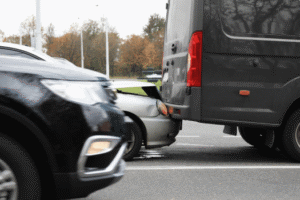


Back and spine injuries from car accidents are the most contested claims in Nevada personal injury law. They’re real, debilitating, and expensive — and insurance companies dispute them more aggressively than almost any other injury type. Our Las Vegas car accident lawyers handle spinal injury claims with the medical expertise and legal preparation these cases require to win. Call us at Howard Injury Law 24/7 at (702) 331-5722 for a free consultation.

If you or a loved one has been hurt in a car accident in Las Vegas that caused back injuries, you need a top personal injury attorney Las Vegas for back injury claims who will fight to get you proper medical care and maximum compensation. At Howard Injury Law, we help injury victims navigate the complex legal process and hold negligent parties accountable for their actions.
Why Back Injuries Are So Common in Car Accidents
Back injuries occur frequently in motor vehicle crashes because of the powerful forces involved. When your body is jolted forward, backward, or sideways during a collision, your spinal column and surrounding muscles can suffer severe trauma. Rear-end collisions are notorious for causing whiplash and soft tissue injuries, while high-impact crashes can fracture vertebrae or even damage the spinal cord.
These injuries can range from mild strains to permanent paralysis, profoundly affecting your quality of life. The cost to diagnose, treat, and rehabilitate back injuries often runs into tens or hundreds of thousands of dollars.

Types of Back or Spinal Injuries from Car Accidents
The spine is a complex structure — and car accident forces can damage it in multiple ways simultaneously.
Herniated disc or bulging discs. The most common crash-related spinal injury. The soft inner material of a spinal disc ruptures through its outer casing and presses on adjacent nerves. Cervical herniation produces neck pain, arm numbness, and radiating pain into the shoulders and hands. Lumbar herniation produces lower back pain and radiating pain down the legs — commonly called sciatica.
Vertebral fracture. A crack or break in one of the spine’s bony vertebrae. Compression fractures are common in high-impact crashes and in older victims whose bone density makes them more vulnerable to fracture at lower force thresholds.
Spinal cord injury. Damage to the spinal cord itself — the nerve tissue running through the spine’s bony canal. Depending on the level and severity of injury, spinal cord damage can produce partial or complete paralysis, loss of sensation, and loss of bladder or bowel function.
Facet joint injury. The small joints connecting adjacent vertebrae can be sprained, fractured, or destabilized by the forces of a crash — producing chronic pain, limited range of motion, and nerve irritation that persists long after other injuries have healed.
Spinal stenosis aggravation. Pre-existing spinal stenosis — a narrowing of the spinal canal — can be significantly aggravated by crash forces even when the crash wouldn’t have caused stenosis in a healthy spine. Nevada law recognizes the eggshell plaintiff doctrine: a defendant takes their victim as they find them. A pre-existing condition does not eliminate your right to recover for the aggravation caused by the crash.
Soft tissue injuries. Sprains, strains, and whiplash affecting muscles and ligaments. These injuries often trigger sudden swelling and muscle spasms that restrict your normal range of motion. Early movement and targeted physical therapy prevent the tissue from healing with stiff, painful scar matter.
Compression fractures. Bones in the spine breaking or collapsing. This collapse frequently leads to a noticeable loss of height and a forward-hunched posture over time. Specialized spinal braces and bone-density medications help stabilize the area and prevent future fractures.
Chronic lower back pain. Persistent discomfort affecting mobility and daily activities. This ongoing pain often stems from underlying disc degeneration or long-term joint inflammation. Daily core-strengthening exercises and proper ergonomic habits are vital to managing symptoms and restoring function.
Compared to other injuries, back injuries may not always show clear signs on X-rays or MRI, but their effects can be debilitating. Insurance companies often try to underestimate these injuries, which is why you need strong legal assistance.
Herniated Disc
A herniated disc from a Las Vegas car accident turns into a long-term issue because the violent trauma of a crash inflicts structural damage that rarely heals cleanly on its own. While a standard herniation might come from wear-and-tear, an auto collision introduces sudden, massive mechanical forces that complicate both medical recovery and legal timelines.
Connecting the medical reality to a local accident victim involves specific compounding factors:
- Violent Acute Trauma vs. Gradual Wear: The extreme G-forces of a collision—especially common rear-end or side-impact crashes on busy roads like the I-15 or the Las Vegas Strip—forcibly compress and twist the spine. This sudden impact can severely rupture the disc’s outer ring, pushing the gel-like core deep into the spinal canal and causing immediate, severe nerve compression.
- The “Eggshell Injury” Complication: Many victims have asymptomatic, age-related disc degeneration before a crash. The trauma of an accident accelerates this baseline vulnerability, transforming a previously painless condition into a permanent source of chronic inflammation and physical limitation.
- Delayed Symptom Onset: Adrenaline and shock immediately following an accident frequently mask the pain. A victim might mistake severe disc damage for minor whiplash or soreness, delaying localized spinal treatment and allowing prolonged nerve irritation to transition into chronic neuropathic pain.
- Compounding Lifestyle Factors: Las Vegas workers—such as casino dealers, hospitality staff, or rideshare drivers—often return to jobs that require prolonged standing or sitting. Subjecting a newly weakened, post-accident disc to these repetitive workplace stressors increases the risk of a re-rupture.
The Reality of Herniated Discs from Car Accidents
Because herniated discs degrade progressively, rushing into a quick insurance settlement can leave an injured person footing the bill for lifelong medical care.
Lumbar Strain
While a herniated disc involves structural damage to the spinal shock absorbers, a lumbar strain is an injury strictly to the lower back muscles and tendons. In a Las Vegas car accident, the violent whipping motion of a crash overstretches or tears these soft tissues. Though often dismissed as a minor injury, a severe strain can cause debilitating, long-term dysfunction due to chronic muscle spasms and scar tissue formation.
Connecting a lumbar strain to a local auto accident involves specific physical and practical factors:
- Whiplash of the Lower Spine: The sudden deceleration of a collision on highways like the I-15 forces the torso forward while the seatbelt restrains the pelvis. This violent mechanical whipping rapidly overstretches the erector spinae muscles and supporting tendons, causing microscopic tearing.
- The Cycle of Chronic Spasms: To protect the injured area, the surrounding lower back muscles violently contract. In severe cases, this protective guarding becomes a chronic muscle spasm that alters a person’s posture, limits mobility, and causes persistent, localized pain.
- Scar Tissue Weakness: Torn muscle fibers heal by laying down rigid scar tissue instead of flexible muscle tissue. This scar tissue is weaker, less elastic, and highly prone to re-injury, turning a one-time accident injury into a chronic, recurring problem.
- Impact on Las Vegas Workers: Soft tissue injuries heavily impact the local workforce. Casino dealers standing for long shifts, culinary staff lifting heavy trays, and rideshare drivers sitting for hours all place immense static demand on the lower back, which delays healing and triggers frequent flare-ups.
The Reality of Soft Tissue Injuries from Car Accidents
Insurance adjusters often label lumbar strains as “minor soft tissue injuries” to minimize payouts. However, the legal timeline for securing compensation remains just as strict as a structural disc injury.
Other Levels of the Spine
Because your lower back carries the most body weight and absorbs the heavy mechanical force of a lower-body impact, it is incredibly vulnerable during a car accident. Lumbar spine strains or herniations here cause localized lower back spasms, stiffness, and radiating pain down the buttocks and legs—a condition known as sciatica.
However, your lower back isn’t the only area at risk during a collision. Depending on how the crash occurred, the destructive forces of the impact can ripple upward through different levels of your spine, causing entirely different symptoms:
- Cervical Spine (Neck): Highly vulnerable to the violent “whiplash” motion of a crash. Injuries here cause severe neck stiffness, headaches, and radiating pain, numbness, or tingling down the shoulders, arms, and fingers.
- Thoracic Spine (Mid-Back): The most rigid part of the spine, secured by the ribcage. It takes massive force—like a seatbelt restraint in a high-speed collision—to injure this area. Damage can cause pain that wraps around the chest, making it painful to take deep breaths.
Back Injuries vs. Spinal Cord Damage
Spinal cord damage is fundamentally different from a back injury because it involves irreversible trauma to the central nervous system, whereas back injuries affect the supporting bones, discs, and muscles.
While severe back injuries like herniated discs or lumbar strains cause extreme localized pain, they rarely cause total loss of bodily function. In contrast, spinal cord injuries (SCIs) interrupt the electrical signals between the brain and the body, leading to permanent neurological deficits or paralysis.
The mechanical forces required to cause these injuries dictate the medical trajectory for an accident victim:
Spinal Cord Damage Dynamics: High-speed, catastrophic impacts—such as rollover crashes on desert highways or high-impact T-bone collisions at busy intersections—can fracture or dislocate vertebrae. If a bone fragment bursts into the spinal canal or slices the spinal cord, it cuts off the brain’s communication line. This results in instant, permanent loss of movement and feeling below the level of the injury.
Back Injury Dynamics: A standard rear-end collision on a highway like the I-15 typically whips the spine forward and backward. This forces the muscles to tear (lumbar strain) or cracks the outer ring of a disc (herniation). The damage is structural, painful, and limits movement, but the underlying nervous system highway remains intact.
Minor to severe back pain is routinely treated at outpatient orthopedic offices. Spinal cord trauma requires immediate rerouting by EMS to a Level 1 Trauma Center, such as University Medical Center (UMC) in Las Vegas. Long-term, specialized neurological rehabilitation often requires transfer to regional facilities vetted by the State of Nevada Patient Protection Commission.
Why Spine Injury Claims Are Aggressively Disputed by Insurers
Insurance companies fight spinal injury claims harder than almost any other category because the potential damages are high and the pre-existing condition argument is almost always available.
The playbook is predictable. Their Independent Medical Examiner — a doctor they hire and pay — reviews your imaging and concludes your disc herniation is degenerative, not traumatic. It was there before the crash. The crash just “aggravated” something that was already present. And the aggravation, they argue, is minor.
Countering this requires a treating physician who documents the onset and progression of your symptoms in direct relation to the crash, comparative imaging showing the difference between your pre-crash and post-crash spinal condition where available, and expert testimony from a spinal specialist who can explain the biomechanical connection between the forces of your specific crash and the injuries you sustained.
We build that foundation from the beginning of every spine injury case.
Long-Term Costs of a Spinal Injury in Nevada
Spinal injuries don’t resolve in weeks. Many require surgery. Most require extended physical therapy. Some require permanent pain management. The most severe produce lifetime care needs that dwarf the immediate medical costs.
You are entitled to recover not just the treatment bills you’ve already received, but the full projected cost of your future medical care, your lost earning capacity if the injury affects your ability to work, and your pain and suffering — both past and future.
Accurately projecting those future costs requires working with medical experts, vocational rehabilitation specialists, and life care planners before any settlement is accepted. A spine injury settlement that only covers current bills is almost always a settlement you’ll regret.
Spine Injuries Deserve the Full Value of Their Impact.
Talk to a Las Vegas car accident lawyer at Howard Injury Law. We handle back and spine injury claims with the medical and legal expertise they require — free consultation, no fees unless we win.
How Our Las Vegas Car Accident Lawyer for Back Injury Claims Can Help
At Howard Injury Law, our dedicated attorneys work closely with top medical experts and reconstruct the details of your accident to build a compelling case. We know the tactics insurance companies use to minimize claims and we fight aggressively to protect your rights.
Here’s how we support clients suffering from back injuries:
- Coordinate your medical care and rehabilitation with trusted spine specialists.
- Assess the long-term impact of your injuries on your quality of life and ability to work.
- Investigate the crash to prove liability and fault.
- Gather medical records, expert opinions, and accident reports to strengthen your claim.
- Negotiate with insurance companies to seek maximum compensation for medical bills, lost income, pain and suffering, and future care needs.
- Prepare for litigation if insurers refuse to offer fair settlements.
Our goal is to let you focus on recovery while we handle the legal and financial complexities. Call or text us at Howard Injury Law 24/7 at (702) 331-5722 for a free consultation.
Common Causes of Back Injuries in Las Vegas Car Accidents
Back injuries in car crashes can be caused by a variety of factors typical to Las Vegas roads:
- Rear-end collisions at stop lights or in traffic
- High-speed crashes on highways like I-15 or US-95
- Side-impact collisions at intersections
- Rollovers caused by sharp turns or swerving
- Multi-vehicle pile-ups in heavy traffic
Las Vegas’ busy roads and tourist traffic increase the likelihood of these severe accidents, making it essential to have local legal representation.

When to Contact a Lawyer After a Back Injury
If you experienced back pain, numbness, tingling, or loss of function after a car crash, don’t wait to seek legal advice. An early free consultation allows your attorney to collect evidence promptly, including police reports and medical records.
Nevada’s statute of limitations for personal injury claims—typically two years from the date of injury—makes timely legal action critical. Contact Howard Injury Law as soon as possible to protect your rights and build a strong case.
What Compensation Can I Recover for a Back Injury?
You and your family may be entitled to recover various types of damages, including:
- Current and future medical expenses
- Lost wages due to time off work and lost earning capacity
- Pain, suffering, and emotional distress caused by your injury
- Rehabilitation and physical therapy costs
- Home care or assistive devices if needed
Our lawyers carefully evaluate all economic and non-economic losses to present a full picture to insurance companies or juries.

Understanding Nevada’s Comparative Negligence Law
Nevada follows a modified comparative negligence rule. This means if you share some fault for the accident but less than 51%, your compensation will be reduced based on your percentage of fault. For example, if you are found 20% responsible, your damages award will reduce by 20%.
If you are 51% or more at fault, you cannot recover damages. Your attorney will work to minimize your assigned fault by gathering witness statements, video evidence, and accident reconstructions.
Why Choose Howard Injury Law?
Choosing the right car accident lawyer in Las Vegas Nevada for back injury claims matters. At Howard Injury Law, we combine personalized care with aggressive legal strategies. Our founder Glen Howard has handled thousands of injury cases, guiding families through difficult times with transparent communication and dedicated support.
We work relentlessly to hold negligent parties responsible and secure the maximum compensation our clients need to face an uncertain future with confidence.

Free Consult with a Back or Spine Injury Lawyer in Las Vegas
Back injuries can have life-altering consequences. When caused by someone else’s negligence, you don’t have to face the physical, emotional, and financial burdens alone. At Howard Injury Law, we expertly guide you through the legal process as your dedicated personal injury lawyer in Las Vegas. From the initial FREE consultation to the resolution of your case, our experienced car accident attorneys or personal injury lawyers serve Nevada, California, Colorado, and Arizona, and are committed to providing comprehensive support and representation. We understand the complexities and challenges that come with personal injury claims, and we’re here to ensure that your rights are protected every step of the way. Call or fill out our free online form!
📞 Free Consultation: (702) 331-5722
–Se habla español
-我们说普通话和粤语
Learn More About:
-Our Las Vegas car accident attorneys
-How to choose the right personal injury lawyer in Las Vegas
–Helpful resources before and after an accident
Learn about Attorney Glen Howard and the team behind Howard Injury Law.
Find us on Google, Yelp, or follow us on Instagram for community news, legal updates, and safety tips.