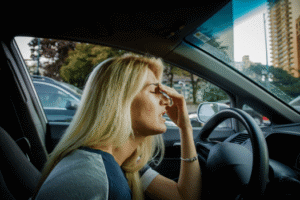


A drunk driver who kills or seriously injures someone changes everything for the people left behind. If a DUI crash in Las Vegas took a family member or left one with catastrophic injuries, you’re probably being told the driver faces criminal charges — and assuming that’s where justice happens. It isn’t the whole story. The criminal case punishes the driver. A separate civil claim is how your family actually recovers the cost of what happened. Here’s what Nevada law gives you, and why cases involving DUI death or serious injury are worth more — and fought harder — than almost any other kind of crash.
When a Las Vegas DUI Crash Causes Death or Serious Injury, Everything Changes
Nevada law draws a hard line at severity. A DUI that causes “substantial bodily harm” or death isn’t treated like an ordinary crash with an impaired driver behind it. Criminally, it jumps to a felony. Civilly, it becomes the highest-value kind of claim a Las Vegas drunk driving accident attorney handles. Late nights on the Strip, the resort corridor, and I-15 produce a steady stream of them.
That severity cuts both ways. The higher the stakes, the harder the insurance company fights. Carriers assign their most experienced adjusters and defense lawyers to severe and fatal claims because the exposure is enormous. It’s the paradox grieving families keep running into: the worse the harm, the harder the other side works to pay less than it’s worth.
The Criminal Case Punishes the Driver. It Doesn’t Pay Your Family.
After a fatal or serious DUI, the State of Nevada charges the driver. Under NRS 484C.430, a DUI that causes death or substantial bodily harm is a Category B felony — 2 to 20 years in prison, a fine, and a license suspension, with probation off the table. Repeat or aggravated cases can be charged as vehicular homicide, which carries far longer sentences.
That process matters. But it’s built to punish the driver, not to compensate you. Even when a criminal court orders restitution, it rarely comes close to covering the real cost of a death or a lifetime of medical care.
Your civil claim runs on a completely separate track. You don’t have to wait for the criminal case to finish, and the driver doesn’t have to be convicted for your family to recover. Civil cases use a lower burden of proof, and a strong Las Vegas attorney often uses the evidence built in the criminal case to strengthen the civil one.
If a Drunk Driver Killed a Family Member: Nevada Wrongful Death Claims
When a DUI crash is fatal, Nevada gives your family the right to bring a wrongful death claim under NRS 41.085 — and it’s structured differently than most people expect.
Two separate claims: the heirs and the estate
The statute creates two distinct claims from the same death. The heirs — typically the spouse, children, or next closest family — bring one claim. The estate, through a personal representative, brings the other. They can move forward together in the same case, but they recover different things, and neither can pursue the other’s losses.
What each claim can recover
The heirs recover for their own losses: grief and sorrow, loss of financial support, and the loss of companionship, and they can also recover for the pain and suffering their loved one endured before death. The estate recovers medical and funeral expenses, the decedent’s lost earnings, and any punitive damages the decedent could have pursued. One line matters here: the estate cannot recover the decedent’s pain and suffering — that belongs to the heirs.
Nevada places no general cap on compensatory wrongful death damages, which is part of why these cases carry the value they do. How the recovery is structured and divided depends on who survives and the specific facts, so this is an area where having the claim built correctly from day one changes the outcome.
If You Survived a Serious DUI Injury: What Your Claim Covers
Not every serious DUI crash is fatal. Survivors of catastrophic injuries — spinal cord damage, traumatic brain injury, amputations, permanent disfigurement — face their own long fight, and their claims are valued on a different scale than a typical crash. A catastrophic injury claim looks past today’s ER bill to lifetime medical care, lost earning capacity, home modifications, and the day-to-day toll of an injury that doesn’t fully heal.
DUI cases also open a door most crashes don’t: because the driver chose to drink and then drive, these claims often support punitive damages, which can significantly increase what you recover. It’s worth understanding how punitive damages work in Nevada DUI cases and what damages you can recover after a DUI crash before you accept any number from an insurer — and to get a realistic sense of how much a drunk driving case is worth at this level of severity.
Who Actually Pays in a Fatal or Serious DUI Crash
In most of these cases the money comes from a few sources — and one that families expect, but rarely can recover from:
- The driver and the driver’s insurer. Nevada only requires drivers to carry 25/50/20 liability coverage (NRS 485.185) — $25,000 per injured person. Against a death or a lifetime of care, that’s often a small fraction of the real loss.
- Your own UM/UIM coverage. When the at-fault driver is uninsured or badly underinsured — common in these crashes — underinsured motorist coverage on your own policy (NRS 687B.145) often becomes the largest single source of recovery. Many families never realize they’re covered until an attorney looks.
- The driver’s employer, if the driver was on the job at the time.
- Not the bar or casino. This surprises people, but Nevada is one of the few states with essentially no dram shop liability. Under NRS 41.1305, a licensed bar, casino, or restaurant that served an adult 21 or older generally cannot be sued for what that person later does behind the wheel — Nevada treats the drinking, not the serving, as the legal cause. A narrow exception exists only for serving minors.
Finding and stacking every available source of coverage is where a Las Vegas motor vehicle accident claim is often won or lost, especially when the drunk driving crash claim is worth far more than the driver’s policy.
Why These Cases Need a Lawyer Who Knows the Insurance Playbook
Severe and fatal DUI claims are decided by how well the insurance company is handled, and the carrier is already several moves ahead. Attorney Glen Howard spent years as an insurance defense attorney — the lawyer on the other side, defending carriers against exactly these claims. He knows how they value a death, how they minimize a catastrophic injury, and where they look to pay less. Howard Injury Law puts that knowledge to work for your family instead.
Time works against you in these cases. Vehicle data, surveillance footage from nearby businesses, and witness memories all disappear fast, and Nevada’s filing deadlines are firm. There’s no fee to talk it through, and no fee unless we win.
If you’re not sure whether you have a case, that’s exactly the question a free consultation answers. Talk to our team about what happened, and we’ll tell you honestly where you stand.
Frequently Asked Questions
Is a DUI that causes death or serious injury a felony in Nevada?
Yes. Under NRS 484C.430, a DUI that causes death or substantial bodily harm is a Category B felony — 2 to 20 years in prison, a $2,000 to $5,000 fine, and a three-year license suspension after release, with probation prohibited. Repeat or aggravated cases can be charged as vehicular homicide, carrying up to 25 years to life. For your family, though, the felony case runs on its own track. A conviction can help your civil claim, but the criminal court’s job is to punish the driver, not to compensate you — and restitution rarely covers the full cost of a death or a catastrophic injury.
What’s the difference between the criminal case and my family’s civil claim?
The criminal case is the State of Nevada prosecuting the driver, and its goal is punishment: prison, fines, and loss of license. Your civil claim is separate. It’s your family seeking money — medical bills, funeral costs, lost income, lifetime care, and the human losses a family carries after a death or serious injury. The two run in parallel. You don’t have to wait for the criminal case to end to file, and the driver doesn’t have to be convicted for you to recover, because civil cases use a lower burden of proof. A skilled Las Vegas attorney often uses evidence from the criminal case to strengthen the civil one.
How long do I have to file after a fatal DUI crash in Nevada?
For a wrongful death claim, Nevada generally gives you two years from the date of death to file (NRS 11.190). Miss that deadline and the right to recover is usually gone for good. There are wrinkles — the clock can pause while a related criminal case plays out, and shorter notice rules apply when a government entity is involved — so the safest move is to speak with an attorney early rather than assume you have time. Serious cases also turn on evidence that vanishes quickly: vehicle data, nearby surveillance, and witness memories. Acting fast protects both the deadline and the proof.
In a Nevada wrongful death case, does the family or the estate get the money?
Both can recover, through two separate claims under NRS 41.085. The heirs — usually the spouse, children, or next closest family — recover for their own losses: grief, loss of support and companionship, and the decedent’s pain and suffering before death. The estate, through its personal representative, recovers medical and funeral expenses, the decedent’s lost earnings, and any punitive damages the decedent could have pursued. The estate cannot recover the decedent’s pain and suffering — that belongs to the heirs. How the recovery is divided depends on who survives and the facts, which is one reason these claims are best structured by an attorney from the start.

Talk to a Las Vegas Drunk Driving Accident Attorney
You didn’t choose this, and you shouldn’t have to pay for someone else’s decision to drink and drive. Howard Injury Law offers a free, no-obligation consultation, and you pay nothing unless we win. Attorney Glen Howard will look at your claim, the available coverage, and whether the driver’s conduct opens the door to more — and tell you honestly where you stand.