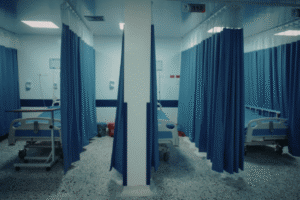


You checked into a Las Vegas hospital for one problem and left fighting another one nobody warned you about. Now you’re staring at a MRSA diagnosis, a wound that won’t heal, or a loved one on antibiotics for something they caught inside the building — and everyone in scrubs keeps calling it “an unfortunate complication.” Here’s what they’re not telling you: a large share of hospital-acquired infections are preventable, and “preventable” is not a feeling. It’s a legal line.
That line is the difference between a genuinely unavoidable outcome and a facility that cut corners on the basics. Below is how to tell which one you’re looking at, when a hospital may actually be responsible, and what to do next in Nevada.
How Hospital-Acquired Infections Actually Happen
A hospital-acquired infection (sometimes called an HAI or “nosocomial” infection) is one you pick up during care, not one you walked in with. The most common ones injured patients ask us about include:
- MRSA (methicillin-resistant Staphylococcus aureus) — a staph infection resistant to common antibiotics, often showing up in surgical wounds or the bloodstream.
- C. diff (Clostridioides difficile) — a gut infection linked to heavy antibiotic use and contaminated surfaces.
- Surgical-site infections — infections at or near an incision.
- Catheter-related bloodstream infections (CLABSI) — from central lines that weren’t placed or maintained cleanly.
- Ventilator-associated pneumonia (VAP) — a lung infection tied to breathing-tube care.
These organisms spread through predictable routes: unwashed hands, unsterile instruments, contaminated surfaces, poorly maintained catheters and lines, and sloppy wound care. That predictability matters, because a route that’s predictable is also a route that’s preventable — which is exactly why infection control exists.
Preventable vs. Unavoidable: The Line That Decides Your Case
Not every infection is someone’s fault. Being honest about that is the whole point — because it’s also what makes the preventable ones actionable.
Factors that often point to preventable negligence:
- Staff skipping hand hygiene between patients
- Instruments or equipment that weren’t properly sterilized
- Central lines or catheters left in too long or handled without sterile technique
- Wound care that fell below the standard — dressings not changed, sites not monitored
- Early signs of infection (fever, redness, rising white counts) noticed late or ignored
- Understaffing that leaves overloaded nurses unable to keep up with basic infection protocols
Factors that usually point to an unavoidable outcome:
- A severely immunocompromised patient (chemotherapy, transplant, advanced illness)
- Colonization the patient already carried before admission
- Genuine medical emergencies where sterile ideal conditions weren’t possible
- A known, disclosed risk of an otherwise properly performed procedure
The honest reality sits in the middle: an infection by itself doesn’t prove negligence, and a hospital saying “these things happen” doesn’t disprove it. What decides your case is whether the facility met the accepted standard of care — and whether a preventable lapse is what let the infection take hold. Proving a hospital fell short of that standard is a specific legal process, not a hunch, and it’s not something you’re expected to do on your own.
When a Las Vegas Hospital May Be Legally Responsible
Nevada hospitals — UMC, Sunrise, Valley, Spring Valley, Summerlin, Centennial Hills, Mountain View — all operate under the same duty: to follow reasonable infection-control standards and protect the patients in their care. When a facility’s own failure causes preventable harm, that can be hospital negligence, a form of medical malpractice under Nevada law.
This isn’t theoretical here. Major Valley hospital systems have been named as defendants in Nevada medical-malpractice litigation, some reaching the Nevada Supreme Court. Large local facilities do get held accountable when the evidence supports it — you are not the first Las Vegas patient to ask whether an infection could have been prevented.
Two things to understand about liability:
- It can be the institution, not just one person. What counts as malpractice often comes down to systemic failures — understaffing, broken protocols, poor oversight — rather than a single “bad” nurse or doctor.
- The clock is different for infections. Nevada gives medical-malpractice claimants a longer, more forgiving deadline than most injury cases, and it runs in part from when you discovered the harm — which matters when an infection surfaces days or weeks after discharge. The specifics of that filing deadline are explained here, and they’re strict once they run, so it’s worth knowing where you stand early.
Every case turns on its own facts, so treat this as general information rather than advice about your specific situation — the only way to know what your circumstances support is to have them reviewed.
What to Do If You Suspect a Preventable Hospital Infection
If your gut is telling you this shouldn’t have happened, take a few practical steps:
- Request your complete medical records — admission notes, nursing charts, lab results, and any infection-control documentation. You have a right to them.
- Write down the timeline while it’s fresh: when symptoms started, what you were told, who said it.
- Don’t accept “just a complication” as the final word. It may be accurate — or it may be the easiest thing to say.
- Note the discovery date. The day you learned the infection was hospital-acquired can matter for your deadline.
- Keep everything — photos of the wound, discharge paperwork, follow-up bills.
You don’t need to prove the case yourself. In Nevada, a malpractice claim is built with a qualified medical expert who reviews the records and identifies exactly where care fell short — that’s the standard for filing, and it’s the firm’s job to handle, not yours.

Frequently Asked Questions
What are the first signs of MRSA?
MRSA often starts on the skin, which is why it’s frequently mistaken for a spider bite. Watch for a red, swollen, painful bump or a cluster of bumps that feel warm to the touch, sometimes draining pus or fluid. It may come with a fever. When MRSA is tied to a surgical site or a wound, the early signs are increasing pain, redness spreading around the incision, warmth, and drainage that looks or smells off. Because MRSA is antibiotic-resistant, it can worsen quickly, so early signs after a hospital stay deserve prompt medical attention — and documentation, in case the infection turns out to be hospital-acquired.
Does MRSA ever go away completely?
An active MRSA infection can usually be treated and cleared, often with specific antibiotics that still work against it and sometimes with drainage of the infected area. But there’s a distinction that trips people up: even after the infection resolves, some people remain “colonized,” meaning the bacteria still live harmlessly on the skin or in the nose without causing illness. Colonized carriers can develop a new infection later, especially during another hospital stay or surgery. So MRSA can be beaten, but for some patients it isn’t a one-and-done situation. Your treating doctor can tell you whether you’re cleared, colonized, or still fighting an active infection.
Do I need to stay away from people if I have MRSA?
You generally don’t need full isolation, but you do need common-sense precautions to avoid spreading it. Keep any wounds clean and covered with a dry bandage until they heal, and wash your hands often — especially after changing dressings. Don’t share personal items like towels, razors, or bedding, and wash your laundry in hot water. If you’re caring for someone with MRSA at home, glove up for wound care and wash your hands afterward. The people most at risk from your infection are those with weakened immune systems or open wounds of their own, so extra care around them is wise until you’re cleared.
What comes first, sepsis or MRSA?
The infection comes first. MRSA is a specific bacterial infection; sepsis is the body’s extreme, life-threatening reaction to an infection that has spread or gone unchecked. In other words, a MRSA infection (or another hospital-acquired infection) can lead to sepsis if it isn’t caught and treated in time — sepsis is the escalation, not the starting point. This is exactly why delayed recognition matters so much in a hospital setting: staff who miss the early signs of a preventable infection can allow it to progress to sepsis, which is far more dangerous. If a hospital’s failure to act let an infection spiral into sepsis, that progression is often central to a negligence claim.

Talk to a Las Vegas Hospital Negligence Attorney
If something about your infection feels wrong, that instinct is worth listening to — you know your own body and your own care better than anyone reviewing the chart later. The hard part is that hospitals and their insurers are practiced at framing preventable harm as bad luck.
That’s the advantage of having Glen Howard in your corner. Before founding Howard Injury Law, he worked as an insurance defense attorney — the side that gets paid to call your infection “an unfortunate complication.” He knows exactly how those arguments are built, which means he knows how to take them apart.
A consultation is free, it costs you nothing to simply ask, and you’re under no obligation. And because the firm works on contingency, there’s no fee unless we win your case. If you suspect a preventable hospital-acquired infection harmed you or someone you love, reach out for a free case review — and don’t wait too long, because Nevada’s filing deadline is strict once it starts to run.