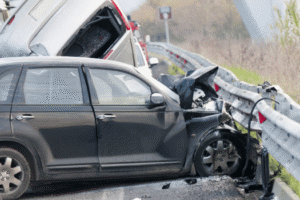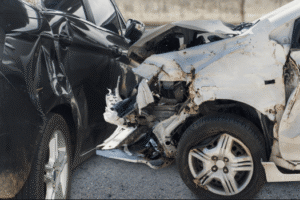


If a driver hit you while texting, the crash was preventable — and your claim is often worth more than the adjuster’s first number suggests. This guide breaks down what a texting and driving accident settlement is actually worth in Nevada, the ranges people see by injury type, and the specific things that push a claim’s value up or drag it down.
There’s no single “average” that tells you what your case is worth. Two texting crashes at the same Las Vegas intersection can settle for wildly different amounts depending on the injuries, the medical record, and how clearly the other driver’s distraction is documented. What follows is how the value is really built.
What Is a Texting-While-Driving Accident Claim Worth in Nevada?
A distracted driving claim is worth the full cost of what the crash did to your life: medical bills, future treatment, lost income, reduced earning ability, and the pain and daily limits you now live with. Texting, talking on a handheld phone, eating or drinking behind the wheel, and adjusting dashboard screens are among the top causes of crashes in Nevada — and when one of them caused yours, the at-fault driver’s insurer owes for the damage.
The reason there’s no reliable “average” is that value tracks severity and proof, not the type of crash. A soft-tissue neck injury and a spinal fracture are both “texting accidents,” but they don’t live in the same universe on value. The ranges below are illustrative of what Nevada claims tend to look like by injury tier — not a prediction for your case. The only way to get a real number is to have the specific injuries, records, and insurance coverage reviewed.
Settlement Ranges by Injury Severity
These are general ranges seen across Nevada distracted driving claims. Treat them as a rough map, not a quote — where your case lands depends on the factors further down this page.
Minor and soft-tissue injuries
Whiplash, sprains, strains, and soft-tissue neck and back pain typically fall in the $3,000 to $25,000 range. These claims turn heavily on documentation. A gap between the crash and your first medical visit, or a short treatment history, gives the insurer room to argue the injury was minor or unrelated. Consistent treatment and a clear diagnosis move these cases toward the top of the range.
Moderate injuries requiring surgery
Fractures, herniated discs, torn ligaments, and injuries that need surgery generally land in the $25,000 to $150,000 range. Once a procedure is involved, the medical bills climb fast, recovery takes months, and lost wages stack up. The value here is driven by the surgical record, the recovery timeline, and any lasting limits the injury leaves behind.
Severe or catastrophic injuries
Traumatic brain injuries, spinal cord damage, permanent disability, and injuries that end or change a career start around $250,000 and can exceed $1,000,000. At this level, future medical care and lost earning capacity become the largest part of the claim, and the available insurance coverage often becomes the real ceiling — which is why underinsured motorist coverage matters so much in serious cases.
Why Distracted Driving Can Raise the Value of Your Claim
Distraction isn’t just how the crash happened — it can strengthen your position on liability, and liability is a value lever.
Nevada law prohibits handheld texting, reading data, and holding a phone to talk while driving. When the other driver broke that law, it helps establish they were negligent, which makes fault harder for their insurer to shift onto you. Clear fault means fewer dollars shaved off your recovery under Nevada’s comparative negligence rules — and a claim the insurer is more motivated to settle rather than take to a jury.
In rare, egregious cases — think prolonged, willful phone use in obvious disregard for everyone around them — a claim may support an argument for punitive damages. That’s a high bar in Nevada and never automatic; ordinary texting is treated as negligence, not the kind of conduct that unlocks punitive awards. If your case has facts that go beyond a momentary glance at a screen, that’s worth raising with an attorney. Every case is different, and only a review of the specific facts can tell you whether that leverage exists.
What Increases (or Shrinks) Your Settlement
The same crash can settle for very different amounts depending on these factors:
- Injury severity and permanence — lasting or disabling injuries carry the most value.
- Medical documentation — a clean, consistent treatment record is often the single biggest driver. Gaps and delays are the first thing an adjuster attacks.
- Lost income and earning capacity — time off work, and any long-term hit to what you can earn.
- How clearly the distraction is proven — solid evidence of phone use tightens liability and raises value.
- Available insurance coverage — including your own underinsured motorist policy when the at-fault driver’s limits fall short.
- Comparative fault — any percentage of blame the insurer pins on you reduces your recovery.
- Pain and suffering — the non-economic toll, from chronic pain to lost ability to do the things you used to. This is a real and often large part of a claim; you can learn more about pain and suffering after a car accident and how it’s calculated.
For the fuller picture of how these pieces come together, see our breakdown of how much your car accident case is worth, and — if you want the broader, non-distraction number — our guide to the average car accident settlement in Las Vegas.
Proving the Other Driver Was Distracted
Value follows proof, so the evidence that they were on their phone directly affects the number. Phone records, carrier data, the police report, witness statements, and any traffic or business camera footage near the scene can all place the phone in the driver’s hand at the moment of impact. In many cases, an attorney has to subpoena those cell phone records — drivers rarely admit they were texting.
This is its own subject, and we cover it in depth in how to prove distracted driving in a Nevada car accident. The short version: the sooner the evidence is preserved, the stronger your claim, because records and footage don’t stay available forever. It’s the same reason a cell phone car accident case can be won or lost in the first few weeks.
Should You Accept the First Settlement Offer?
Usually not. The first offer is a starting point, and it’s almost always low — designed to close your claim before you know its full value or before all your injuries have fully surfaced. Once you accept, the claim is over; you can’t reopen it if your neck pain turns into a herniated disc three months later.
This is where working with a firm that knows the other side pays off. Glen Howard spent years as an insurance defense attorney before founding Howard Injury Law — he built the very playbooks these adjusters use to value down and delay claims. When we look at an opening offer, we know the number they started from and why. That’s a different conversation than a lone claimant guessing at what’s fair.
Nevada Deadlines That Affect Your Claim
Nevada gives you two years from the date of the crash to file a personal injury lawsuit. Miss that deadline and a court can throw out even a strong case, so it’s not a date to leave to chance. More on the specifics in how long you have to sue after a car accident in Nevada.
There’s a second, tighter clock that matters more in distracted driving cases: the evidence. Cell phone records, surveillance footage from nearby businesses, and vehicle data can disappear or be overwritten in weeks. The earlier an attorney gets involved, the more of that proof survives — and proof is what protects your claim’s value.

Frequently Asked Questions
What is the average settlement for a texting-while-driving accident in Nevada?
There’s no fixed average, because value tracks injury severity, documentation, and available insurance — not the type of distraction. As a rough guide, minor soft-tissue claims often fall between $3,000 and $25,000, injuries requiring surgery between $25,000 and $150,000, and severe or catastrophic injuries from $250,000 into seven figures. These are illustrative ranges, not predictions. A texting crash with clear evidence of phone use and well-documented injuries tends to settle higher than one where fault or treatment is murky. The only way to get a real figure for your situation is a review of your specific injuries, records, and the at-fault driver’s coverage.
How do I prove the other driver was texting?
You typically prove it with cell phone records, the police report, witness accounts, and nearby camera footage. Drivers rarely admit to texting, so an attorney often has to subpoena carrier records to place the phone in use at the moment of the crash. The key is speed — records and footage don’t stay available forever, so preserving that evidence early is what keeps your claim strong. We walk through the full process in our guide on proving distracted driving in a Nevada car accident.
Does Nevada’s 51% fault rule affect my settlement?
Yes. Nevada uses modified comparative negligence: you can still recover as long as you’re not more than 50% at fault, but your award is reduced by whatever share of blame is assigned to you. So if you’re found 20% responsible on a $100,000 claim, you recover $80,000 — and at 51% or more, you recover nothing. This is exactly why insurers try to shift blame onto injured people: every percentage point they pin on you is money out of your pocket. Clear evidence that the other driver was distracted helps keep your fault percentage where it belongs — at or near zero.
How long do I have to file a texting accident claim in Nevada?
Generally two years from the date of the crash, under Nevada’s personal injury deadline. Waiting until the deadline is risky, though — the evidence that proves distraction, like phone records and surveillance footage, can vanish long before two years pass. Getting an attorney involved early preserves that proof and gives your claim the best chance. If a loved one died in the crash, different timing rules can apply, so it’s worth confirming your specific deadline with a lawyer.
Should I accept the insurance company’s first offer?
Rarely. First offers are typically low and come early, before the full extent of your injuries is known. Once you sign, the claim is closed for good — even if your condition worsens later. Before accepting anything, it’s worth having the offer reviewed against what your claim is actually worth, especially in a distracted driving case where strong liability evidence gives you leverage the insurer would rather you not use.

Find Out What Your Distracted Driving Claim Is Really Worth
If an adjuster has already put a number in front of you, that number was built to protect their company — not you. Before you accept it, find out what your claim is worth to someone who has sat on their side of the table.
A free case review with a Las Vegas distracted driving accident attorney gives you a real read on your case — what it’s worth, what evidence needs preserving now, and whether the offer on the table is fair. Howard Injury Law works on contingency, so there’s no fee unless we win, and Glen Howard’s insurance-defense background means we know exactly how these claims get valued down. If you were hurt in any Las Vegas car accident involving a distracted driver, call (702) 331-5722 for your free consultation.
Every case is different, and this article is general information about Nevada law — not legal advice for your specific situation. Talk to an attorney about the facts of your case.