


You finally reach a settlement after a car accident. The number looks good. Relief kicks in. Then reality hits:
“Wait… who gets paid first?”
“Do I have to pay all these medical bills?”
“What are these liens—and why are they taking my money?”
This is the part no one really explains upfront.
Wondering how medical bills and liens are paid after a settlement? At Howard Injury Law, we’ll let you know how the process works—and how to protect your final payout. Injured? Call us at Howard Injury Law 24/7 at (702) 331-5722 for a free consultation or fill out our 24/7 web form.

Where Your Settlement Money Goes
Before you ever receive a check, your settlement is typically divided into several parts:
- Attorney fees
- Case costs
- Medical bills and liens
- Your net recovery (what you take home)
This breakdown is usually shown in something called a:
The Settlement Distribution Sheet
Think of this as your financial roadmap. It shows:
- Total settlement amount
- Attorney percentage
- Expenses (filing fees, records, etc.)
- Medical bills and liens
- Final payout to you
If you don’t understand this sheet—you don’t understand your case outcome. A good Las Vegas personal injury lawyer or attorney will walk you through this line by line before any money is distributed.
Do You Have to Pay Your Medical Bills From a Settlement?
Short answer?
Yes—most of the time, you do.
If medical treatment was provided because of your accident, those providers expect to be paid.
But here’s where it gets nuanced:
Not all bills are treated the same.
There are different categories:
- Regular medical bills
- Medical liens
- Health insurance reimbursement (subrogation)
- Government liens (Medicare/Medicaid)
Each one has different rules—and different leverage when it comes to negotiation.

What Is a Medical Lien?
A medical lien is a legal claim against your settlement.
It allows a provider to:
- Get paid directly from your case
- Claim a portion of your settlement proceeds
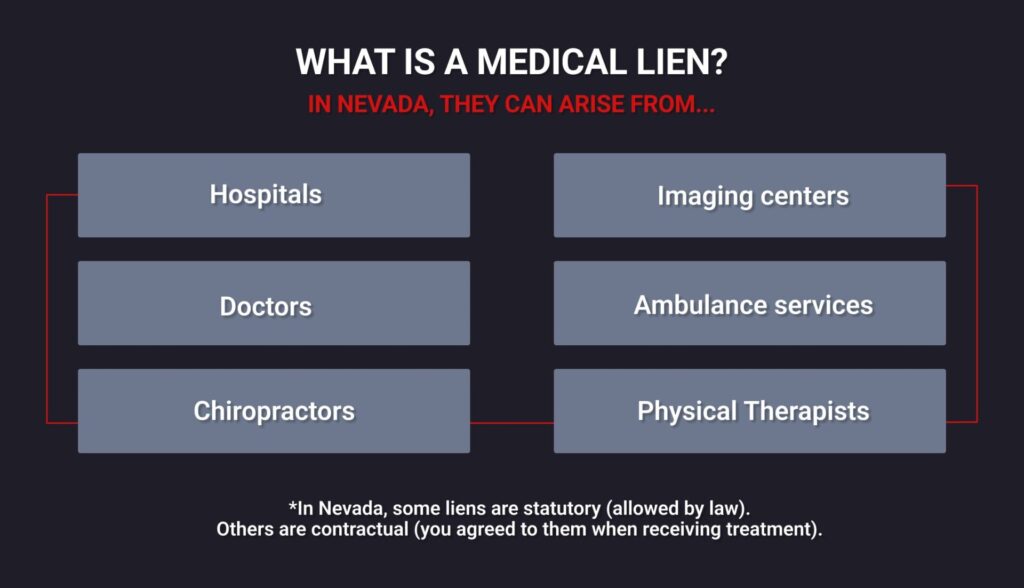
In Nevada, liens can arise from:
- Hospitals
- Doctors
- Chiropractors
- Imaging centers
- Ambulance services
Some liens are statutory (allowed by law).
Others are contractual (you agreed to them when receiving treatment).
The Difference Between Liens, Bills, and Letters of Protection (LOPs)
This is where people get confused—so let’s clean it up.
Regular Medical Bills
These are standard invoices.
They don’t automatically have legal rights to your settlement.
Medical Liens
These have legal standing.
They can demand payment directly from your settlement.
Letters of Protection (LOPs)
This is an agreement between:
- You
- Your attorney
- The medical provider
It says:
“Treat now, get paid later from the settlement.”
LOPs are common in personal injury cases where patients don’t want to use health insurance upfront.
Subrogation (Health Insurance)
If your health insurance paid your bills, they may seek reimbursement later.
This is called subrogation.
And yes—they often want their money back.
How to Check for Liens on Your Case
Before money gets distributed, all liens must be identified.
This process typically includes:
- Contacting hospitals and providers
- Requesting billing records
- Checking health insurance payments
- Reviewing treatment history
- Verifying lien notices
Your attorney will often compile something like a:
Lien Dossier
This is a full list of:
- Who is owed money
- How much is owed
- Whether the claim is valid
Because here’s the truth: Not every bill or lien is valid.
Verifying Lien Validity (This Is Where Money Is Saved)
Just because someone sends a bill doesn’t mean:
- It’s accurate
- It’s enforceable
- It should be paid in full
Common issues include:
- Duplicate charges
- Billing errors
- “Upcoding” (charging for more expensive procedures)
- Services unrelated to the accident
A skilled Las Vegas attorney will audit these charges and challenge anything questionable. This step alone can significantly increase your net payout.

Negotiating Medical Bills and Liens
This is where strategy matters. Most providers would rather:
- Get paid something
- Than risk getting nothing
So settlements often involve negotiation.
Common negotiation strategies include:
- Requesting reduced lump-sum payments
- Highlighting limited settlement funds
- Challenging inflated charges
- Using legal leverage where applicable
In Nevada, experienced lawyers regularly negotiate:
- Hospital liens
- Chiropractic bills
- Imaging costs
And yes—reductions can be substantial.
Medicaid and Medicare Liens (Non-Negotiable Territory… Mostly)
If Medicare or Medicaid paid for your care, things change.
These are government liens, and they must be addressed carefully.
Medicare:
- Must be reimbursed from your settlement
- Requires formal reporting and final demand amounts
- Can delay settlement distribution if not handled properly
Medicaid:
- Also requires repayment
- May allow limited negotiation depending on circumstances
If these liens aren’t resolved correctly, it can lead to:
- Delays
- Penalties
- Legal complications
This is not DIY territory. A knowledgeable Nevada personal injury lawyer will handle this process.
Who Actually Pays the Medical Bills?
Let’s clear this up. You don’t typically sit there writing checks to every provider. Instead:
Your Attorney Handles It
Once your settlement is received:
- Funds are placed in a trust account
- Liens and bills are verified
- Negotiations happen
- Payments are issued
- You receive your final portion
This ensures:
- Nothing is missed
- Everything is documented
- You’re protected from future claims
When Are Medical Bills Paid?
Bills and liens are paid after the settlement is finalized but before you receive your money.
This timing matters because:
- You can’t distribute funds until liens are resolved
- Some negotiations take time
- Government liens can delay the process
Patience here protects you from future liability.
What Happens If You Don’t Pay Medical Liens?
Ignoring liens is not an option.
If valid liens are not paid:
- Providers can pursue legal action
- Your credit may be affected
- You could face collections
- Your attorney may be ethically required to withhold funds
Bottom line: Liens don’t disappear—they follow the money.
The Surprise That Catches People Off Guard
One of the biggest mistakes? Forgetting about smaller providers. Examples:
- Radiologists
- Lab services
- Ambulance companies
- Independent specialists
These providers may bill separately—and sometimes late. That’s why a thorough lien check is critical before closing out your case.
How Much Is Pain and Suffering Worth?
This is one of the most searched—and misunderstood—questions. There’s no fixed number. Pain and suffering depends on:
- Severity of injuries
- Duration of recovery
- Impact on daily life
- Emotional distress
- Long-term effects
In Nevada, this is fact-specific and often negotiated. But here’s the key:
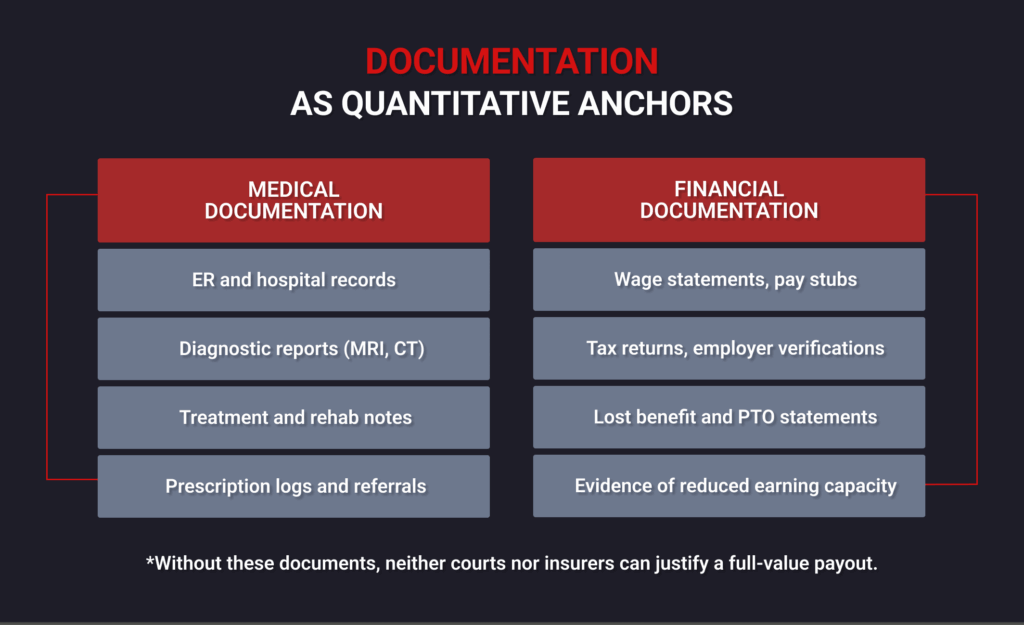
Your medical documentation directly influences this value. The stronger your treatment history, the stronger your claim.
What Should You Not Say During Settlement?
This part is underrated—but critical. During settlement discussions, avoid saying:
- “I just want to be done”
- “I don’t need that much”
- “I feel fine now”
- “Let’s just settle quickly”
These statements signal:
- Urgency
- Weak leverage
- Willingness to accept less
Insurance companies are trained to pick up on this. Instead, let your Las Vegas accident attorney handle negotiations strategically.
How to Maximize Your Net Settlement
If your goal is to walk away with the highest possible payout, focus on:
- Verifying every lien
- Challenging inflated charges
- Negotiating reductions
- Identifying all coverage sources
- Avoiding premature settlements
This is where having the right legal team makes a massive difference.
Speak With a Las Vegas Personal Injury Lawyer Today
If you have questions about your settlement, liens, or medical bills, Howard Injury Law is here to help. Our experienced Las Vegas attorneys handle:
- Lien verification and negotiation
- Settlement distribution strategy
- Insurance and medical billing disputes
At Howard Injury Law, we represent all injury victims across Las Vegas, Nevada with elite trial experience and real courtroom strength. When your health, income, and future are at stake, you deserve a lawyer who prepares every case as if it’s going to trial.
📞 Free Consultation: (702) 331-5722
–Se habla español
-我们说普通话和粤语
Learn More About:
-Our Las Vegas car accident attorneys
-How to choose the right personal injury lawyer in Las Vegas
–Helpful resources before and after an accident
Learn about Attorney Glen Howardand the team behind Howard Injury Law.
Find us on Google, Yelp, or follow us on Instagram for community news, legal updates, and safety tips.