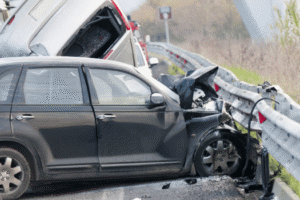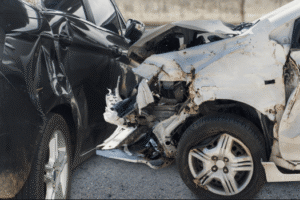


A visiting driver staring at their GPS or texting a hotel confirmation just hit you, and now you are hurt, shaken, and worried they will fly home before anyone sorts out who was at fault. That worry is fair, but the situation is more in your favor than it feels right now. A distracted tourist driver accident in Las Vegas is one of the most provable types of crash there is, as long as the right evidence gets locked down quickly.
Here is what actually matters in the hours and days after the wreck, how Nevada law treats a distracted out-of-state driver, and how the right steps now protect your ability to recover later.
Why distracted tourist drivers cause so many Las Vegas crashes
Distracted driving is one of the top causes of crashes in Nevada, and Las Vegas concentrates every ingredient that makes it worse. Roughly 40 million people visit the city each year, and a large share of them get behind the wheel of a rental car on roads they have never driven, in a place designed to pull their eyes off the road.
Unfamiliar routes and constant GPS glances
Out-of-state drivers rarely know where they are going. They look down at a phone mounted on the dash, glance up at street signs, and second-guess exits on I-15 or the 215 Beltway. Every one of those glances is a moment their eyes are off traffic. Adjusting the dashboard, reprogramming a route mid-drive, and hunting for a resort entrance are the exact behaviors that cause rear-end and lane-change collisions.
The Strip’s built-in distractions
Las Vegas Boulevard is engineered to grab attention. Neon signs, massive digital billboards, and heavy foot traffic near the resort corridor pull a driver’s focus off the car in front of them. A tourist trying to read a marquee or spot a valet entrance is not watching brake lights, and sudden stops in that stretch are constant.
Where these crashes tend to cluster
Most tourist-involved crashes happen where visitors actually drive: the Strip and Las Vegas Boulevard, the I-15 corridor near Tropicana and Sahara, and the surface streets feeding the major resorts. Congestion in these areas produces abrupt stops and quick lane changes, which is a bad combination with a driver who is looking at a screen instead of the road.
Is a distracted tourist driver still liable under Nevada law?
Yes. Nevada is an at-fault state, not a no-fault state, which means the driver who caused the crash is responsible for the harm they caused, regardless of where their license was issued. An out-of-state driver who causes a wreck in Nevada is held to Nevada’s traffic laws while they are here.
Nevada law also makes the specific behavior illegal. Under Nevada’s handheld device law, drivers cannot text, enter data, or hold a phone to talk while driving; hands-free use is the only allowed option. When a driver breaks that rule and causes a crash, that violation becomes powerful evidence of negligence in your injury claim. Because the claim arises from a crash on Nevada soil, it is handled under Nevada law even after the tourist goes home, and their insurance company can still be pursued here. If you are dealing with a driver who lives elsewhere, our guide on out-of-state driver accident claims walks through how that plays out.
One caution: insurers routinely try to shift blame onto the injured person to shrink what they pay. Every case turns on its own facts, so treat this as general information and talk to an attorney about yours.
What to do immediately after the crash — before the tourist leaves the state
The single biggest difference between a strong claim and a weak one is what happens in the first hour, because a tourist may be gone within a day or two. If you are safely able to, work through these steps:
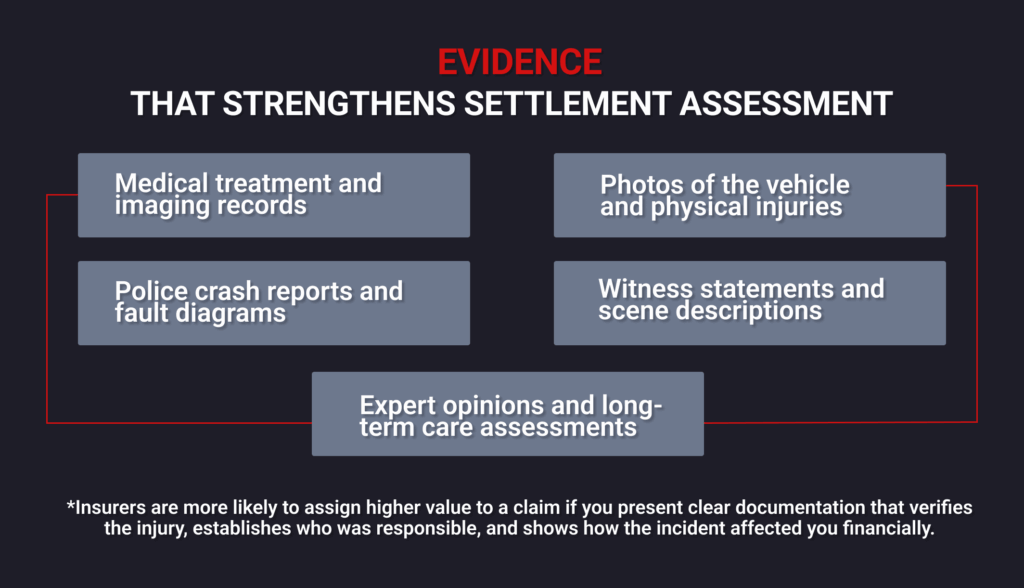
- Call 911 and ask for Las Vegas Metropolitan Police. A responding officer documents an official crash report and can issue a citation at the scene. That report becomes an anchor for your claim.
- Get medical care right away. A same-day evaluation creates a formal medical record tying your injuries to the crash. Gaps in treatment are the first thing an adjuster uses against you.
- Photograph everything. Capture vehicle damage, both license plates, the other driver’s phone in their hand if visible, the surrounding scene, traffic signals, and any resort or business cameras pointed at the intersection.
- Collect the tourist’s details in full. Home-state driver’s license, insurance card, rental car agreement, and a phone number. If they are in a rental, note the rental company; questions about rental car insurance coverage after an accident come up constantly in these cases.
- Get witness contact information. Tourists and locals who saw the crash may also leave town. A name and number now is worth far more than a memory later.
The faster these are secured, the less room the other side has to rewrite what happened.
How we prove a tourist was distracted
Proving distraction is not a matter of your word against theirs. There is usually a trail, and a legal team can move to preserve it before it is erased. Cell phone records and carrier data can show texting or app use at the moment of impact. Traffic cameras and resort or casino surveillance footage often capture the crash itself. The police report, any citation, and independent witness statements fill in the rest.
Timing is everything here, because a lot of this evidence is temporary. Surveillance footage gets overwritten on a cycle, and phone data has to be formally requested before it is gone. This is where Glen Howard’s background matters. As a former insurance defense attorney, he spent years on the other side, learning exactly how carriers minimize distracted driving claims and bury the evidence that proves them. For the deeper picture of how these claims are built and valued, see our distracted driving accident practice page. It sits within our broader Las Vegas car accident and motor vehicle accident resources.
Frequently Asked Questions
Is Nevada a no-fault state for accidents?
No. Nevada is an at-fault, or tort, state. That means the driver responsible for the crash, and their insurance company, pays for the harm they caused. You are not limited to your own coverage the way drivers in no-fault states are. To recover, you generally show the other driver was negligent, for example by texting or holding a phone in violation of Nevada law. Fault can be shared under Nevada’s comparative negligence rules, which is one reason insurers try to pin part of the blame on you. Because the details decide the outcome, it is worth having an attorney review the specifics of your crash.
What’s worse, distracted driving or speeding?
Both are dangerous, but distracted driving is uniquely so because it removes all three things a driver needs at once. Texting takes the eyes off the road, the hands off the wheel, and the mind off driving in the same moment, while speeding usually affects only one of those. A driver reading a phone at highway speed travels the length of a football field essentially blind. That combination is why cell phone use behind the wheel is treated so seriously under Nevada law and why it produces so many serious injury crashes.
What is the most common cause of distracted driving accidents?
Cell phone use, especially texting, is the most common and most cited cause. Beyond phones, the frequent culprits are talking on a handheld phone, eating or drinking, and adjusting dashboards, navigation, or climate controls. For visiting drivers in Las Vegas, GPS use is a leading trigger, since they constantly check directions on unfamiliar roads. Anything that pulls a driver’s eyes, hands, or attention away from the task of driving qualifies, and in a busy resort corridor even a few seconds is enough to cause a crash.
What happens if the tourist who hit me already flew home?
You can still pursue your claim. A crash that happened in Nevada is handled under Nevada law no matter where the at-fault driver lives, and their insurance company can be pursued here. A Las Vegas attorney can locate the driver, work with their insurer, and, if needed, file suit while managing the cross-state logistics for you. This is exactly why the evidence you gather at the scene matters so much, and why acting quickly is worth it. Remember that Nevada generally gives injury victims two years from the date of the crash to file, so the clock is running even while a tourist is long gone.
Talk to a Las Vegas attorney before the evidence disappears
If a distracted tourist driver hurt you, the most valuable move you can make is preserving the proof before it is overwritten or the driver becomes hard to reach. That is not something you should have to chase alone while you are trying to heal.
Howard Injury Law was founded by attorney Glen Howard, who knows how the other side thinks because he used to be on it. We work on a contingency fee, which means no fee unless we win your case, and a consultation costs you nothing. Call (702) 331-5722 or reach out through our contact page to find out whether you have a case and what evidence needs to be secured today. If you are a visitor injured far from home and unsure where to turn, our HILhelps community resource is a place to start.