


You hired a personal injury attorney. A few days later someone calls to introduce themselves as your case manager. You’re wondering — who is this person, what do they do, and are they the one actually handling my case? These are fair questions. Understanding what a personal injury case manager actually does — and how their role differs from your attorney’s — helps you know who to call for what, what to expect throughout your case, and how the firm is organized to serve you.
Here’s a clear breakdown of what case managers do, what they don’t do, how their role compares to a paralegal, and how Howard Injury Law structures the relationship between your attorney and support staff.

What a Personal Injury Case Manager Is
A personal injury case manager handles the organizational and coordination work that keeps a case moving efficiently. They manage the logistics — the records, the communications, the timelines, the documentation — so your attorney can focus on legal strategy, negotiation, and advocacy.
Case managers are not attorneys. They don’t give legal advice, make strategic decisions about your case, or negotiate with insurance companies. Those functions belong to your attorney. What case managers do is handle the substantial operational work that surrounds those legal functions — and handle it well so nothing falls through the cracks.
At a well-run personal injury firm, your case manager and your attorney work as a coordinated team. Your attorney leads. Your case manager executes. Together they cover every aspect of your case — legal and operational — without you having to manage the details yourself.
The Daily Work of a Personal Injury Case Manager
The specific tasks a case manager handles vary by firm and by case stage. Across most personal injury practices in Las Vegas, the core responsibilities cover medical management, insurance coordination, client communication, and demand preparation.
Medical Record Tracking and Management
Your medical records are the foundation of your personal injury claim. Every ER visit, specialist appointment, imaging study, physical therapy session, and prescription creates a record that documents the nature, extent, and progression of your injury. Compiling those records — from multiple providers, across multiple months of treatment — is a significant organizational task.
Your case manager tracks which records have been requested, which have been received, and which are outstanding. They follow up with providers who haven’t responded to record requests, organize the documentation so the attorney has a complete, chronological picture of your treatment when building the demand package.
They also monitor whether you’re following your treatment plan — because gaps in treatment are one of the primary tools insurers use to minimize claims. A case manager who notices you’ve missed several physical therapy appointments can alert you to the potential impact on your case before it becomes a problem that’s harder to address.
Insurance Coordination
Your case manager handles the administrative relationship with insurance companies — establishing claims, verifying coverage limits, documenting adjuster contacts, and tracking response timelines.
When Howard Injury Law takes your case, we notify the at-fault driver’s insurer of our representation. From that point forward, all insurer communication routes through the firm. Your case manager tracks that communication — logging every call, every letter, every email — so the attorney has a complete record of how the insurer has handled your claim.
They also verify coverage — confirming the at-fault driver’s policy limits, checking whether umbrella coverage applies, and identifying any other potentially applicable coverage sources. That coverage picture shapes the attorney’s demand strategy.
Client Communication and Status Updates
Your case manager often handles the day-to-day communication flow between you, the firm, your medical providers, and the insurance companies. When you call with a question about your treatment timeline, a document you received, or a status update on your case, your case manager frequently handles that call.
This isn’t a barrier between you and your attorney. It’s an efficient division of communication. Questions about case status, appointment scheduling, record requests, and insurance correspondence don’t require attorney-level judgment — they require accurate, timely responses. Your case manager provides those.
When something requires attorney judgment — a new settlement offer, a legal strategy question, a development that changes the case picture — the communication routes to your attorney. The case manager and attorney coordinate on which questions belong where.
Demand Package Preparation
As your treatment concludes and the case approaches the demand phase, your case manager compiles the full evidentiary picture. Medical records and bills from every provider. Lost wage documentation from your employer. Photographs of injuries and property damage. Insurance correspondence. A chronological summary of your treatment history and current medical status.
This compiled package gives the attorney everything they need to draft a comprehensive settlement demand. The quality of that compilation — how complete it is, how well-organized, how accurately it captures the full scope of your losses — affects the quality of the demand and the insurer’s response to it.
What a Case Manager Does Not Do
Understanding the limits of a case manager’s role is as important as understanding what they do — especially when evaluating how a firm is actually structured.
Case Managers Don’t Give Legal Advice
Legal advice — assessment of liability, strategic recommendations, evaluation of settlement offers, advice about whether to file a lawsuit — belongs exclusively to your attorney. A case manager who offers opinions on whether you should accept a settlement offer or advises you on legal strategy is operating outside their role.
If you receive legal advice from a case manager at any firm without clear indication that the attorney reviewed and directed it, that’s worth noting.
Case Managers Don’t Negotiate Settlements
Settlement negotiation is an attorney function. The demand goes out under the attorney’s name. Counter-offers get evaluated by the attorney. The negotiation strategy — when to push, when to hold, when to recommend filing a lawsuit — comes from the attorney’s legal judgment and their understanding of Nevada law, local court tendencies, and insurer behavior.
At Howard Injury Law, Glen Howard personally handles settlement negotiation on every case. The case manager supports that process by ensuring the attorney has complete, accurate, current information — but the negotiation itself is attorney-driven.
Case Managers Don’t Make Case Strategy Decisions
How your case gets built — what experts to retain, what legal theories to pursue, how to frame the liability argument, how to present your damages — these are attorney decisions. They require legal training, professional judgment, and understanding of how specific decisions will affect outcomes in Clark County courts and with specific insurers.
This is why the question “who handles my case day-to-day” matters when you evaluate any personal injury firm. An attorney-led case is fundamentally different from one where case managers make substantive decisions without meaningful attorney oversight.
Case Manager vs Paralegal — What’s the Difference
People often use these terms interchangeably. They describe related but distinct roles.
What Paralegals Do
Paralegals have formal legal training and handle work that requires legal knowledge — drafting legal documents, preparing court filings, conducting legal research, and supporting litigation preparation. When a personal injury case moves from the pre-litigation negotiation phase into active litigation — after a lawsuit is filed — paralegals step up their involvement significantly.
They prepare discovery documents, organize deposition materials, draft motion support documents, and manage the detailed legal paperwork that litigation requires. Their work is closely supervised by the attorney and directly supports the legal functions of the case.
What Case Managers Do
Case managers focus on the operational and coordination functions — medical records, insurance communications, client contact, and demand preparation. Their work is more administrative and organizational in nature, though it requires detailed knowledge of the personal injury claim process.
In practice, many personal injury firms have staff who perform overlapping functions. The important distinction for you as a client isn’t the job title — it’s whether attorney oversight governs all substantive decisions and whether you have direct access to the attorney when legal judgment is needed.
Why the Distinction Matters
At settlement mills — high-volume firms built around processing cases quickly — case managers often make substantive decisions that should belong to attorneys. They evaluate settlement offers, recommend acceptance, and manage negotiations with minimal attorney involvement. The attorney signs documents. The case manager runs the case.
That model produces faster case closure. It doesn’t produce better outcomes. For more on how to identify this pattern and what it means for your recovery, read our guide on trial lawyers vs settlement mills — what’s the difference.
How Howard Injury Law Structures the Case Manager Role
At Howard Injury Law, case managers support the attorney — they don’t replace the attorney’s involvement.
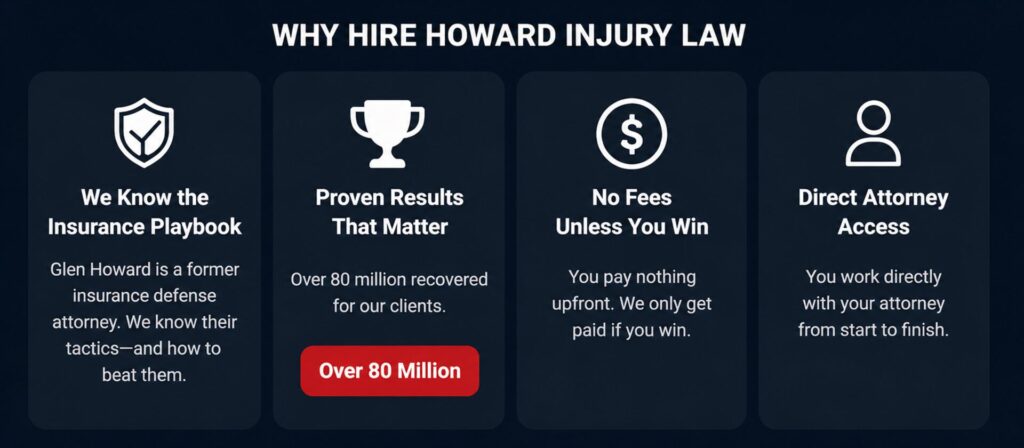
Glen Howard leads every case from intake through resolution. Our case managers handle the coordination, documentation, and communication logistics that keep cases moving efficiently. They track medical records, manage insurance correspondence, coordinate with providers, and compile demand packages. They keep clients informed on case status and answer operational questions promptly.
What they don’t do is make strategic decisions, evaluate settlement offers, or operate as a substitute for attorney involvement in substantive matters. When something requires legal judgment, it goes to Glen Howard. That’s not a policy statement — it’s how we actually operate.
We built this structure because we believe attorney-led cases produce better outcomes. Clients who work directly with their attorney make better-informed decisions about their cases. Demands built under close attorney supervision are more persuasive. Negotiations handled by experienced trial attorneys who understand how Nevada insurers operate produce higher settlements.
For more on why direct attorney involvement throughout your case matters for outcomes, read our guide on why direct access to your attorney matters.
Questions to Ask Any Firm About Their Case Manager Structure
When evaluating personal injury firms in Las Vegas, these questions reveal how the case manager role actually functions:
Who reviews settlement offers — the attorney or the case manager? The answer should be the attorney, always.
Who makes the decision to file a lawsuit if negotiations fail? Attorney-driven decisions on litigation should not involve case manager input as the primary voice.
Who contacts me when my case has a significant development? At well-run firms, significant developments come from the attorney.
How much direct contact will I have with the attorney throughout my case? The answer distinguishes attorney-led firms from case-manager-operated volume practices.
What is the case manager’s role in the demand package preparation? Compilation and organization — yes. Legal framing and strategic decisions — those belong to the attorney.
For a complete consultation evaluation framework, read our guide on questions to ask during a personal injury consultation.

Frequently Asked Questions
Is it normal to have a case manager on a personal injury case?
Yes — most personal injury firms use case managers to handle the substantial organizational work involved in tracking medical records, managing insurance correspondence, and preparing demand packages. The key question isn’t whether a firm uses case managers but how the attorney’s oversight and involvement works alongside them.
Can I request to speak directly with my attorney instead of the case manager?
Always. Your attorney is your legal representative and you have the right to direct communication with them. A responsive firm makes this straightforward rather than routing you back through case managers for matters requiring legal judgment. For more on what responsiveness looks like at a well-run firm, read our guide on responsive and respectful lawyers in Las Vegas.
How does the case manager help if I have trouble accessing medical care?
Your case manager connects you with providers who work with personal injury patients on medical liens — treatment now, payment from your settlement later. They coordinate referrals, track provider communications, and ensure your treatment is documented consistently throughout your recovery.
What happens to my case manager’s role if my case goes to litigation?
As the case moves into active litigation, paralegal and attorney involvement increases significantly. The case manager’s organizational role continues — tracking documents, managing communications, supporting the litigation team — but the work shifts toward the legal preparation that active litigation requires.
How do I know if a case manager is handling things they shouldn’t be?
Watch for case managers evaluating settlement offers without clearly attributing the recommendation to the attorney, making strategic recommendations about litigation, or being the primary contact for every matter regardless of legal complexity. These patterns suggest a firm where attorney oversight is thinner than it should be.
Supporting Your Case From the Inside Out
A personal injury case manager handles the detailed, time-consuming operational work that keeps your case moving — medical records, insurance coordination, client communication, and demand preparation. They do this work well so your attorney can focus on the legal strategy and advocacy that actually determines what your case is worth.
Understanding what a personal injury case manager actually does helps you work effectively with your firm and know who to call for what. It also helps you evaluate whether the firm you’re considering has the right structure — attorney-led, with case manager support, rather than case-manager-operated with minimal attorney involvement.
Howard Injury Law structures every case with Attorney Glen Howard leading and our support team backing that leadership. Free consultations 24/7. Call (702) 331-5722 or contact us here.