


If you lost someone in a crash on Las Vegas roads, one of the first documents you’ll need is the police report — and getting it after a fatal crash works differently than getting a routine fender-bender report. It takes longer, fewer people are allowed to request it, and the agency that has it depends on where the crash happened.
This guide explains how to get the police report after a fatal crash in Las Vegas: how to find the right agency, how to request the report from each one, who is legally allowed to get it, and why a fatal report can take weeks or months instead of days. If chasing paperwork is the last thing you have energy for right now, that’s understandable — and it’s something a fatal crash lawyer in Las Vegas can handle for you.
First, Find Out Which Agency Investigated the Crash
There is no single citywide lookup for crash reports in Clark County, because several agencies patrol different areas. The report is written and held by whichever agency responded to the scene. In and around Las Vegas, that’s usually one of four:
- Las Vegas Metropolitan Police Department (LVMPD) — most crashes on city streets, local intersections, and unincorporated Clark County (think Sahara & Decatur or Tropicana & Eastern).
- Nevada Highway Patrol (NHP) — crashes on state highways and interstates, including I-15, US-95, and the 215 Beltway.
- Henderson Police Department — crashes within Henderson city limits.
- North Las Vegas Police Department — crashes within North Las Vegas city limits.
The fastest way to confirm the agency is to look at the paperwork left at the scene — the officer’s business card, the driver’s exchange information, or any citation. It usually shows the agency name and a case or event number. If you don’t have that, the agency’s non-emergency records line can confirm whether they hold the report using the date, time, and location of the crash.
How to Request the Report From Each Las Vegas Agency
Each agency has its own process and fee. Here’s how the four Las Vegas–area agencies handle it.
LVMPD
LVMPD offers three ways to request a traffic collision report: online through the Records and Fingerprint Bureau, in person, or by mail.
- Online: The quickest option. You’ll need a debit or credit card, and most reports are delivered by email through a secure link.
- In person: Visit the Records and Fingerprint Bureau at 400 S. Martin Luther King Blvd., Building C, Las Vegas, NV 89106, or your nearest area command during business hours. Bring a valid photo ID.
- By mail: You’ll need to include a notarized authorization, a copy of your valid (unexpired) government photo ID, a self-addressed envelope, and payment by cashier’s check or money order.
The fee is usually around $12, and standard reports typically take at least 10 business days to become available. Fatal crash reports often take longer and may need to be picked up in person — more on that below.
Nevada Highway Patrol
If the crash happened on a freeway or interstate, NHP has the report. Routine NHP reports can be requested online, but fatal crash reports and crash photos are handled differently — you generally have to contact the regional office directly rather than pulling the report from the standard online portal. For the Las Vegas Valley, that’s the NHP Southern Command (Las Vegas Area) office, reachable at 702-668-4100. The base report fee is typically $10, with a small additional fee for photos.
Henderson and North Las Vegas
Henderson and North Las Vegas run their own records systems. Henderson makes closed-case reports available online, and its records line is 702-267-4700 — worth calling first to confirm the report is ready before you make a trip. North Las Vegas typically releases reports through an online records provider. In both cities, a report tied to an open fatal investigation usually won’t be released until the case is closed.
Why a Fatal Crash Police Report Takes Longer Than a Routine One
A minor crash report is often ready in about a week or two. A fatal crash is different, because it triggers a full investigation — measurements, evidence, toxicology, and sometimes a criminal case against the at-fault driver.
While that investigation is open, the agency may hold the report, release only a redacted or partial version, or wait until the case is closed before releasing the full file. That’s not the agency being difficult with your family — it’s standard for any death investigation. The same criminal case that slows the report down can also affect your family’s civil claim, which is why it helps to understand how the criminal case affects a fatal crash claim from the start.
If weeks pass with no report, that delay is normal. It does not mean anything is wrong with your case, and it does not mean you’ve missed a deadline.
Who Is Allowed to Request the Report When Someone Has Died?
This is where fatal crash reports get complicated for families. When the person named in the report has died, they obviously can’t request their own copy — so the agency has to verify that you have the right to it.
In practice, that means you’ll usually need to show your connection to the person who died and, depending on the agency, provide a notarized authorization and your photo ID. If the person’s estate has been opened, the personal representative of the estate typically has clear standing to request records on the family’s behalf.
An attorney can also request the report for you. When a law firm represents the family, it handles the verification, the paperwork, and the follow-up with the agency — so you’re not making repeated calls and trips while you’re grieving. Every family’s situation is different, so if you’re unsure whether you’re the right person to request the report, it’s worth a quick conversation with a lawyer before you start.
Are Nevada Police Reports Public Record?
Mostly, but not in the way people expect. Under Nevada law, the crash report an officer prepares — and the information in it — is not privileged or confidential. It’s treated as a public record rather than a secret file.
That does not mean anyone can download a full copy of it. Agencies release these reports to people with a legitimate connection to the crash — those involved, their legal representatives, and insurers — and they redact personal information like dates of birth and driver’s license numbers before releasing a report, especially to someone who wasn’t a party. So for a grieving family, the practical answer is: yes, the report exists and can be obtained, but you’ll likely need to show you’re entitled to it.
One thing to keep separate: the report a driver files directly with the Nevada DMV after a crash is a different document with its own confidentiality rules. The record you want is the investigating officer’s traffic collision report.
The Police Report Isn’t the Only Record — the Coroner’s Report
For a fatal crash, there’s a second document families often need: the coroner’s report. The Clark County Office of the Coroner/Medical Examiner determines the official cause and manner of death, and that report is separate from the police crash report and comes from a separate office.
Two things surprise families here. First, the cause of death may be listed as “pending” for weeks while toxicology and the examination are completed — that’s routine, not a sign of a problem. Second, because it’s a separate office, the coroner’s report has its own request process and fee. If impairment, a medical event, or another cause is a question in your loved one’s case, the coroner’s findings can matter as much as the police report.
Why Getting the Report Early Protects Your Family’s Claim
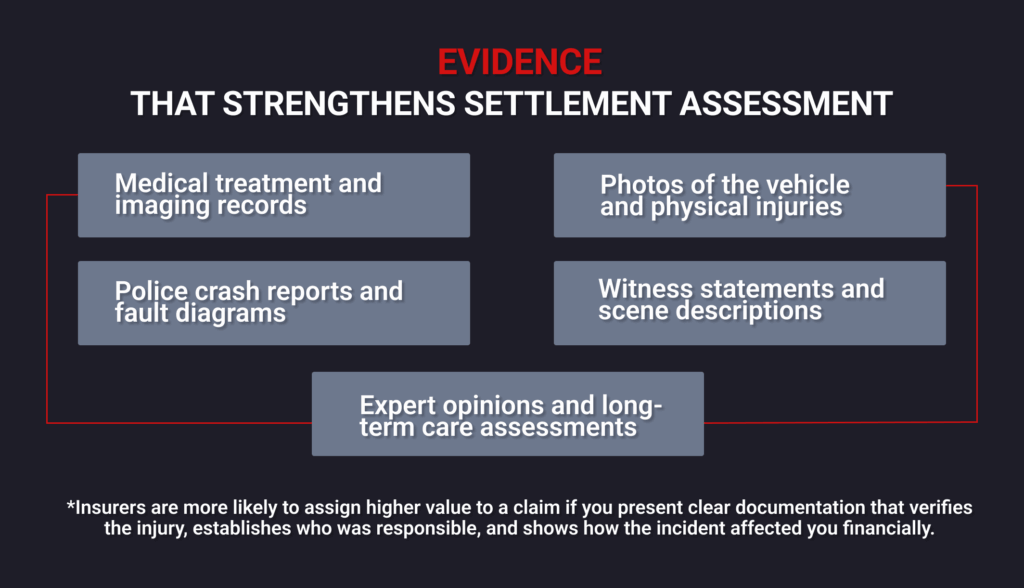
The police report is one of the most important pieces of evidence in a fatal crash case. It captures the officer’s account of what happened, any citations issued, witness information, and the initial view on fault — all of which shape how an insurance company evaluates the claim.
Getting it into the right hands early does two things. It preserves the record while memories and evidence are fresh, and it gives your family a clear picture of what you’re dealing with before an insurer starts making decisions for you. Nevada generally gives families two years from the date of death to bring a wrongful death claim, though certain circumstances can change that timeline — so it’s worth understanding your options well before that clock runs down. If you’re weighing what comes next, our team can walk you through help after a fatal car accident and where the report fits in.
Frequently Asked Questions
How long does it take to get a police report after a fatal crash in Las Vegas?
Longer than a routine crash report. A minor accident report is often ready in about 10 business days to two weeks. A fatal crash triggers a full investigation, so the report can take weeks or months, and the agency may release only a redacted or partial copy until the case is closed. Agencies like Henderson generally hold reports tied to an open investigation until it’s complete. If weeks pass with no report, that delay is normal — it does not mean something is wrong with your case or that you’ve missed a deadline. An attorney can follow up with the agency on your behalf and get you the report as soon as it’s released.
Who can request a police report for a family member who died?
Family members with a legitimate connection to the person who died can request the report, and the personal representative of the estate typically has clear standing to do so. Because the person named in the report has passed away, the agency has to verify that you’re entitled to a copy — which usually means showing your relationship and providing a notarized authorization and photo ID, depending on the agency. An attorney representing the family can also request the report and handle all of that verification for you. Every family’s situation is different, so if you’re unsure whether you’re the right person to request it, a quick conversation with a lawyer can save you time and frustration.
Are Nevada police reports public record?
Largely, yes. The traffic collision report an officer prepares is not privileged or confidential under Nevada law, so it’s treated as a public record. But that doesn’t mean anyone can pull a full copy. Agencies release these reports to people connected to the crash — those involved, their legal representatives, and insurers — and they redact personal details like dates of birth and driver’s license numbers, especially for anyone who wasn’t a party. For a grieving family, the report can be obtained, but you’ll generally need to show you’re entitled to it. Note that the separate report a driver files with the Nevada DMV is a different, more restricted document.
How much does a Las Vegas crash report cost?
Fees are modest and vary by agency. An LVMPD traffic collision report is usually around $12, and a Nevada Highway Patrol report is typically about $10, with a small extra fee for crash photos. Henderson and North Las Vegas set their own fees through their records systems. Fees can change, so confirm the current amount with the agency when you request the report. If a law firm is representing your family, obtaining the report is part of the work they do on your case — so cost is rarely something a grieving family needs to worry about on its own.
Do I need a lawyer to get the police report?
No — families can request the report themselves. But after a fatal crash, many people find it easier to have a lawyer handle it, because the process involves proving you’re authorized, waiting out an open investigation, and following up with the right office. A lawyer can obtain the police report and the coroner’s findings, check them for errors, and use them to evaluate your family’s claim. At Howard Injury Law, that’s part of a free consultation, and there’s no fee unless we win — so having an attorney pull the report doesn’t add a cost while you’re already dealing with so much.

You Don’t Have to Chase This Alone
Requesting a report, proving you’re authorized, tracking down the right office, and waiting out an open investigation is a lot to carry while you’re grieving — and it’s exactly the kind of task our motor vehicle accident attorneys take off a family’s plate every day.
Howard Injury Law was founded by attorney Glen Howard, who spent years as an insurance defense attorney before representing injured people and grieving families. That means he knows exactly how the insurance companies on the other side build — and pick apart — a fatal crash claim, starting with the police report. We’ll obtain the report and the coroner’s findings for you, review them for errors, and tell you honestly whether your family has a claim worth pursuing. There’s no fee unless we win, and the first conversation costs you nothing.
If you’re not sure where to even begin, start there. Call our Las Vegas office at (702) 331-5722 or request a free, no-pressure consultation, and let us handle the paperwork while you focus on your family.